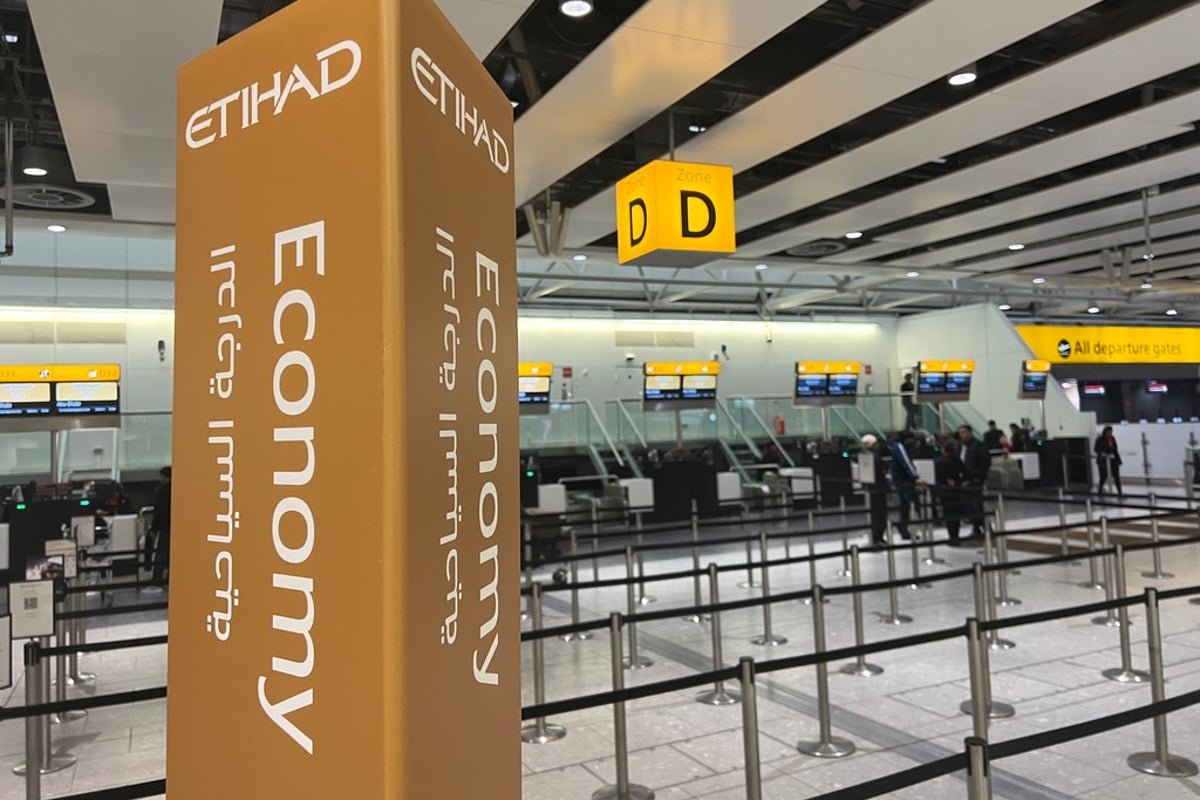
Gulf flights crisis: the answers travellers need as the conflict extends towards a month
On 28 February the US and Israel launched surprise air strikes on Iran. Tehran retaliated by attacking key infrastructure in the Gulf nations, including airports and hotels.
Much of the airspace in the region remains closed, disrupting the plans of millions of travellers. The Foreign Office has placed the UAE, Qatar, Bahrain and Kuwait on its no-go list.
Simon Calder has answered dozens of readers’ questions about the impact on their travel plans – from short-term needs to return home, to the long-term implications for travellers.
These 11 questions, some of which have been updated from previously published content, cover the main issues of concern to travellers.
My flight home has been cancelled because of the conflict. Can I expect to be rebooked swiftly?
Q I booked a UK-Sri Lanka ticket. My return flight from Colombo was cancelled because of the closure of Gulf airspace. The airline insisted the earliest reroute was three weeks ahead. But earlier flights with other airlines were clearly available. Under UK261 shouldn’t I have been entitled to rerouting at the earliest opportunity?
Leon Y
A UK261 is the law that governs air passengers’ rights from a British perspective. It is a copy-and-paste near-replica of the deeply flawed European statute, EU261, which came into effect 21 years ago. Both sets of consumer protection have a gaping loophole for many airlines. While all carriers that cancel a flight from British or European airports must find alternative transport for the passenger as soon as possible, that obligation does not apply to non-UK/EU carriers flying from outside Europe.
You are among millions of passengers whose travel plans have been torn up because of the Middle East flight disruption – and who are discovering the airlines are in no particular hurry to fly them home.
The cancelling carrier has no obligation to you beyond flying you back when it is convenient for it to do so, or refunding the homeward portion of your fare. That sum is almost certain to be a lot less than you will need to spend to return swiftly.
If you are prepared to take the risk involved in changing planes at Dubai International Airport, the obvious way home is on Emirates for less than £400; seats are available every day.
Meanwhile, I will continue to lobby for an improvement of air passenger rights. After Brexit the government could have chosen to make the rules fit for purpose, but declined to do so. All that changed was that the stipulated compensation figures in euros were replaced by proper sterling pounds.
Is transit through “no-go” airports advisable?
Q We are heading for Sydney soon via Abu Dhabi on Etihad Airways. The Foreign Office advises it’s a no-travel zone and suggests going there may invalidate travel insurance. Any thoughts as to whether that’s only for time in transit there – or could cover be denied further into the holiday for passing through?
Cathy R
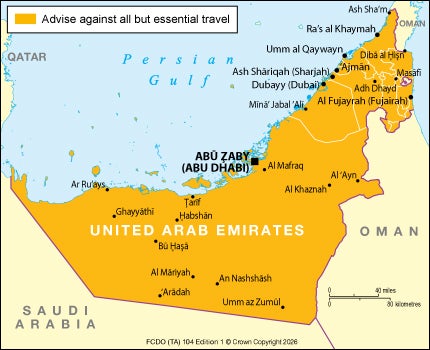
A The Foreign Office “advises against all but essential travel” to the UAE because of the intermittent attacks on the country from Iran. While the FCDO has no direct influence on what this means for travel insurance, a standard term in such policies will say something like: “If you choose to travel contrary to the FCDO’s advice, we will only cover a claim if the cause is not linked to the reason for the advice.”
In other words: were you to be injured as a result of an event at the airport related to the Iran conflict, you would not be covered for medical expenses. However, in that extremely unlikely event, it is fair to assume that the UAE authorities would want to care for anyone who was hurt free of charge. In contrast, were you to lose something or hurt yourself by tripping over at the airport, you would be covered by the normal terms of your policy.
This partial withdrawal of insurance applies only when you are actually on the ground in the UAE. As soon as that plane takes off for Sydney, it clicks back into full cover. To answer your key point: you will not be punished for going against Foreign Office advice for a couple of hours.
On Monday I connected at Abu Dhabi airport, fully aware of the insurance implications. The airlines, the airport and the UAE authorities are all confident that you can safely change planes. The pilots who are flying the aircraft in and out of Abu Dhabi – and nearby Dubai – evidently believe they can operate safely. That is what persuaded me to take the risk.
Isn’t ‘airside transit’ at an airport exempt from Foreign Office warnings?
Q Isn’t being in transit exempt? Given you do not pass the border, surely you are technically not entering the UAE – just pausing at the terminal at Abu Dhabi or Dubai?
Simon S
A No. The Foreign Office advice mentions Iran’s attacks on airports. So it is unsurprising there is no exemption for merely spending a couple of hours in the duty-free shop between flights. Whether or not I pass through immigration is irrelevant.
For avoidance of doubt: the FCDO is not averse to the concept of allowing airside transit in a location on the no-go list. In Ecuador’s largest city, Guayaquil, as well as the Mexican border town of Tijuana, there is a specific exemption for people changing planes. In the case of the UAE, evidently the officials deem the risks too high.

Will I get a refund for a super-expensive replacement flight home?
Q My daughter flew back at the weekend from Phnom Penh to London via Seoul. She wanted to avoid the uncertainty of her flights being repeatedly cancelled and having to transit via the UAE, which the Foreign Office says is not safe. The new flight cost her around £1,500. She can only get back about £250 from the airline as a refund. Is there any way to plug the gap in her finances?
Name supplied
A Your daughter – happily back safe and sound – is one of many thousands of British travellers dealt a lousy hand in the current crisis. As I have previously written, air passengers’ rights rules are asymmetric. They are generous to anyone starting a flight at a British airport, but do not apply for flights starting outside Europe on non-UK/EU airlines. If Emirates, Etihad or Qatar Airways cancels a homebound trip from an Asian airport, the carrier merely has to offer a replacement flight at a time of its choosing – or a refund of the unused part of the ticket.
In addition, the airline’s calculation of the appropriate refund is often disappointingly low. Example: suppose your daughter paid £630 for a London Heathrow-Phnom Penh return ticket. She might naturally expect to get £315 back for the unused portion. But roughly £130 of the original fare comprises UK air passenger duty and Heathrow’s service charge. The airline has already had to hand that over. So the refund shrinks to just £250.
I shall suggest some possible remedies, though the odds are not looking promising. The first is to try to claim from travel insurance the difference between the refunded amount and the new ticket. Many policies exclude paying out for losses incurred as a result of “declared or undeclared war or hostilities”. The Iran conflict certainly qualifies. Yet the insurer may possibly cough up as an exceptional case. If (more likely) the claim is turned down, the Financial Ombudsman Service might rule it should be paid because buying a new, expensive ticket was the only way your daughter could avoid going through “no go” territory.
Finally, the airlines could decide that they really should reimburse the millions of passengers who have incurred big credit card bills through no fault of their own. Your daughter should keep the receipts.
Should I book onto alternative flights to Australia?
Q My flight from Manchester via Doha to Perth has been cancelled by Qatar Airways. I’ve found alternatives going through Dubai. What’s the best way to check if a flight is going ahead before forking out another £4,000-plus?
Andy S
A Qatar Airways has cancelled millions of passengers’ bookings over the past three weeks. Anyone flying from Asia, Africa and Australasia to the UK is not covered by air passengers’ rights rules. But a journey going from Manchester to Perth definitely is. Under “UK261” rules, travellers whose flights are cancelled are entitled to be flown to their destination as close as possible to the original schedule, on any airline that has seats available. Qatar Airways should arrange this for you. If it does not, then you can buy the lowest-cost option and claim reimbursement from the airline. This should be in the same class.
Looking at the price you quote, it looks as though you may have been booked in business class. Whatever you intend to claim will need meticulous records. You will need to demonstrate, for example with screenshots from Skyscanner, that you have sought the lowest-cost option. As you were on a one-stop flight (Manchester-Doha-Perth) you can go for the same – whether on Singapore Airlines, Cathay Pacific or indeed Emirates via Dubai. For the Dubai option, bear in mind that the Foreign Office warns against travel to anywhere in the UAE. Your travel insurance will not apply for any claim to do with the reason for the no-go warning, ie attacks from Iran.
In terms of whether the flight will go ahead: the odds are in favour. Dubai fully intends to return to its role as global superhub. But looking at Emirates flight EK20 from Manchester to Dubai for the past week: one departure returned to the starting place as a result of another Iranian attack, and another diverted to Ras al Khaimah, 45 miles northeast of DXB. That will have wrecked many connections.
Unlike in normal times, however, anecdotal evidence suggests there may be plenty of room on the next departure for the Western Australian capital. Some Emirates planes are said to be far from their normal occupancy levels.

What will be the impact on the tourism industry in developing countries?
Q We have just left a small hotel in Mirissa in Sri Lanka. The owner was telling us that he has had cancellations of $20,000 (£15,000) so far due to the Middle East turmoil. That is a lot of money in Sri Lanka. I wonder how many businesses won’t survive this?
Paul E
A You touch upon one of the saddest aspects of the collapse of tourism between Asia and Europe due to the Iran conflict. Traders who depend upon rich Westerners to keep their businesses running and their families fed are discovering just how important the airlines of the Gulf are in terms of bringing in customers.
I agree that it seems desperately unfair. The party directly responsible for the near collapse of aviation is Iran. The beleaguered Islamic republic is retaliating by targeting economic infrastructure in the UAE and Qatar, intermittently closing the skies and leaving thousands more stranded each time.
An adventure by Donald Trump combined with vengeance wrought by Israel is having a massive effect on tourism across the eastern hemisphere. This has not happened on such a large scale since, well, the two Gulf wars.
When tourism in Sri Lanka comes back this time around, I can be pretty sure that airlines will open up new routes to feed the demand. It isn’t that people don’t want to visit the gorgeous Indian Ocean Island – we tourists have become over-reliant on transferring via the Middle East. The premium for non-stop flying has just increased.
While I sympathise with the Sri Lankan property owner, I am not too despondent for him. The Indian outbound market is vast. Normally India is the chief source of tourists to Dubai (followed by Saudi Arabia and the UK). Only a relatively small percentage of them will need to switch to Sri Lanka to make up for the shortfall in numbers. And who knows, they may discover a superb new holiday destination that is cheaper and easier to reach than the UAE.
My package holiday is due to pass through Qatar – what should I do?
Q I read your thoughts on the Middle East travel implications with optimism. You sounded confident about flights in the Gulf being up and running in the near future. Yet now BA has cancelled flights to and from the Middle East until May. I booked a British Airways package holiday to Goa, including flights on Qatar Airways and one inbound flight (from Doha) on BA. What do I do?
Layla D
A Not for the first time, I was over-optimistic about when flights might resume at scale to and from the Gulf. Perhaps that was because I had a booking that I desperately hoped would go ahead as planned. It didn’t.
Happily, you could not be in a stronger position. You have booked a package holiday, and it is now down to British Airways to figure out how to get you to Goa and bring you back safely. The most obvious route is on BA to Mumbai with a quick connection from there – or, indeed, the splendid train ride south to Goa.
In practice, though, flight bookings to India are extremely heavy. So it might be that the company turns around and says: look, we simply cannot provide this holiday. Were that to happen, you would of course be entitled to a full refund.
Given that British Airways holiday operation is a sensible business, though, it may well be that you are incentivised to take a different holiday – for example to the Caribbean – at a significant discount.
Could I face a fuel surcharge for my forthcoming holiday?
Q I have already fully paid up for a river cruise. Can the company force me to pay more because of fuel crisis?
Paul M
A Three weeks after the conflict began between Israel, the US and Iran, oil prices are soaring. Buyers are concerned about a reduction in world supply: both from a cut in production, and a blockade of the Strait of Hormuz. A significant amount of the world’s oil is carried on tankers through this narrow passage between Iran and Oman. When supply is reduced and demand remains stable, the only way for prices is up.
To protect against fuel price shocks, many travel companies “hedge” the majority of their forecast energy requirements: they enter into financial deals to lock into a fixed price for a certain quantity of fuel. But there is no obligation for any company to do so. Let us assume that your river cruise company is exposed to the full weight of the approximate doubling of the oil price. It may tell customers: “The business model we used when setting rates for the voyage no longer applies.”
Under the Package Travel Regulations, travel firms are allowed to ask for more money if “the price of the carriage of passengers resulting from the cost of fuel” has risen. Simply asking for extra because of unspecified fuel costs without giving any details of what has changed is insufficient. The company must notify a traveller “clearly and comprehensibly” of the reason for the price increase. It must show its workings by way of justification, and details of the calculation by which it has applied the surcharge. And no surcharges are allowed to be applied within three weeks of departure.
It is reasonable to withhold payment of a surcharge until clear evidence of the reason is provided. There is no upper limit to the amount that the travel firm can demand. But if the proposed surcharge is eight per cent or more, then you have the right to cancel for a full refund. Many surcharges turn out to be exactly eight per cent, representing an extra £80 on a £1,000 holiday. This is not surprising, as any higher and the traveller can demand all their money back– which is likely to be even more expensive for the holiday firm.

Could the Chinese airlines provide an alternative to the Gulf carriers?
Q Reading your advice on getting home from Australia, I am surprised that another option has not been considered. If you look at the “great circle” route from Sydney to London, it mostly passes over mainland China and Russia. Surely a viable route exists via Chinese cities on Chinese airlines, who can overfly Russia? And it might be shorter than via the Gulf. Any thoughts?
David W
A Agreed: there is much to be said for flying on Chinese airlines between Australia and the UK. The benefits start with minimising the time spent in the air, and commensurately how much fuel is burnt.
The “great circle” route you mention indicates the most direct flight path between two points on the surface of the Earth. A pilot following this path from Sydney to London would take their aircraft more or less overhead Hong Kong and Guangzhou before continuing right across China, Kazakhstan and western Russia, with the final few hours spent tracking across the Baltic and North Seas.
From the passenger’s point of view, this kind of routing is low cost and swift. From an environmental perspective, journeys cause slightly less damage as they take the most direct route across Siberia. Some passengers may take comfort from the fact that they are also giving the Middle East a wide berth. More positively, the opening up of China means that spending a day or two between flights is extremely easy to arrange – and a low-cost alternative to more familiar stopover hubs.
So why aren’t Chinese airlines more popular? People have a wide range of concerns. They may deplore the regime in the People’s Republic, and be unhappy about flying across Russia, with revenue from overflights potentially bolstering the war effort against Ukraine. The likes of China Southern, China Eastern and Sichuan Airlines do not have anything like the same brand recognition and public approval as, say, Singapore Airlines. Some prospective passengers may be concerned about safety, though the carriers of the People’s Republic meet the appropriate international standards.
Yet the current problems faced by Emirates, Etihad and Qatar Airways could lead more passengers to discover the Chinese fast track – and I welcome the extra competition and choice the airlines of China offer to the traveller.

What rights do I have for future flights through the Gulf?
Q If booked through a travel agent as a package, and flights are operating but current FCDO advice remains, what rights do I have?
Darren B
A Not all travel agents are members of Abta, the travel association – but most are, and are bound by its rulings. Abta says: “In the event of the Foreign, Commonwealth & Development Office (FCDO) advising UK nationals not to travel to a given area, we expect all of our members to offer clients who are due to travel imminently to that destination, the correct options.
“Members might be able to offer you an alternative holiday. If they can’t, or if the alternative means a significant change to your original holiday, they must offer you a full refund of all money paid.”
I have asked for confirmation that includes flights going via the Gulf where even the airports are on the Foreign Office no-go list.
The obvious solution for the travel company is to find a route that avoids the “danger zone”.
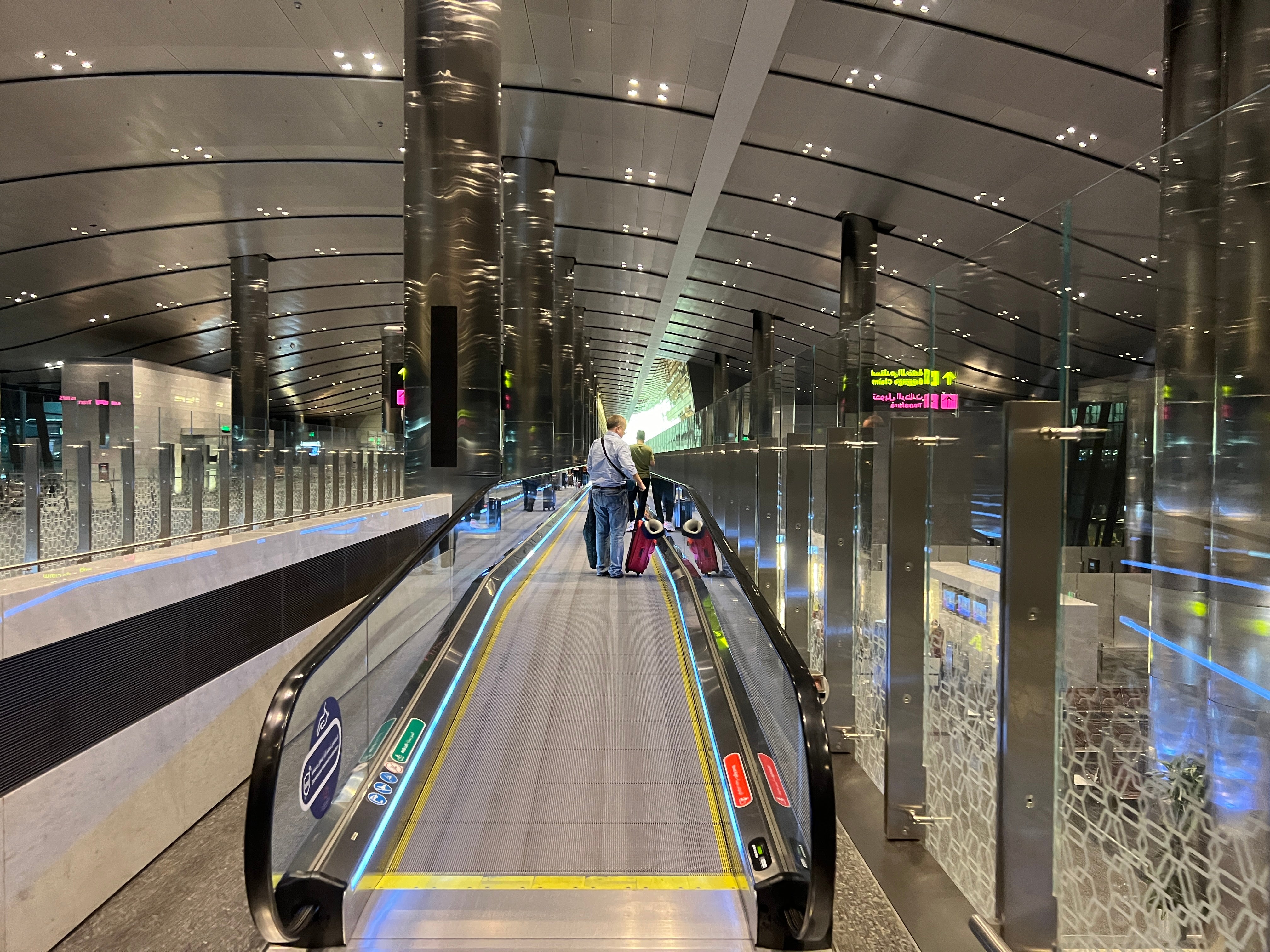
How long will it take for the Gulf airlines to get back to normal?
Q What do you see as the likely sequence of events for the airlines in the Gulf to resume flying at full stretch?
Huw A
A Emirates, Etihad and Qatar Airways are serious airlines that would never compromise safety. If they perceived a threat, they would simply not operate any flight considered at risk. But they have strong motivations for getting back to normal as soon as possible.
One compelling reason is very straightforward: customer service. All three airlines pride themselves on delivering a premium inflight experience. Even though people stranded in parts of Asia, Africa and Australasia, awaiting anxiously for flights home may not feel it, the carriers want to get passengers safely where they need to be.
Next, the commercial aspect. The losses sustained by the “Middle East 3” over the past three weeks run into hbillions of pounds. For many conventionally commercial carriers, those kinds of losses could push them over the brink. Thankfully, the trio are backed by their respective governments: Dubai (Emirates), Abu Dhabi (Etihad) and Qatar. There is no possibility that they will fail.
Most critically, though the economic essence of these locations is largely based on tourism: for Dubai alone more than half the people coming through the International Airport are actually staying in the emirate rather than connecting immediately. The image of these locations as safe and sun-sure has been jeopardised, and the governments will be working with the airlines to restore links swiftly and safely.
The strategies adopted by the different airlines are interesting. Emirates, which is by far the largest, appears to be pursuing a plan of rebuilding towards 100 per cent as soon as safely possible. As you will have seen, there have been multiple setbacks, with intermittent closures of the hub at Dubai International Airport.
The carrier’s business mix is also severely disrupted – because around half of passengers end their journeys or make a stop over in Dubai. For that full service to be feasible, there must be a sustained spell without attacks and furthermore foreign governments including the UK must lift their warnings on travel to the UAE.
Across in Abu Dhabi, Etihad is progressing more slowly. It has a higher proportion of connecting traffic than Dubai. To get a coherent network up and running is difficult. The early morning Airbus A380 to London Heathrow would normally be filled by passengers from dozens of flights. With most of those feeders currently out of action, the problem is that the airline could be flying lots of fresh air around and losing even more money.
Qatar Airways is the outlier. It has commendably run some repatriation flights, for example from Bangkok to Manchester non-stop, but has almost no operations in and out of its hub at Doha. Furthermore, significant parts of its fleet are apparently being flown to an airfield in Spain for storage – which suggests the airline is planning a large-scale resumption in months rather than weeks.
Whenever they feel able, all three airlines will announce massive seat sales. Just as British Airways did after the first Gulf War in 1991, they will put lots of capacity on sale at well below the usual fares as they seek to restore confidence and fill their aircraft.

Read more: The joy of a late flight, even in uncertain times