I flew through Abu Dhabi’s no-go zone – along with thousands of other travellers
Don’t mention the war: that appears to be the plan as Etihad, the national airline of the United Arab Emirates, restores its schedules.
The UAE – including the two giant airports of Abu Dhabi and Dubai – is on the Foreign Office no-go list. The FCDO insists even spending two hours in transit is unacceptably risky. Since the US-Israeli attack on Iran began, Tehran has been dispatching missiles and explosive-laden drones at targets in the UAE – including airports.
Emergency air traffic control rules are in place across the nation’s airspace.
Yet each day thousands of British travellers are going against the official advice and changing planes at the Gulf hubs. Like many other passengers, I booked a ticket to fly via the UAE well before the conflict began. Alternative routes from my location, Indonesia, were both scarce and expensive. So I took the chance. And this is how it went.
3pm Sunday, Indonesian time
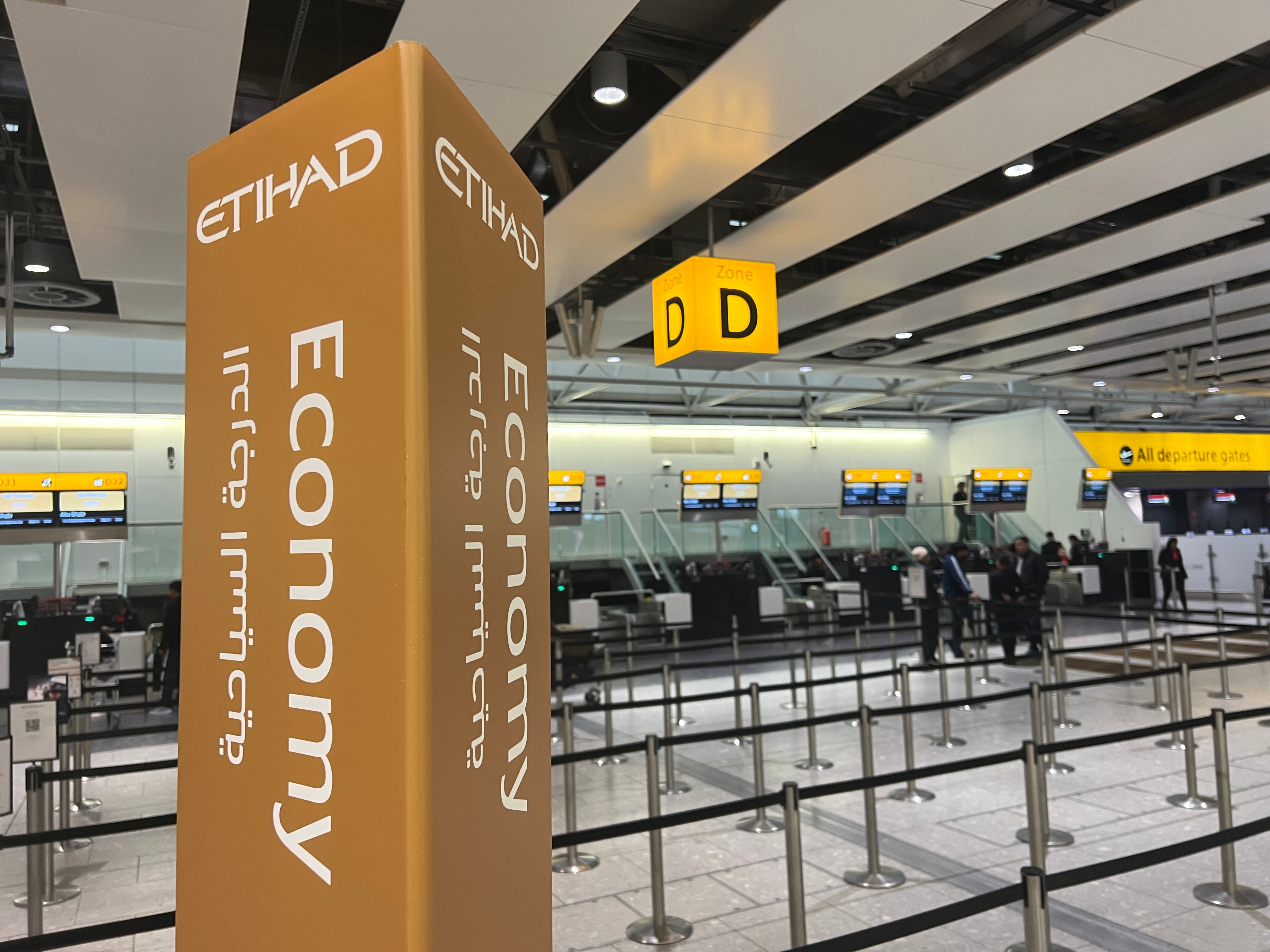
A police dog, unusually wearing sunglasses, is scrutinising passengers entering Terminal 3 of Jakarta’s main airport. Over three hours before the scheduled departure of the first flight for days from Jakarta to Abu Dhabi, hundreds of people are queuing at the Etihad check-in zone at the Indonesian capital’s airport.
Many of the passengers for flight EY475 are European tourists, some of whom have been delayed for a week or two.
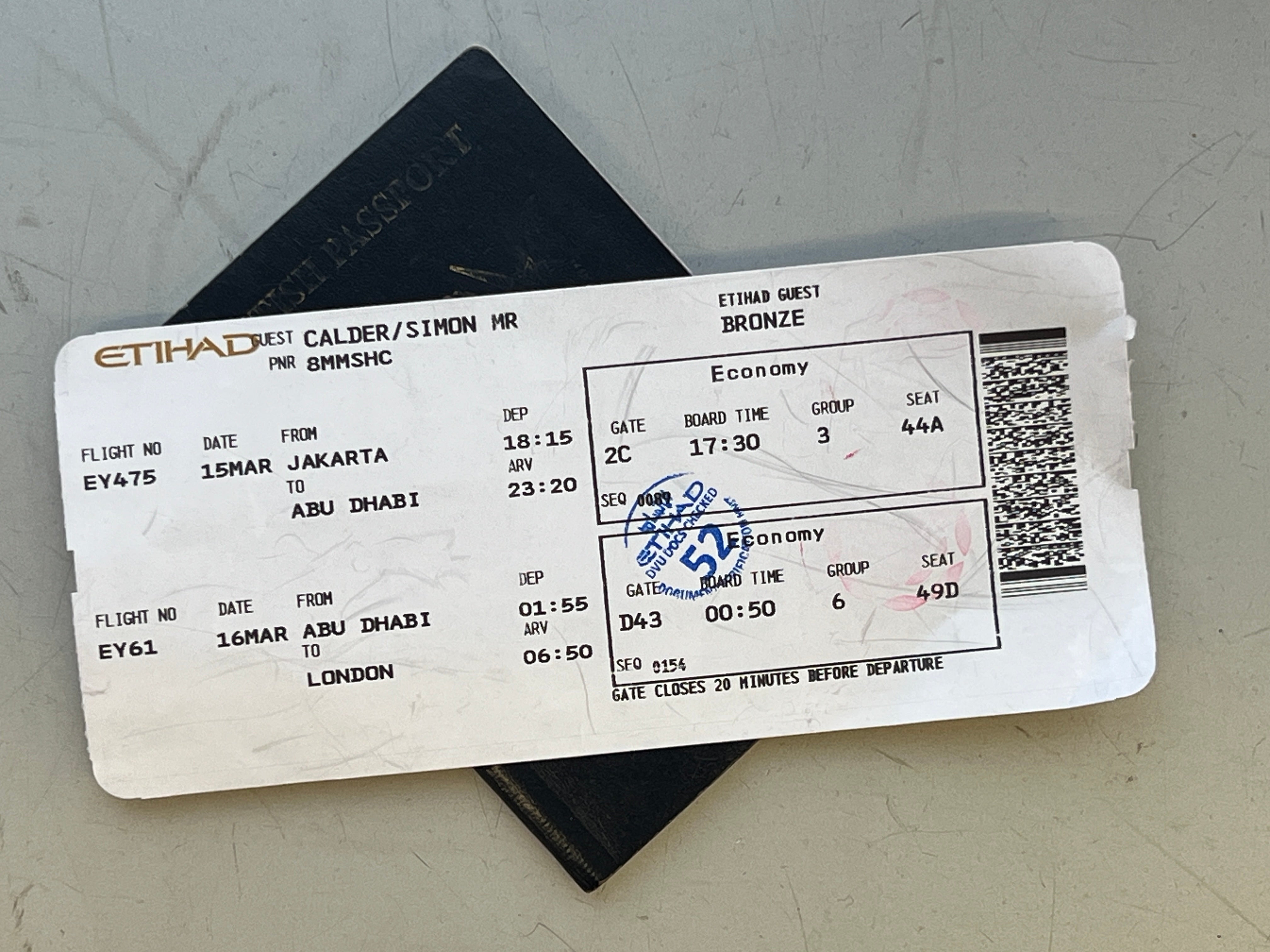
Etihad, along with its big rivals Emirates of Dubai and Doha-based Qatar Airways, has been struggling to restore at least part of its schedules to clear the backlog. My flight was supposed to be at 6pm on Saturday, with a two-night stopover in Abu Dhabi provided by the airline.
Three days before departure, Etihad customer service called to say that I could fly just over 24 hours later, but there was no prospect of staying in Abu Dhabi. I would need to connect straight through to London Heathrow.
In the light of the Foreign Office admonition not to travel to the UAE, I looked at alternatives. But with much capacity between the UK, Asia and Australia taken out by the partial closure of the aviation superhighway through the Gulf, airlines based elsewhere are typically charging three times the normal fare.
Once I reach the front of the queue and talk to the agent, there is no mention of the unusual circumstances – just a reminder that I must get on a connecting plane and will no longer be stopping over.
5.30pm
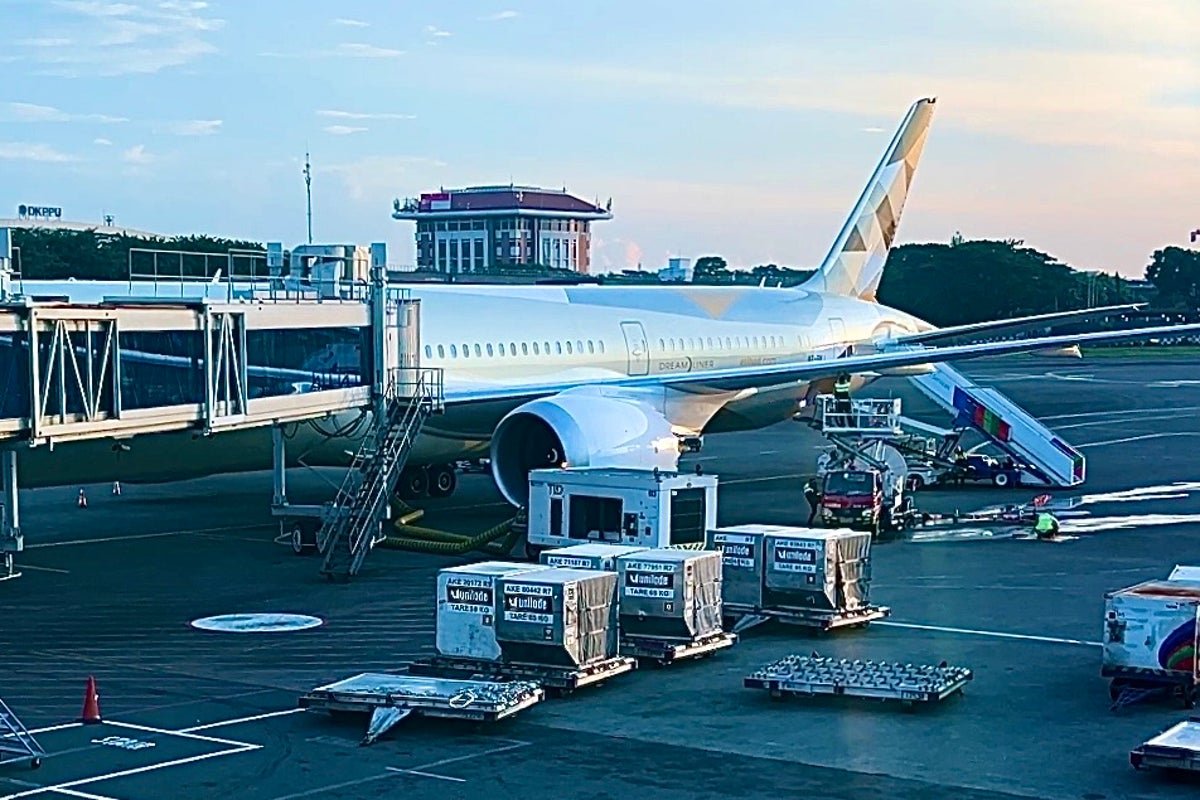
Boarding begins at gate 2C. The sun is low in the sky behind the Etihad Boeing 787. At the gate, passengers are being offered small bags containing Iftar snacks. During Ramadan, Muslims fast during the day; the airline provided dates, water and yoghurt for consumption after sunset.
Every seat in economy is full. As I walk to my place in the last-but-one row, I speculate that most passengers are Indonesians returning to work in the UAE; an estimated 300,000 citizens are based there. Normally there are two widebodied Etihad flights a day on the route, as well as a pair of Emirates A380 SuperJumbo departures to Dubai.
All the Emirates – and Qatar Airways – flights from Jakarta to the Gulf are showing on the screen as cancelled.
6.20pm
Flight EY475 departs a few minutes behind schedule. The captain makes no mention of the fact that we are flying into a conflict zone; to be fair, I’m not sure what he might have said that could possibly reassure anxious passengers.
Etihad says: “The decision to operate a limited flight schedule has been taken in coordination with relevant authorities following extensive safety and security assessments. Etihad continues to monitor the situation closely and will only operate flights once all safety criteria are met.”
7pm
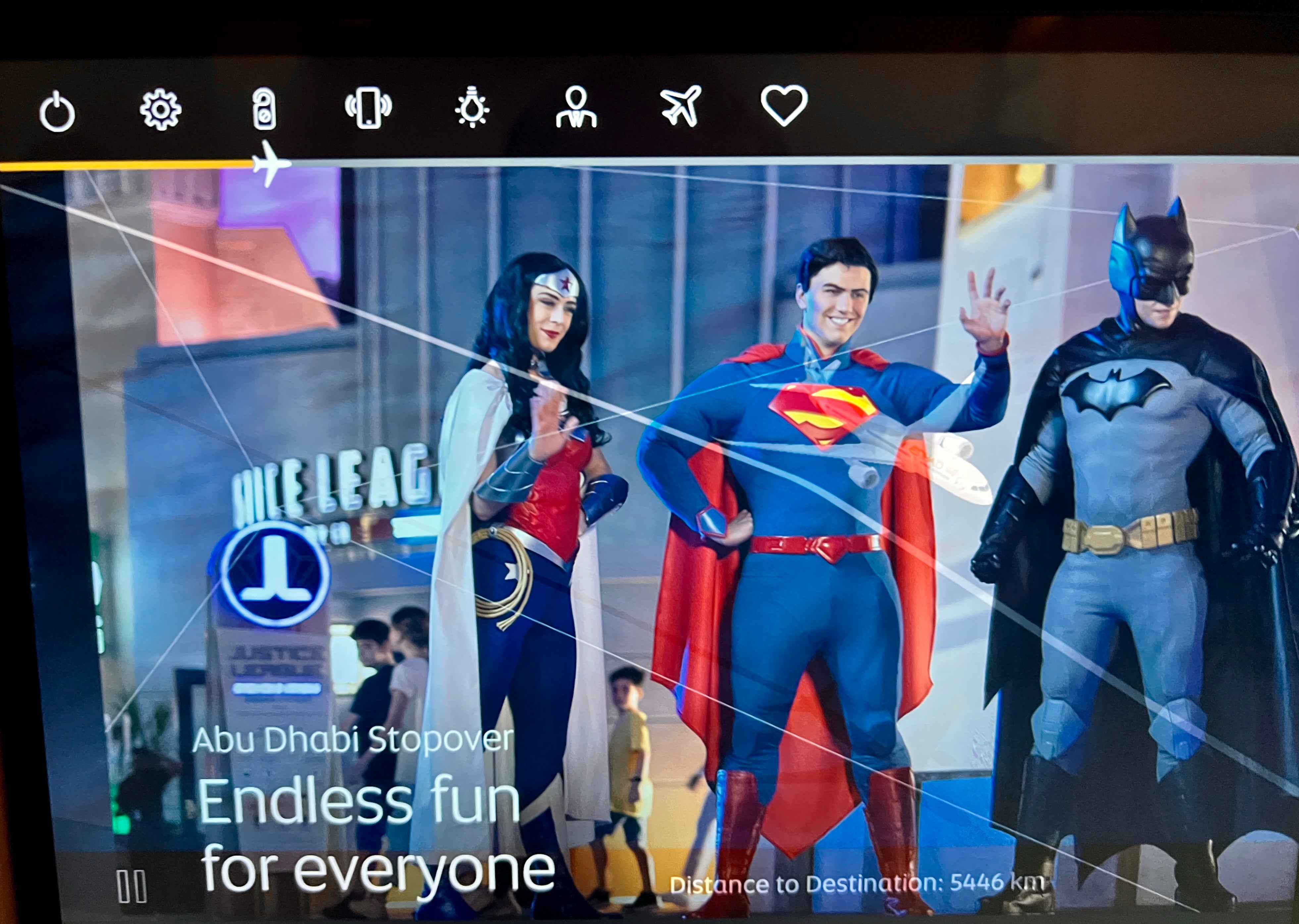
Why did nobody have a word with the inflight entertainment people? On the sky map rotating cycle, about once per minute passengers are promised: “Abu Dhabi stopover – endless fun for everyone.” Perhaps it is just better to pretend all is normal.
7.30pm
Dinner is served: chicken and potato, uninspiring but filling. Etihad is not a “dry” airline, so I ask for a can of Heineken. And later, a glass of red wine. To steady the nerves, honest.
11pm
Are we nearly there yet? With Bengaluru in southern India just to the south, the flight is barely halfway through. The two cities, Jakarta and Abu Dhabi, are 4,100 miles apart – further than London to Chicago. When I had booked the flights, the plan was to fall out of the plane and into bed at an Abu Dhabi airport hotel. Then, after a couple of nights and a day to explore, to take a morning flight to Heathrow.
Instead, after this eight-hour flight, I have another one soon after arriving at the off-limits airport.
11pm, UAE time
The plane has made landfall over Oman and is descending towards Abu Dhabi. The flight crew are now in operating under “Escat” rules: Emergency Security Control of Air Traffic.
“Flights will be required to comply with any airspace and/or flight restrictions that may be issued in support of National Defence,” the UAE authorities say.
“Emirates ACC [air traffic area control centre] will approve/reject a flight plan dependent on current and forecasted military operations within the area.”
We have been cleared to land, and make a smooth approach, touching down about 15 minutes behind schedule but with no drama.
11.45pm
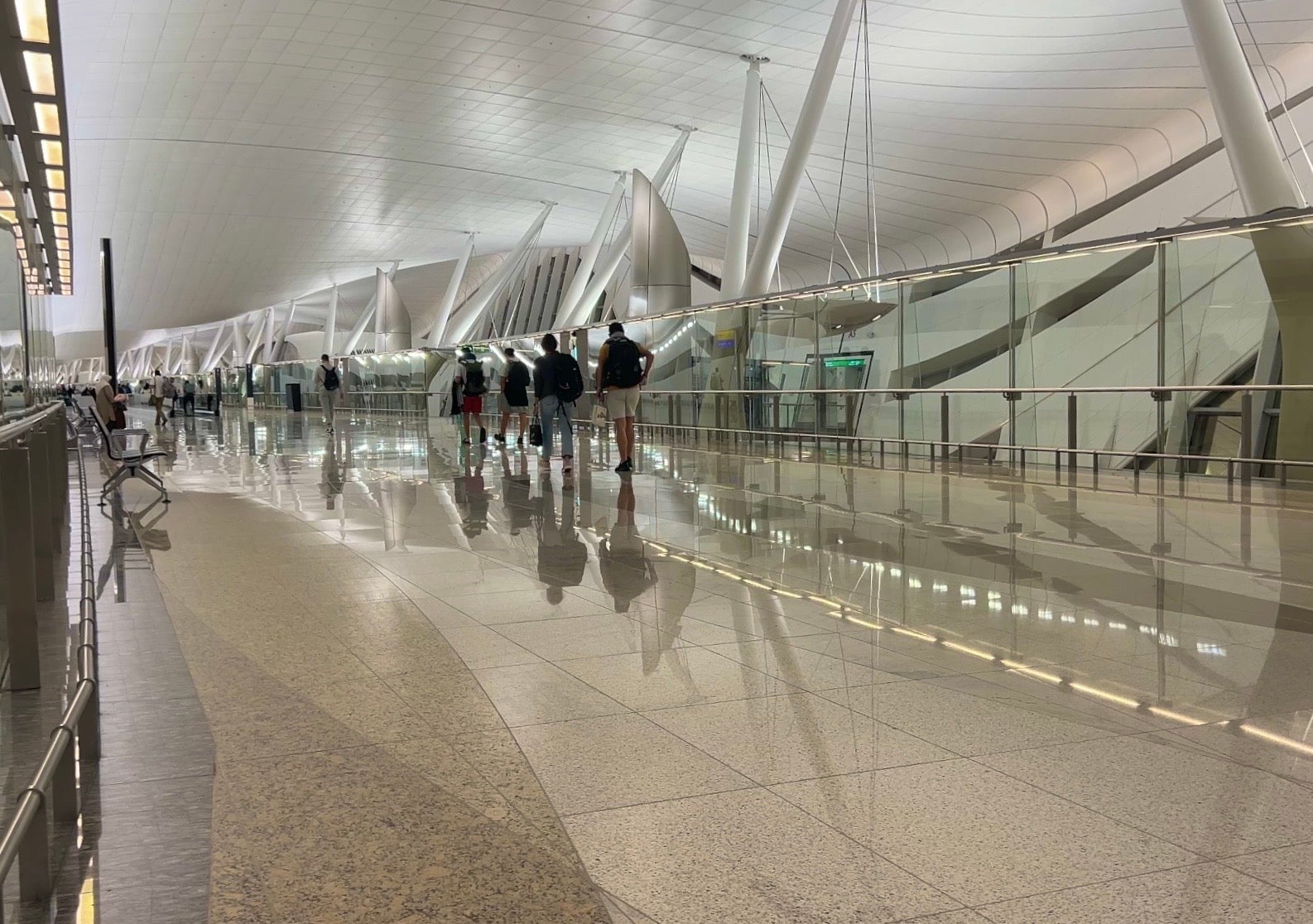
Zayed International Airport (”the Middle East’s fastest-growing airport”) is vast, shiny – and three-quarters empty. From my seat at the back next to the loo, I am one of the last to leave the aircraft. Normally at around midnight, the hub would be humming – with aircraft arriving every few minutes from Asia to connect with a bank of early morning departures to western Europe, especially the UK.
But this is officially the danger zone. Were the Iranians to succeed in getting a missile or drone through to the airport, I would have no insurance cover.
11.55pm
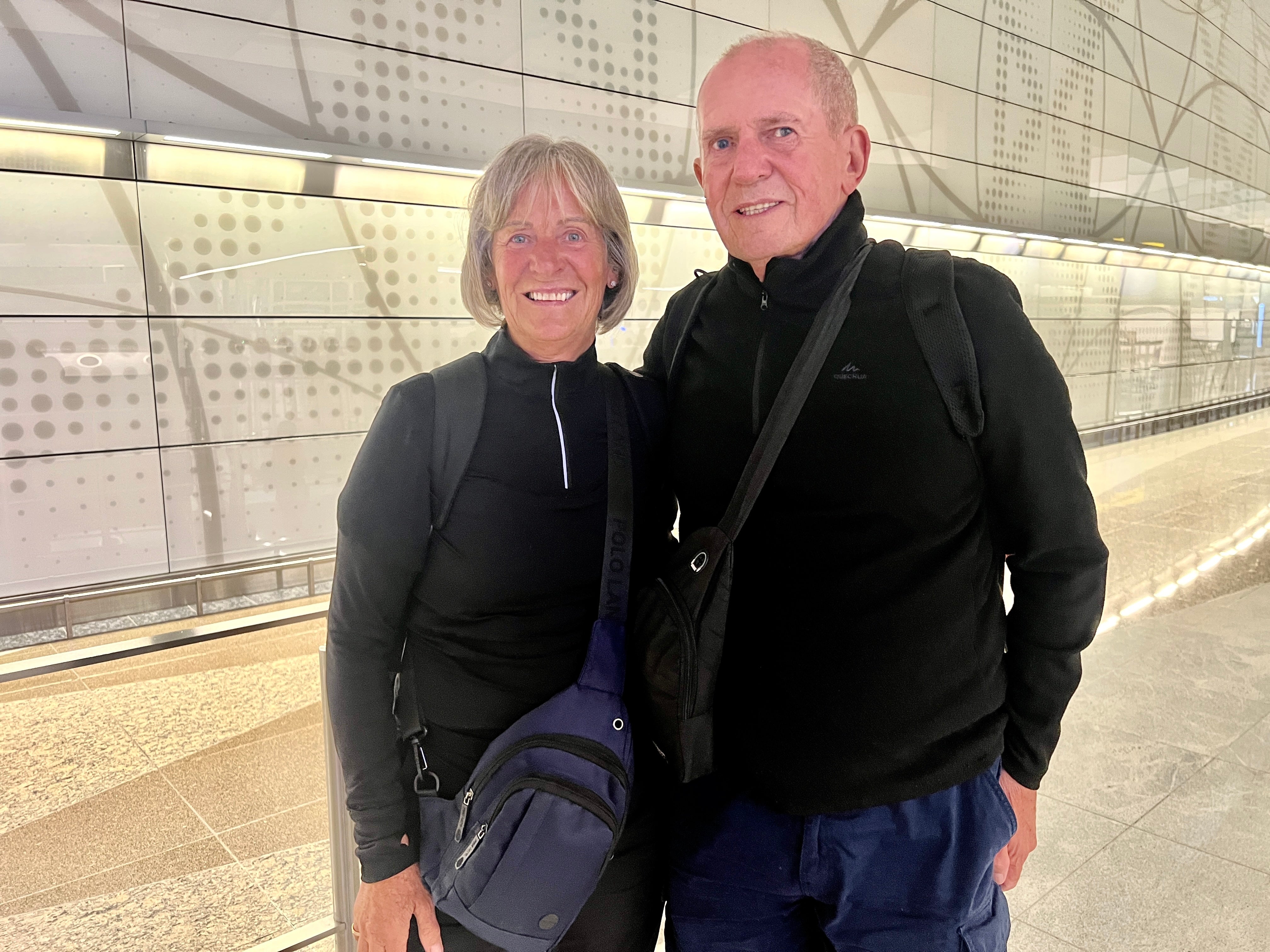
After a 10-minute walk through an echoing corridor, I reach the security checkpoint – just at the same time as an inbound flight from Bali. I meet Daniel and Karen Fletcher, who are trying to make their way home to Bolton after a trip to Sri Lanka, Vietnam and Indonesia.
“I was feeling, coming into land, a bit apprehensive, I won’t tell a lie,” says Karen. “Because you never know when these drones are coming. As soon as I landed, I felt fantastic. But we have to get on another flight yet back to Manchester. A few thousand miles from here, I’ll be much happier.”
Daniel explains that on the day of their original flight, 3 March, they were able to check in. “But then after half an hour, we got a message to say that our flight was cancelled, and that we were to stay at the hotel and not go to the airport. ‘Wait till we contact you’.” The call never came. Following many hours trying to contact the airline, they had finally been rebooked 11 days after they were supposed to leave.
12.05am
The security search is swift. AUH, as it is known, is a ghost airport. The dazzling arrays of duty-free shops are open but seem to have no customers. Even though I have nearly two hours before the onward flight EY61 to London Heathrow, I go to gate D23 just in case of delays. The UK government insists on extra checks for passengers flying from here.
“I just want to get home and see my daughter,” a fellow passenger named Andrew tells me.
1.55am
“All passengers have boarded,” announces the senior member of cabin crew as the doors close on the Airbus A380 SuperJumbo.
I am in a row of four seats that is fully occupied. Having checked with a member of ground staff, who said that the plane was only about two-thirds full, I go to the back of the plane and find a space in row 69 with an empty seat next to me.
We stay at the gate for nearly half an hour beyond the scheduled departure time. It is not clear why. Nor does the captain make any reference to the unusual flight path we are about to follow.
3am
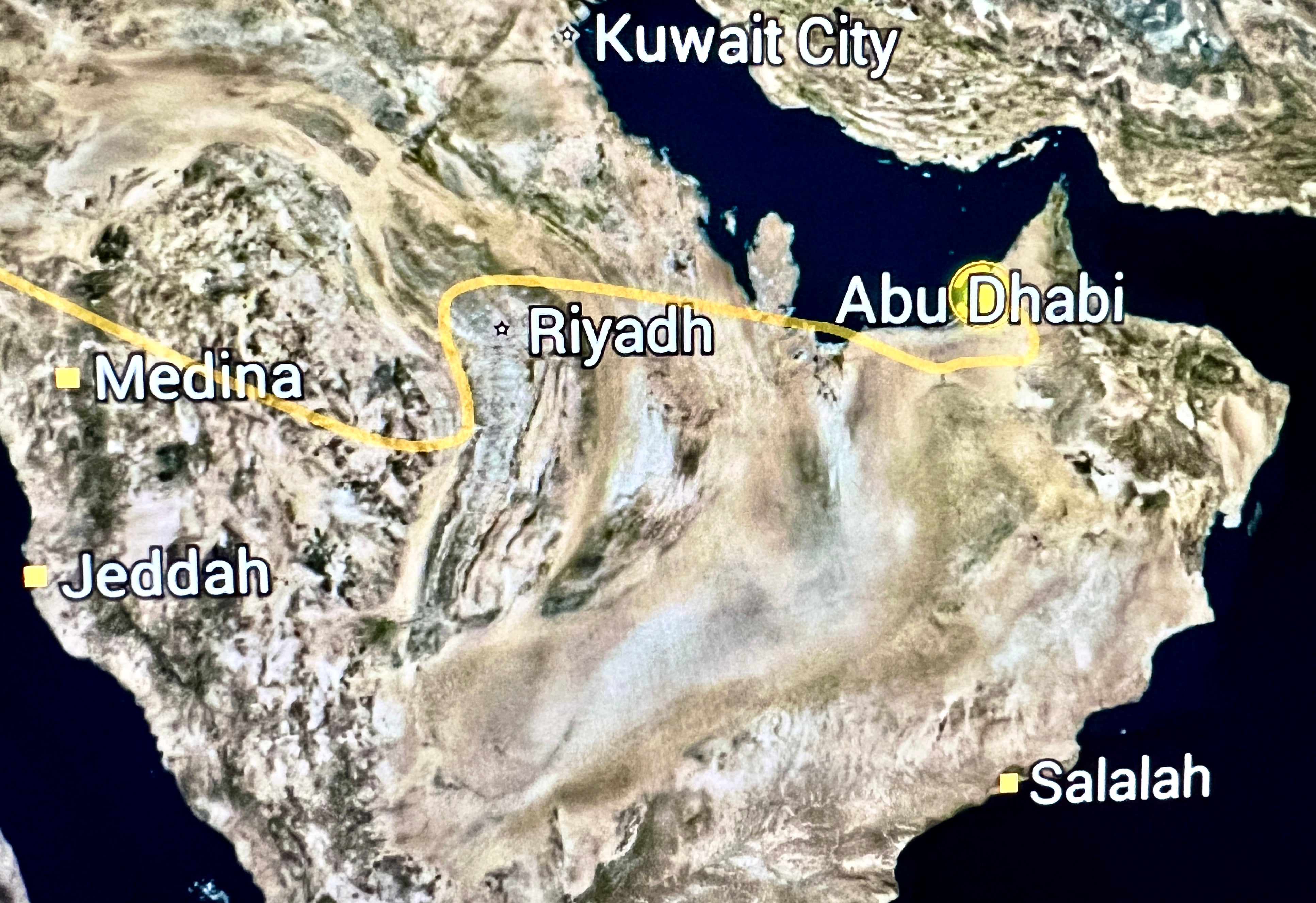
Never have I paid an inflight sky map so much attention. The journey begins by flying diametrically away from London – and also from Iran. Only when around 100 miles into the journey does the captain make a wide arc to fly west over northern Saudi Arabia, flying just to the south of Qatar – whose airspace, along with that of Bahrain and Kuwait, is closed.
3.30am
Shortly after passing Riyadh, the plane turns south again for over 100 miles over the vast emptiness of the Saudi desert before resuming a trajectory towards London.
Meanwhile, across in Dubai, the world’s busiest international airport has just closed to arrivals and departures because of another Iranian attack .
Many British passengers are aboard aircraft that were planning to land at Dubai when the shutdown was announced. They are now joining the procession back to Heathrow, Manchester and Edinburgh.
5am
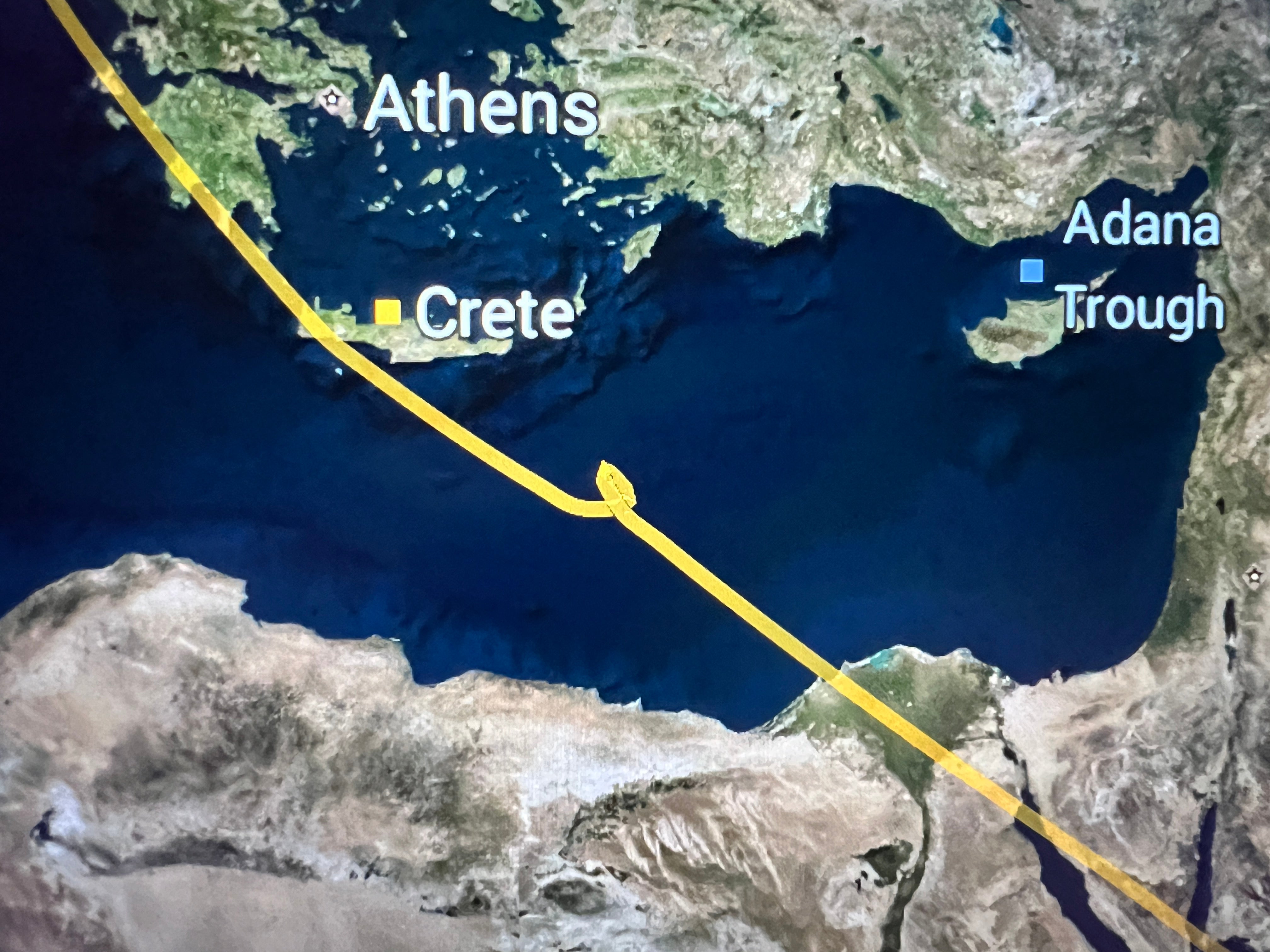
The sky map shows the pilots making a loop just when leaving Saudi airspace and crossing the neck of the Gulf of Aqaba to Egypt’s Sinai Peninsula. This is not a common technique. It is usually deployed to delay the aircraft so it can enter a sequence of other planes as specified by air traffic controllers.
Even in the middle of the night, the skies are highly congested. Western aircraft are limited to a small band of airspace between the southern tip of Russia and northernmost Iran, and this southern route over Saudi Arabia.
6.30am
Another random-looking loop, halfway across the Mediterranean between Alexandria in Egypt and mainland Greece. From here the flight path will be familiar to anybody who has been on a holiday jet to or from the eastern Mediterranean: following the coast of Croatia, over northern Italy, clipping western Austria, crossing southwest Germany and a tiny corner of Luxembourg before bisecting Belgium. In normal times, the direct track would be way to the north: crossing Iraq, Syria, Turkey, the Black Sea and the Balkans – though Belgium would still be on the flightpath.
6.15am GMT
The descent from 38,000 feet begins just over the port of Zeebrugge, making landfall 15 minutes later over Clacton and touching down a few minutes behind schedule at London Heathrow. The journey has taken nearly nine hours – compared with around seven were the pilots allowed to fly a direct track.
Longer flights mean higher fuel consumption, more engine wear, less aircraft utilisation and more connections jeopardise. And they are not much fun for the passenger either.
7.10am
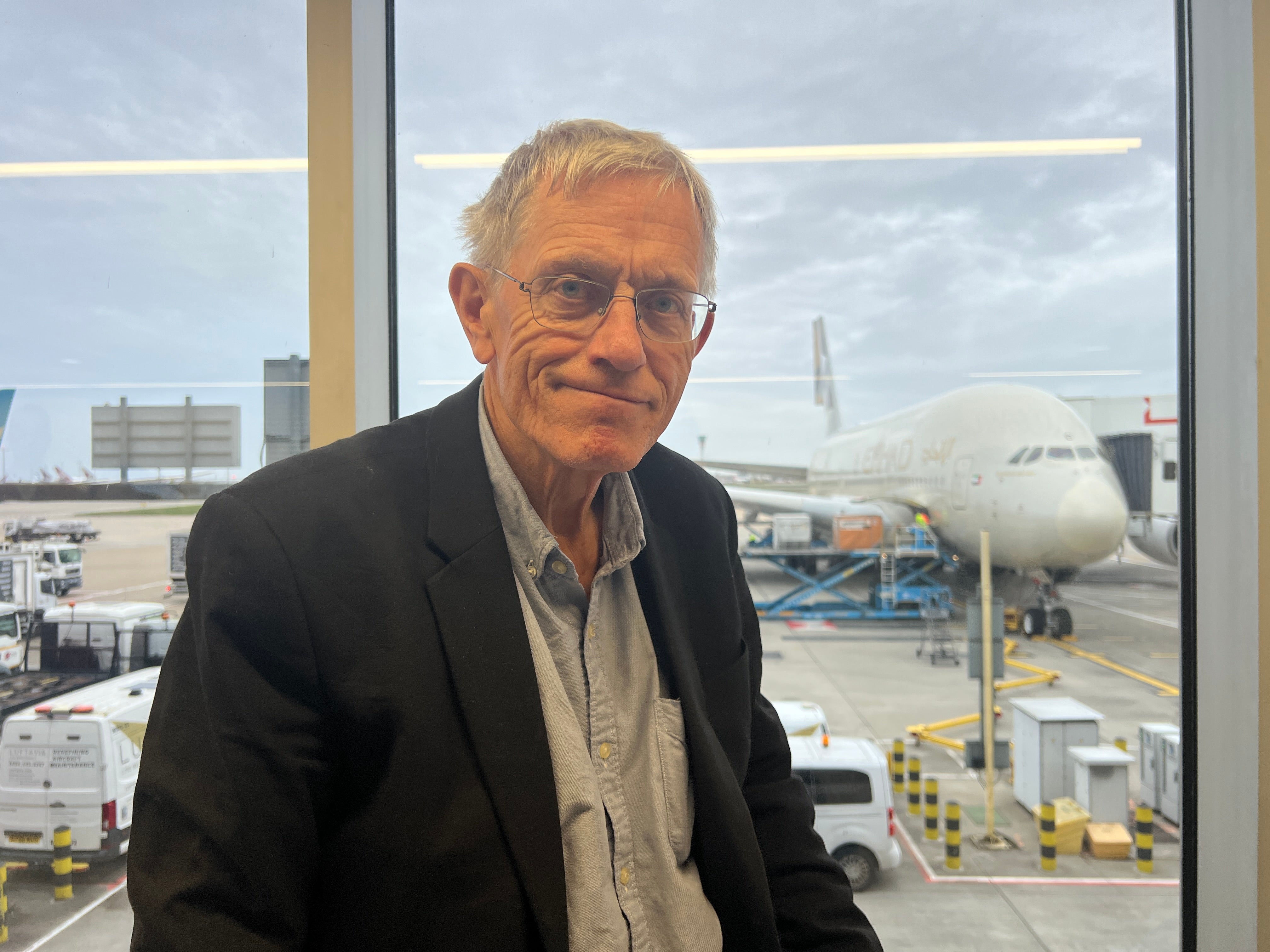
With about one-third fewer passengers than normal, Terminal 4 feels empty and progress through the eGates is swift. I find a café for my first decent cup of tea in weeks.
I ask the server: “If a normal day is 100, how busy are you now?”
“Right now? Ten.”
Aviation cannot carry on like this for long.
Read more: Heathrow Terminal 4 loses third of passengers as Iran war leaves airport empty