BTN Exclusive with Josh Littman – Appointed EMEA Development Lead at Langham Hospitality Group | News


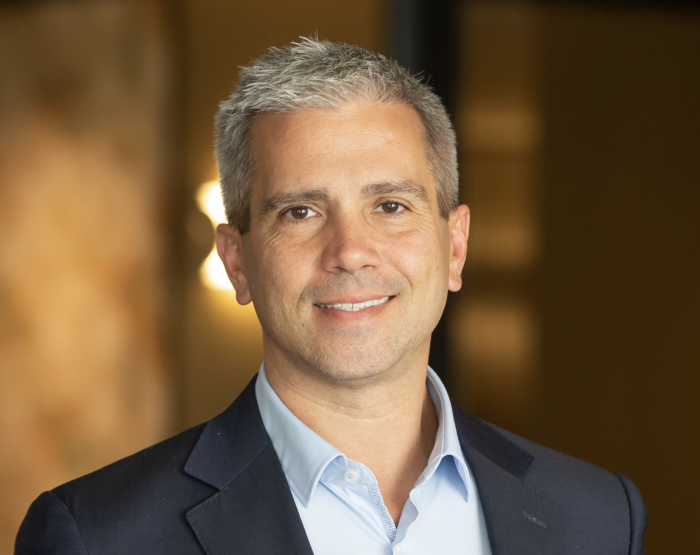
Langham Hospitality Group has appointed Josh Littman as Head of Development – EMEA. Based in London, Littman will lead the Group’s expansion efforts across Europe, the Middle East and Africa, with a focus on securing new hotel and branded residence contracts for The Langham Hotels & Resorts, Cordis Hotels & Resorts, Eaton and Ying’nFlo.
BTN recently had the opportunity of putting several questions to Josh as he takes up his new position within the company.
“The opportunities we’re seeing across the EMEA region continue to strengthen as owners and developers increasingly seek brands with clear positioning and long-term relevance,” Langham Hospitality Group CEO Bob van den Oord said. “With landmark openings such as The Langham, Venice and The Langham, Diriyah already helping to build momentum for the Group across the region, Josh’s broad range of experience, which extends across the luxury, upscale, resorts and branded residences segments, makes him exceptionally well placed to help us capitalise on these opportunities. His track record of working with owners and investors across a wide range of projects and markets will be a major asset as we expand our portfolio.”
BTN recently had the opportunity of putting several questions to Josh as he takes up his new position within the company:
1 Congratulations on your appointment. What attracted you to Langham Hospitality Group at this stage in your career?
Thank you. I am thrilled to have joined Langham Hospitality Group, and the more I learn after having joined, the more excited I am to help grow the group’s portfolio. The Langham has such a strong and well recognised foundation of heritage and timeless luxury, with locations in some of the biggest outbound feeder markets in the US and a significant presence across the APAC region.
Born in London 160 years ago, our European footprint is very exclusive for now, anchored by our iconic London hotel and soon to be joined by The Langham, Venice next year. With an exceptional new project underway in Saudi Arabia, we see Europe, the Middle East and Africa as a wide-open territory, rich with possibility. For developers, that means the rare opportunity to help shape a legacy brand’s next chapter across underserved, high potential markets. We bring a strong foundation, a long-standing reputation, and a proven track record, paired with abundant room for growth.
2 Langham is one of hospitality’s most iconic names. How do you balance preserving the heritage and DNA of the brand while ensuring it continues to innovate and remain relevant to new generations of travellers, residents and owners?
The Langham, London was unabashedly grand in a classical sense when it first opened in 1865. With hydraulic lifts and running water in every room, it was also among the most sophisticated structures of its time. Since then, the group’s DNA has included that fusion of classic beauty with forward-thinking ideas. We intend to continue that spirit in ways that appeal to contemporary tourists and residents. Honouring our past doesn’t mean staying still; rather, it means building unique experiences for the future on the foundation of our past. Technology is one area in which the group is heavily invested, particularly in AI. We are doubling down on this new technology which will not only allow us to better understand, anticipate and respond to our guests and their journey through the system, but also help us quickly lean into the future as the industry and world, adapt to this new frontier.
3 What key trends are currently shaping hospitality development across Europe, the Middle East and Africa?
Demand is the primary driver of hospitality development. The trend is toward leisure-led, experience-first hospitality, with wellness and culture also driving growth. Hybrid work and ‘bleisure’ travel have normalised longer stays, so branded residences are also on the rise. Major events and mega-projects are catalysing pipelines, while intra-regional travel is strengthening.
4 Which EMEA markets are you most excited about, and where do you see the strongest opportunities for expansion?
EMEA is an open field for us and represents an amazing opportunity for the group as a differentiated product with a robust global presence, operating platform and strong brand recognition. In Europe, the past few years have seen significant investor interest in southern Europe and the Mediterranean, both in urban areas and, more interestingly, in the resort space, which is a strategic focus of ours. In the Middle East, again, it is wide open for the group now. We are a fresh yet familiar face that appeals to investors, owners and developers. We absolutely want to be in the key urban and resort markets across the wider region. The same applies to Africa. Locations in North Africa, such as Morocco and Egypt, represent obvious opportunities to grow our group’s presence, as do some of the more developed markets in West, East and Southern Africa, as well as Indian Ocean destinations such as the Seychelles and Mauritius. Although luxury is the obvious play across the region, there is a significant gap in the market for innovative lifestyle concepts, and both our Eaton and Cordis brands are ideal for conversions.
5 How important will branded residences be to Langham’s development strategy, and what are owners looking for from a hospitality brand today?
The Langham Residences offers owners an exclusive opportunity to invest in The Langham lifestyle. Our Residence philosophy mirrors that of The Langham Hotels and Resorts – elegance in design, innovation in hospitality, genuine service and captivation of the senses.
Research has shown that branded residences command an uplift in value as they offer a trusted name, first-class facilities, consistently high-rated service and security, and assurances that are difficult to match in a non-branded environment. Owners are given access to the services and amenities provided by our hotels, as well as special benefits at all properties in our global portfolio through an exclusive Residences programme.
It has become more challenging to develop stand-alone luxury hotels, given long construction timelines and rising costs. Incorporating other mixed-use components, such as residential, can be crucial to making the economics work. Fortunately, the group is heavily invested in branded residences, which are an increasingly important part of our future growth. It is not just a matter of throwing a brand on an apartment or villa and selling it for a premium. There must be a certain level of trust and brand recognition for developers to be confident in their ability to sell units to future buyers. The Langham benefits from its 160-year legacy and hotel presence in key buyer markets around the world, and developers see our early-stage growth in the region as an opportunity to secure market share from more saturated brands already present.
6 How do you assess the opportunities emerging across Saudi Arabia, the UAE and the wider GCC?
The GCC offers significant growth opportunities for LHG, although each market has its own unique characteristics. While Dubai is one of the more mature destinations from a hotel development standpoint, many earlier-generation hotels are coming to the end of their contracts or physical lives, creating interesting new areas to explore. Obviously, there are always exciting new developments popping up across the Emirate, like Palm Jebel Ali, and we will certainly be pursuing these for both urban and resort opportunities under a few of our brands. Abu Dhabi has taken a more measured approach to growth but has really picked up the pace in recent years, and we see some wonderful projects there where we would love to introduce our brands, again in both urban and resort contexts. RAK has been intently focused on resort schemes for quite some time, and as the area continues to evolve, we see ourselves as a great candidate for prime projects in that market. Saudi Arabia is perhaps one of the most exciting focal points for hospitality and tourism growth in the region, and we already have an iconic project under development in Riyadh, which we are very excited about. We are also looking at opportunities along the Red Sea, in Jeddah, and in Mecca. We would love to have a presence in other key markets across the GCC. What’s important to us is to partner with established firms experienced in developing hotels with international brands. Although it would be great to plant flags in the most mature destinations first, we are opportunistic and look at every deal on its own merits. If it makes sense, is a good fit for the brand, is with a trusted partner and adds both strategic and financial value, then we will pursue it.
7 What differentiates The Langham, Cordis, Eaton and Ying’nFlo in an increasingly competitive marketplace?
Alongside our flagship The Langham Hotels & Resorts, the group includes Cordis Hotels and Resorts, which focuses on locally inspired, wellness-driven experiences; Eaton Workshop, a mission-driven lifestyle hospitality brand known for its commitment to social and environmental causes; and Ying’nFlo, a modern, select-service concept designed for a new generation of travellers. Each of our brands is completely unique, so there is something for everyone in the LHG portfolio. By always looking ahead, LHG remains relevant across all our brands. Examples of the Group’s innovation include our early and effective implementation of AI, sustainability commitments, in-house academies for optimal team development and so on.
8 How are sustainability, wellness and technology influencing development discussions and project design?
Sustainability, regulation and economics have converged. The EU Green Deal, CSRD and tighter national codes are driving design, not just operations. Investors expect certifications like LEED Gold/Platinum or EarthCheck alongside embodied carbon baselines. Adaptive reuse is accelerating to cut carbon and planning risk. They say that the greenest building is a building that already exists, and our next two big launches, Bangkok and Venice, are both heritage restoration projects.
Wellness has moved from an amenity to an expectation. Hotel gyms and wellness facilities are no longer a guest afterthought, so when designing a property, our wellness offering is always a major consideration. Functionality and aesthetic must both be considered. The Langham, Custom House, Bangkok will be the first hotel in Asia to utilise TechnoGym’s sophisticated new sandstone collection, and the visual impact will be significant. This will be one of the chicest gyms the world has seen.
Our chairman has set us a target of net-zero environmental impact by 2045, and we are actively pursuing this through EarthCheck certifications, a benchmarking programme, sustainable sourcing efforts, waste management, and so on. Such initiatives are not only good for the planet but will have tangible benefits for our business.
9 Looking ahead five years, how do you expect the hospitality and branded residences landscape across EMEA to evolve?
Based on recent trends and what we have been observing in the market, I think we’ll see continued growth in the European resort space (beach, mountain and countryside), many of which will likely include some form of branded residences. Compared to the US, for example, the majority of existing resorts are un-branded, and many are owned by smaller groups or are family-owned/operated. International capital has been chasing many of these deals, and they form a significant portion of on- and off-market deals we have been seeing. Conversions (i.e. from offices) have been on the rise, and our brands like Eaton and Cordis are ideal candidates for these opportunities. In the Middle East, markets like Dubai are always sought-after destinations for brands and developers, especially in the branded residence space, but given the robust offering of existing brands, we are seeing a trend towards appealing to new players and concepts to differentiate their projects. We are also seeing exciting opportunities in Abu Dhabi and Saudi Arabia. Egypt is another market with a number of high-profile projects, including those in and around Cairo, on the Mediterranean coast and along the Red Sea. Developers in these markets are looking for well-recognised brands that will appeal to international markets and that have a robust system they can plug into. LHG benefits from this, and our lighter existing footprint means our properties will be unique and more special, a factor that is increasingly important to developers.
10 What would success look like for you and Langham Hospitality Group in the region by the end of this decade?
I would love to see us sign at least 10-15 deals over the next 4-5 years across the region, including having a presence in two or three major European gateway cities and one or two iconic resort locations as a complement to the upcoming The Langham, Venice which is expected to open in 2027. I would also love to see the introduction of our brand, Eaton Workshop, which would be an amazing fit in culturally vibrant markets like London, Lisbon, Berlin, Paris, Barcelona, Copenhagen, etc. In the MENA region, it would be wonderful to open an urban and resort hotel in Dubai and Abu Dhabi, to complement the exciting The Langham, Diriyah Gate project.
A wholly owned subsidiary of Great Eagle Holdings Limited, Langham Hospitality Group (LHG) is a global hotels, resorts and residences operator with a family of distinctive brands that include The Langham Hotels and Resorts, Cordis Hotels and Resorts, Eaton and Ying’nFlo. With over 40 hotels, resorts and residences in operation or development, LHG has an international footprint that extends across Asia, Europe, North America, Australasia and the Middle East. The group takes its name from The Langham, London, Europe’s first Grand Hotel which for 160 years has been the pinnacle of sophisticated hospitality. The property’s philosophies are reflected Group-wide through inspiring design, cutting-edge innovation, sincere service and an unwavering commitment to building great memories. For more information, visit LanghamHospitalityGroup.com.