Purpose, Profits, and Why Small-Group Tours Are Booming


Subscribe Apple Podcasts | Spotify | YouTube | RSS
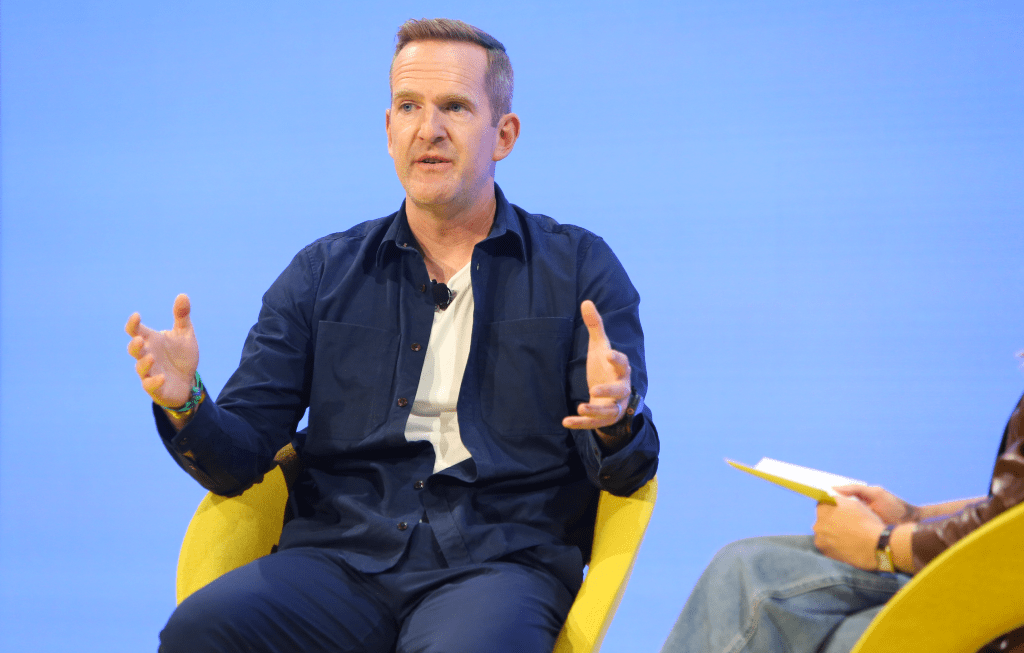
Intrepid Travel is proving that you can build a mission-driven travel company and still be more profitable than ever. In this Skift Take Sessions episode, Wil Slickers tees up a Skift Global Forum conversation moderated by Skift Editor-in-Chief Sarah Kopit with Intrepid Travel CEO James Thornton.
Thornton breaks down how Intrepid uses a balanced stakeholder model and its B Corp framework to keep value in local communities while delivering an outstanding customer experience. He explains what is powering growth right now, from baby boomers chasing immersive experiences to younger travelers prioritizing trips over traditional milestones, and why the American market is the next big unlock through shorter, more flexible adventures.
The conversation also hits a refreshingly honest moment on AI, where Thornton admits the industry is still figuring out “what on earth are we going to do,” while Intrepid tries to protect what makes its product work: human connection.
More from Skift Takes Sessions:
Want to access the full video of these sessions? Become a Skift Pro Subscriber today.
We’d love to see you at our next Live Skift event. Learn more here to see where and when you can see these sessions in person with other industry leaders just like you.
Watch This Conversation
Transcript of This Conversation
This transcript is generated by artificial intelligence.
All right, Sarah Kopit, Editor-in-Chief. Here we are. How are we doing, my friend?
I am good, I am good.
It is summer here in New York City, and that is, it is a special time for all of us, so I am great.
I was gonna say, you seem happier than normal. Maybe just more vitamin D, you got a little bit of a walk-in. I love it.
Yeah, wearing a T-shirt, I’ve got flip flops on.
Like, the world is happy.
I’m here for it, I’m here for it. Well, last week we got to have Seth Borco on the show and it was our first time getting to record together and I told him, you know, this is kind of weird being on the other side with you. So it’s been cool.
For all of you who don’t know, and I know Seth kind of said this, like when Seth and I do our podcast, Wil is like lurking around in the background and like sending us little notes and love notes in the group chat, you know?
And so here he is. It’s great to be able to see your smiling face.
Of course. Yeah, I love giving you guys a live audience, you know, live commentary around the podcast. It’s always really good.
You guys get me. There’s been multiple times when we were recording that show and I have a smile on my face while I’m listening to you guys go back and forth because the banter is just so good. You guys are a great dynamic.
So for all the listeners of this show, go listen to that one. Just go listen to that one. Yeah, go listen to that one.
1:16
Balanced Stakeholders
But today we’re actually talking about the session that you did at Skift Global Forum with James Thornton, the CEO of Intrepid Travel, which I’m super excited about because we’ve done airlines, OTAs and hotels on the show. And this is the first one.
I’m an outdoorsy guy. I’m an adventurous person. So this is a cool one to do.
And I really love the session. And I want to set you up for the kind of first kind of question I had, which was kind of one of your first questions to James as well. And basically, James says that Intrepid’s secret is a balanced stakeholder approach.
And he credits the B Corporation framework as a kind of a credit to that success. And I want to get your take because, is that repeatable?
Do you think that is available for every company to be like that, to have that balanced stakeholder approach, to take care of the local economy, to take care of the investors, or make profit for investors and shareholders?
No, no, I don’t. I think that it is where James and Intrepid are. They have a unique product and the product fit for that is really, really high, I think.
I think that people like go on Intrepid travel trips, people who spend money with that company and that type of company, I think are very willing to hand over their dollars and they think about a lot of the environmental and other good works that
Intrepid and companies like Intrepid do. And so, I think that for, if you have that product market fit, yes, like it is possible.
And I do, and to give Intrepid credit, they do a lot of work on the back end to incentivize a lot of these things, which is hard and it’s risky and it takes a lot of guts from a corporate standpoint to actually do it.
But as far as like all companies, especially like publicly traded companies that have a fiduciary duty to shareholders, no, I don’t think that it works for everybody.
Do you think there’s more room for this in hospitality and travel?
Or do you think like tour operators, because I did hear your comment on this session where they are a tour operator, they have the ability to work with local people, to partnership and do other things that are around local sustainability of the areas
that they’re in. But hotels, you know, like, can they do that because it’s a big, costly asset while they’re getting squeezed.
Yeah, I think that travel probably is, like if you just think of the vast landscape of the type of businesses out there, travel probably is better placed than most to do these type of things.
But to your point, I think it’s very specific to what they’re doing, where and how they’re making their money. And so to answer your question, could travel do more? Yeah, yeah, they absolutely can.
I mean, but the thing that I think needs to happen, and this is me just being like armchair policy expert, I really think it’s the place of, I think the governments need to step in. And I think they can, and I think they should.
And I don’t think that many companies will kind of do the things that Intrepid did voluntarily without, not just a push, but a mandate, a policy mandate from their governments.
Yeah, governments, you gotta love them. Gotta love them.
Yeah, I’m writing the Trump Effect newsletter right after this. That’s next on my list, right? Things to do today.
Yeah, no, but I agree with you.
I agree, if they got a bigger push, it would be a lot better.
4:56
US Market Strategy
But James also kind of basically says that Intrepid’s biggest challenge in the US is perception, which I think you and I have talked about a lot with American situations in travel and hospitality, along with Europe or Asia or anywhere else.
And people hear tour and they picture a rigid, flag-following experience. What did you hear in his answer about how Intrepid is repackaging the product for Americans, especially around the shorter trips and the freedom on the itinerary?
Yeah, I mean, I thought it’s super interesting. I mean, we Americans, we just don’t do these very much. It’s such a European and an Aussie thing to do.
But the fact that they all do it means there must be something there. I mean, I will personally admit I have never taken a group trip. I’ve not done it.
I think my mom took one to Israel. She and a bunch of her lady friends, they did the thing, they went to, they did the thing there and she loved it and it was great.
I think that, like you said, much of my perception and I think other Americans’ perception is exactly that. That is like the only way that they think of these group trips.
So I think that James is right that A, the perception does need to change in the United States if things like Intrepid are going to grow and shorter, shorter activities. It’s so funny.
I mean, it gets right to the point of that Europeans and Aussies and such are just horrified by the amount of vacation time we get, which is like none. So yeah, they have to do shorter trips. It’s like, can I go for three weeks to Bali?
No, I cannot. No, I cannot. Most Americans cannot.
Right. Very few, almost none of us. So yeah, doing those things and giving people a little bit more independence on the itineraries, all of that stuff, it sounds good to me.
It’ll be very curious to see their numbers, when and if they report them to see if they’ve been successful, but it’s also really interesting here in New York City. Intrepid is like everywhere in the advertising now.
Like when I take the subway, like I see their adverts and stuff up, plastered all over the top. So that push is real and it’s real here. I don’t know if you see it out in Denver, but here in New York, they’re everywhere.
Well, I was smart of them to do that right before Skift Global Forum.
So as all the attendees are coming into the forum on the subway, they’re all seeing it everywhere. So I thought that was really smart. I haven’t seen anything out here in Denver, but I’m a little bit out in the suburbs.
So just less advertising out here for us, I guess.
7:43
AI Adaptation
But we can’t go a podcast without mentioning AI. So I have to pivot into this because I actually loved what James said in your response to it because it was an honest response.
So for the listeners, you asked about GEO and AI, and he basically admits that Intrepid was not doing much back then. Again, this was also, what, six, seven months ago. And then he says the world has changed in six months.
So this was six months prior to that. What does that tell you about how quickly travel leaders are being forced to adapt or adopt AI, especially even like the ones who sell the human connection as Intrepid does?
Yeah. Well, it’s funny. I mean, I think if I’m, if I’m remembering correctly, I’ve interviewed James many times, but for, I interviewed him two years ago at Global Forum, and I asked almost the exact same question.
He’s like, no, Sarah, we are not doing this. Like, this is not our jam. Like, we are not a tech company.
Blah, blah, blah, blah, blah, and then he said, you asked me this question, and I was kind of wrong. Like, I was wrong because now we are using it. And it was like all of, eight months later or whatever.
And even now, I think that, yeah, the speed of adoption for all of us is, I think something that none of us have seen in our lifetimes. I’m old enough to remember like the dawn of the internet. I got my first job in 1999 and saw that boom and bust.
And like the adoption of the internet in business, took a decade at least. And even now, even now, if you leave the urban centers, I mean, people are using the internet, but not necessarily.
Like sometimes I talk a lot about how I have a house up in the Catskills, like I went to go get my haircut up there and I went to try to look for the Haircut Places website so I could book. No website. I had to make, I had to call them.
I had to call them. Wow. I had to call them and talk to a human.
They did a nice job though, nice cut. Anyway, so yeah, so even then, but like the thing with AI is that it’s been exponentially faster. And it really does make sense too.
Like when I first asked the question, I think we might all have been thinking like, what are we talking about with AI? Like robots and cyborgs? Like what’s going on here?
But now I think we’re all learning for businesses, especially high touch human based businesses. The real first entry into AI is on the back end.
It’s business processes, like repeatable processes, things that can make the pure play business side of like making money and having a business a lot easier.
Yeah, 100 percent. When you first asked him, it was almost fiction still. It’s actually kind of like, it’s here, it’s here.
No, it’s a really good point. Well, there’s a lot of good listen to or listen for moments from this session. For the listeners, I highly encourage continue all the way through.
It’s a worthy session.
Like I said in the beginning of the episode, we’ve done hotels, we’ve done airlines, and we’ve done the OTAs on the show, which they’re big, they’re important, but I also think this is a missed category a lot of the time in travel and hospitality.
I’m really excited for this session. You guys did a great job on stage. Sarah, thanks for joining me on today’s podcast.
Thank you, Wil.
11:12
Purpose Driven Growth
James, thank you so much for being here with us today.
It’s awesome to be in New York. It was great.
How long have you been here for?
Just over a week. Always fun to be in New York in September.
New York is a nice rainy day. Today’s panel is about having change good spirits in a business. Intrepid seems to have actually figured out the magic way to do that.
I think late stage capitalism hasn’t always done a very good job of being a good citizen of the world and making money.
How do you guys do it? How do we do it? Well, we’ve been doing it for 36 years, so that helps to start with.
Look, I think the key thing with Intrepid is it’s all about trying to ensure that we balance local communities and make sure as much money as possible stays in the destination, try and have as limited impacts as we can upon the local environment, try
and benefit our people as much as we can. We have more than a thousand staff shareholders at Intrepid who own 10 percent of the business. Try and provide amazing experiences for our customer.
But you do see that a lot of businesses just solely focus on that customer proposition.
Yeah.
That’s what all of the business books would tell you, just focus on the customer. But for us, unless you have that balanced stakeholder approach, and that’s what B Corp methodology has done for Intrepid. We’ve been a certified B Corp since 2018.
And that just model provides us with a framework to be able to make sure that we can grow a business and perform really well. We want to generate great profits for our shareholders.
But we also want to make sure that we’re good citizens and we’re great for local communities and great partners. Because if we don’t do a good job with that, it’s just not going to be a win-win all around.
So if I’m in the audience and a leader here, I’m like, well, James, yeah, okay, fine. You can do this because you are a tour operator. But I’m not a tour operator.
I’m an airline or I’m a hotel. What advice would you give or what would you say to that? Do you think anyone could make money and be a good world citizen?
I think so.
I really do. Sarah, look, I get it. We have a natural advantage.
We’re a tour operator, so we can really embrace the work that we do with the local communities. We can make sure that that money stays in destination as much as possibly can.
But remember, one of the biggest things about for Intrepid or for any leader in this room, you want to be able to attract the best possible people into your organization. If you don’t get amazing people, you really can’t do amazing things.
One of the things we see at the moment is that people increasingly want to buy from and work for companies that have really good credentials, that are good corporate citizens in the world.
There’s a reason why Intrepid is double the size of the double our size of revenue from before the pandemic.
It’s not because just people want experiences, it’s not just because they want to buy from sustainable companies, it’s because we’ve got amazing people driving great results. The way in which we attract amazing people is for standing for something.
I think more and more companies that can stand for a purpose and have a reason to exist beyond just the core centrality of what they deliver.
That doesn’t matter if you’re an OTA, if you’re a hotel, you’ve just got to have a proposition that appeals to people and appeals to customers. When you do that, a certain magic happens.
The other thing I just say, Sarah, is that people often assume that because Intrepid is a kind of for-purpose business, that we don’t like making money and that money isn’t important. I can tell you now, I love making money. Yeah.
It’s really important to Intrepid. We’ve got a thousand staff shareholders. I want to make sure I get a fantastic return for their investment.
We do that by making sure that we deliver great experiences, great purpose results. But Intrepid’s profits this year will be up 35% year on year. We’re more profitable than we’ve ever been before.
So I believe that many companies can embrace it, it can be a point of difference and you can really engage your people at the same time. We need to engage people.
So I’m sure there’s a lot of nuance as to why you’re up that much this year. But I mean, tell us a little bit, why do you think that happened?
Why did that happen? I think it happened because we’re just really sticking leaning into our core values. There’s certain market fundamentals that are absolutely in our favor, that desire that people increasingly want experiences.
There are two very fast growing parts of the market at the moment. Baby boomers, 50s, 60s, kids have left home, paid off the mortgage, they want to get out and see the world. They want to do so in the safety and security of a group.
They might be moving away from maybe more traditional large coach touring, for example, and want those more immersive experiences. They’re the ones with the money. The second ones are the 20s, 30s, first-time travel experiences.
The reality is that home ownership is probably out of their ability right now. They want to spend their money on experiences. They want to have great trips.
They want to get home, show them off on social media, tell their friends about them. So we’re growing a very strong top-line way of top-line growth, and then the ability for us to open into new destinations.
We’re opening offices all around the world. The movement of Caucasians into places like Scandinavia. We’re just about to open our 32nd office in Central Asia with an office for the first time in Uzbekistan.
So the ability to open new offices helps too. And I think the third thing for us is the ability to change the way in which people go and travel. At the moment, if you traditionally travel on a tour, you have to go for a longer period of time.
We’re just about to launch in a couple of weeks time, new Short Break Adventures, which is 30 trips, average duration gonna be three days.
Those unique experiences designed just for the American market that customers can go away, have those wonderful Intrepid experiences, but do so in a shorter period of time.
So a bit of innovation, a bit of market growth, and a bit of people coming our way.
16:49
Engaging US Travelers
So let’s talk about America a little bit.
How many of you in this room have been on an Intrepid trip?
Yes.
Like not very many. What’s up with the United States? Why haven’t they got on board yet?
I think there’s still a bit of a myth around touring and that exists.
There’s billion-dollar incumbent tour operator brands here that might be potentially a little bit more traditional.
Now, one of the things that Intrepid is doing a lot at the moment, spending a lot on our brand advertising, you might see some of our adverts pop up on Subway Network.
I was going to say, I thought of Subway coming here.
You might see us doing partnerships with great brands like the Seattle Sound, the Women’s NBA team up in the Pacific Northwest.
So we’re just trying to associate and get our brand name out there more to bunk the myth of what small group touring is about. The reality is still a lot of people don’t know it. They have perceptions of what it will be like traveling in a group.
I think also making sure that the trips are tailored now for the American market, that just being able to go away for 7, 10, 14 days at a time is a bit trickier, and that’s hence why we’ve done the short break adventures.
Yeah, Americans can’t do that. Yeah, we don’t get enough vacation. So what do you think is the key to the American market?
Short trips and shorter trips, what else?
Yeah, so shorter trips, it is going to be about the telling of the narrative of our story, about that understanding of the balance between what it is to go on a small group adventure trip, that you meet a group of like-minded people.
They typically come from US, Canada, UK, Europe, Australia, New Zealand. And so telling that story about what a trip experience is like.
And I think people think of touring as a person, a T-shirt, a flag and a hat, and they’re going to take you around from place to place, moment by moment, and you just get no freedom and flexibility.
A really important part of an intrepid experience, Sarah, is about making sure you have freedom and flexibility. What Sarah likes when she goes on a trip experience might be very different to what James likes.
And we have expert tour leaders running a thousand trips around the world who are natives in their destination, who are able to provide you the most unique experiences in Istanbul, as you got to experience earlier this year.
They can take you to the best coffee shops. They can take you to the best restaurants. And I think that’s the key proposition that we have to explain, that it isn’t the traditional tour.
You have the freedom and flexibility. It’s a good value proposition as well. We’re talking about cost of living crisis.
We know luxury markets performing well, but the average price for an Intrepid trip is $2,500. So it’s a fantastic way to get out, have good experiences, make your money go as far as possible, and make sure that money stays in local communities.
So it’s kind of a win-win all around, we think.
19:25
Experience First
If you have a question for James, stick it in the Slido app and ask away.
One of the questions that I saw here was, does the US care about sustainability?
Well, we’re growing at 35% year on year in the US market. It’s quickly becoming our largest market globally. So some people care.
I think if they didn’t, they wouldn’t be booking. I think the most important thing, you don’t go and book a trip with Intrepid because you want sustainability. You book a trip with Intrepid because you want to have an amazing experience.
Let’s face it, people are going on holiday. They don’t want to be lectured to about plastic, they don’t want to be lectured to about the environment. But when they get there, they start to get a better understanding of the destination.
Because we use local restaurants, because we stay in local accommodation, because we use local transport, we’re able to tell the narrative about perhaps a slightly better way of travel, and to see how their tourism dollars benefit local communities.
But Intrepid has a net promoter score of 83. That tells me that our product is absolutely outstanding. The 99.5 percent of people have an absolutely amazing time.
So you’ve got to have an amazing customer proposition first and foremost, but then the delivery of it.
I think, look, the number one thing as well is that one of the reasons people repeat travel with us is because of those sustainability and responsible travel credentials. That’s why people keep coming back.
You’ve got to provide an amazing experience first and foremost.
Yeah, that’s really interesting. I know why that person asked the question because I don’t feel like that has permeated the US space like it has in Europe.
Yeah, Europe is the leader of it still today. The thing with Europe at the moment is that Europe is leading when it comes to legislation.
Yeah.
At the moment in Europe, you can get penalized for what you say, and soon out of Europe, you’re going to get penalized for what you do, and you’re going to have to be really accountable towards your brand messaging and the stories that you tell and
your purpose credentials. Obviously, the US is at a bit of an inflation moment, but we still believe that we lean into our values, and we’re seeing this kind of emergence and growth.
Intrepid next year is on target to become a billion-dollar adventure travel company. More than 30 percent of those customers will come from the American market. The American market is growing at 35 percent.
So for me, it’s an awareness proposition, it’s getting the understanding out there, and it’s debunking the myths of touring. We’ll do that by more and more exciting partnerships like the Seattle Sounds and other areas within the US.
You mentioned that the trips have like-minded travelers on them. How do you make sure that that happens?
Well, ultimately, you can’t. I mean, that’s just the trick. You go about presenting your brand into a certain way, into a certain manner, and as a result-
You don’t ask people, you don’t do a quiz or a profile.
We don’t do a quiz.
Maybe we should. Maybe we should be gamification. It is one of the key questions we get, what will be the makeup of our trip?
We share broad demographics, particularly around the family trips. It’s particularly important for people with kids to be able to travel with kids of similar ages. But honestly, it’s a mindset Intrepid.
It doesn’t really matter if you’re 18 or if you’re 80. What you do is you start the trip and you’ve got this strange awkward meeting to be honest with you, where everyone’s like, hi Sarah from the US and James from Australia.
You finish the trip in seven days having shared similar experiences through the food, through the people, through the culture, recognize that people have more similarities than they do differences, and people go away as very often great friends and
great connections. I still got WhatsApp group, WhatsApp groups going from trips that I had in China in April, that I had in Western Australia this time last year.
That connection, that community, that curiosity, that’s what we’re marketing to and that’s what 99.5 percent of our customers are like.
Another question from the audience, what’s the biggest shift you’re seeing in traveler behavior right now?
We’re seeing a shift towards, I guess people just traveling multiple times a year. The average Intrepid traveler only travels once every 630 days.
You think about the life-changing experiences that we provide, those iconic moments of walking the Inca Trail to Machu Picchu, or going to Everest Base Camp, or the cooking trip that you might do through Vietnam.
The reality is that people do a variety of different experiences. An Intrepid traveler is also a traveler who might go and sit and relax on a beach for a week. They might go and take some city breaks.
They might do some adventure weekends traveling domestically. The challenge for Intrepid is to make sure that we’re a relevant part of everyone’s life all the time. That’s why we started to expand into areas like accommodation.
We now have a Riad in Marrakesh. We have an Eco Lodge in the Daintree National Park and Far North in Queensland, an Eco Lodge in Tasmania, in Coles Bay.
We can stretch the brand and people can experience the Intrepid brand and the experience beyond just that life-changing 10 or two-week trip. Again, particularly pertinent for an American traveler.
It’s why we’re starting to think about things like publishing through our website, adventure.com, where we can sell amazing stories.
It’s where we’re thinking about Intrepid gear, Intrepid publishing, all ways in which we can have a relationship with a customer that goes beyond that standard trip so that we make sure that when they’re ready for that great life-changing adventure,
Speaking of some of the nuts and bolts, I’m curious.
Ask the last group if they are preparing for GEO or generative search engine optimization like you would with all these other channels that you just mentioned. Are you guys doing that?
We’re not, Sarah. I think it’s interesting. I remember you asked the question about six months ago and you came and said, what have you seen Intrepid doing with AI?
I said, we’re not doing anything with AI. We’re all about human connection. Well, clearly six months later, the world has changed.
We’re thinking about it in terms of three things. One, what on earth are we going to do? Two, the threat around it.
And three, the actual challenge and opportunity of it. And so for Intrepid’s perspective, we’re thinking about it in terms of productivity. We’re thinking about it in terms of speed and improving the customer experience.
But we are a first and foremost human connection business. So we want to be connecting people together as much as possible and getting them off their phones.
I think that this might be one of the most honest quotes from a CEO on the stage today about the question about AI. What on earth are we going to do?
Absolutely. And you’re feeling the stress of it, the hyperbole of it. I saw Seth’s session earlier where he had the three leaders getting up and talking about AI.
It was actually excellent. It was really honest, really real, really authentic. But yeah, it’s going to be an interesting few years ahead.
25:55
Intrepidʼs Future
So this whole event we’re talking about 2030, where is Intrepid going to be in 2030?
Five years from now, it seems like an eternity, but it’ll be here.
I’ll be here in five seconds. I think the big thing with Intrepid is that we’ll become more a mainstream part of travellers’ life.
When I started Intrepid 20 years ago as a sales rep in the UK, no one would talk to me about sustainable experience for its travel. Ten years ago, people started getting interested in sustainability and experience rich.
Then we’d start to be the token person on the agenda. Now more and more people want to hear, how do I create experiences in a genuine, authentic way? And how do I deliver that sustainably?
We’ve doubled in size as a business since the pandemic. We are more profitable than we have ever been before. And we’re doing more and more amazing things in the purpose and impact space.
It’s my belief that by the time we get to 2030, Intrepid will be a $2 billion plus business. And we’ll be more and more the mainstream of the travel industry. It will no longer be seen as a niche that people do sustainable experience, rich travel.
More and more people will be requesting experiences and sustainability and Intrepid will be at the forefront of delivering those things.
Do you think it’ll move beyond tours?
Yeah, look, we’re already moving beyond tours in terms of the accommodation and publishing. Part of our strategy is leveraging our core. So important 80% of our time is spent leveraging our core.
10% of the time focused on those kind of game changing initiatives, the investment into TaylorMade, the investment into the United States market, thinking about growing those 30 offices that we have around the world to 40 or 50 locations.
But more than tours is an important part of our pillar because we spend hundreds of millions of dollars every year acquiring a customer.
We have to find other ways to acquire the customer more effectively in a way in order to do that is to stretch the brand into areas like accommodation, publishing, gear, media. And we’re having some early success of that too, so it’s good fun.
So this is like the lightning round.
I want to know what question or what number in 2026, like if you had to pick a stat, like something that you obsessively look on your phone at every day, whether it’s the stock market or the price of oil or what have you, your revenue targets, you
know. What’s the biggest number?
Well, to be honest, I’ve actually tried to become less obsessive. I think CEOs are typically strange, rather obsessive people, and I’d get really, live the highs and lows of sales numbers or whatever it might be.
And I think just as I’ve got older, trying to be more measured, calmer, continue to listen to our people and make more informed decisions.
And I reckon the more I can listen to the great people I have around me, hopefully the better decisions I can make for Intrepid.
Yeah, they try to do that too. It hasn’t really worked. Yeah, James Thornton, thank you so much.
Awesome.