
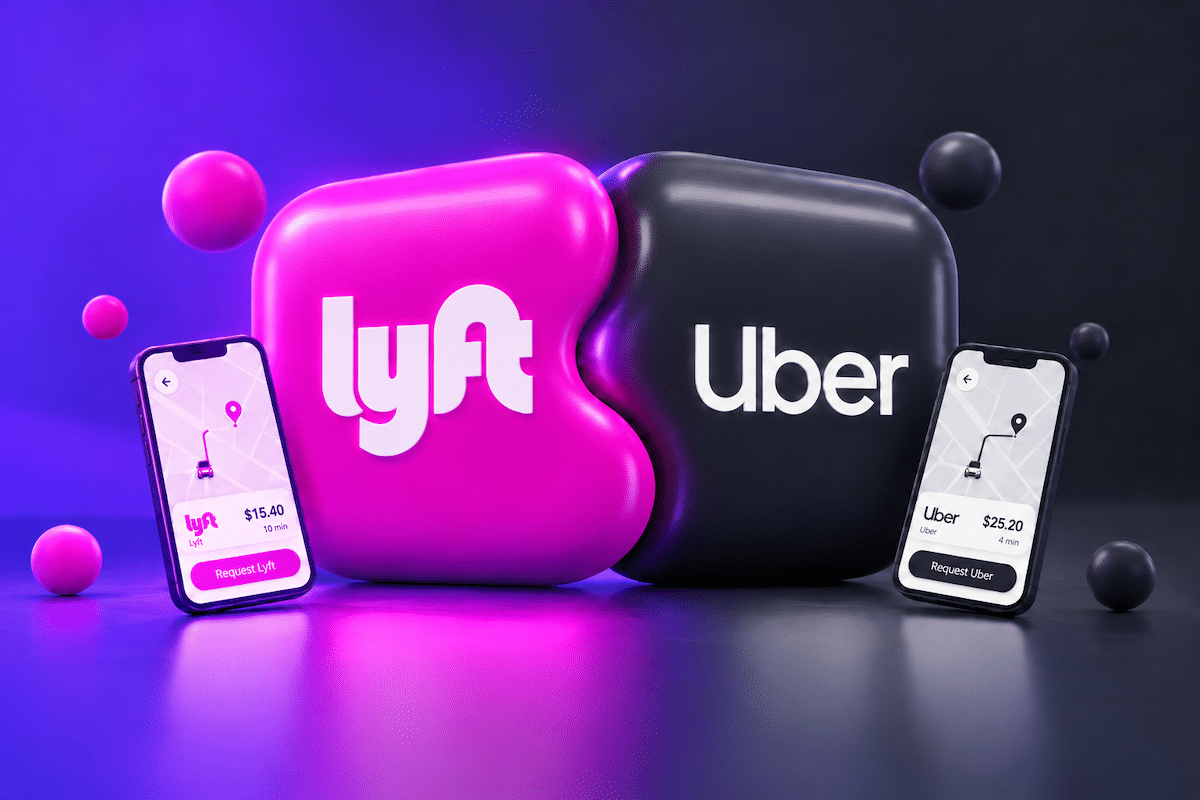
Uber vs Lyft: Use Both Apps For Best Prices & Promotions

Whether you’re touching down in a new city or putzing around your hometown, one app you’re probably opening on a regular basis is one to purchase rideshares. In many destinations further afield, Uber or Lyft is the best or safest way to get around.
So here’s Frugal Flyer’s advice, which we can give with confidence: don’t you dare be loyal to only one. Uber and Lyft price the same ride differently, run promotions at each other constantly, and pay very close attention to when you stop using them. They even have an internal industry term for it: “winbacking,” a delightful little gerund that means exactly what it sounds like.
Your smartphone is spying on you either way; you might as well make it pay. Competition is healthy, especially when you’re the one pocketing the winnings, so lets see how you can take advantage of the Uber vs Lyft situation.
Why Uber & Lyft Want to Give You Good Deals
Rideshare is a market-share knife fight. Uber and Lyft sell a near-identical product, so the levers left to pull are price and promos, and both companies pull them hard whenever one wants to grow. They often have even more competition: Bolt in the EU and legacy taxis almost everywhere.
Canada is watching the results of the battle play out in real time. For example, Lyft only launched in Montreal in June 2025, and to buy its way into the market, it has been undercutting the incumbent Uber: the Montreal Gazette found Lyft cheaper than Uber on 8 out of 10 identical rides. Economists expect prices to converge once the land grab ends. Until then, you, the rider, can burn shareholders’ equity to subsidize your forays around the city.
Montreal is only one jurisdiction where this initial rush is playing out; both apps have been in Toronto for years. Even in mature markets, the competitive gap on pricing never fully closes. A 2025 study of more than 2,200 identical trips in New York City found Uber and Lyft prices differed by about 14% on average for the exact same ride, in either direction. On a $45 airport run, that’s about $6 for tapping a second app.
How to Get Uber & Lyft Promos for Canadians
There are three easy steps to getting cheaper rides on rideshares, none of them hard.
First, install both apps. Lyft now covers most major Canadian metros: the GTA, Ottawa, Vancouver, Calgary, Edmonton, Winnipeg, parts of Southwestern Ontario, and (as of 2025) Montreal and Quebec City. Uber blankets nearly everywhere else.
Then you simply compare fares. It takes 30 seconds, and since the two apps often surge independently of one another, it routinely saves a few dollars. Of course, if you’re leaving a crowded venue after a concert or calling in a rainstorm, prices will be elevated in any case.
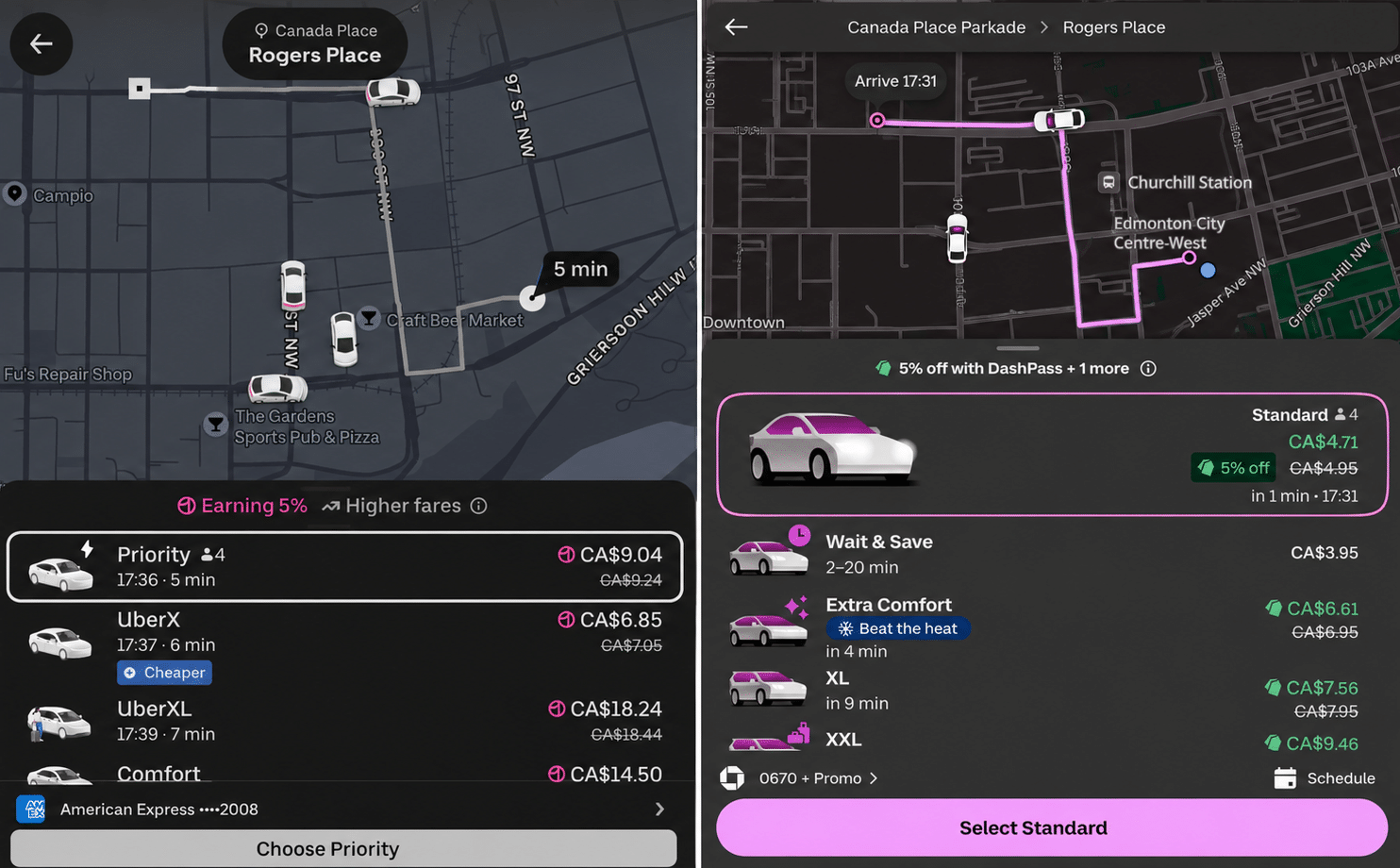
The magic is in step two, where you can take advantage of win-back offers: let one app gather dust now and then. Both companies track how recently you’ve ridden, and once you drift toward the competition, the win-back offers start rolling in: 25% off your next few rides, flat-dollar discounts, the works. Uber sometimes goes so far as to label these promos as “win back” in its own fine print.

Better yet, these codes are sometimes pre-loaded and pre-applied to your account. Both apps can realistically detect the presence of the other, and while nobody has a clue about what processes determine how they assign these codes, I’ve noticed that I rarely got discounts on Uber in any locale until I’d installed Lyft.
Your third step to do this is to use local versions of rideshare apps to compete with the big boys. Uber is now the dominant leader and often coasts on name recognition alone. That means they can often afford to charge more.
When I was in Czechia, I noticed Bolt fares were often much cheaper, and the cars were liveried like taxis.

Similarly, there’s an app in Brazil called ‘99’ that serves the exact same function, often for 20-30% off.
The best part is that because your mainline corporate apps are trying to divert your dollars back to their coffers, merely using or having these other apps while traveling could often land you sick deals while abroad.
Finally, don’t leave points on the table! Link your Aeroplan account to Uber, and you’ll earn 1-3 points per dollar on airport and premium rides, a $20 Air Canada flight credit for every 10 rides, and points on larger Uber Eats orders. Lyft’s answer is Hilton Honors, which earns at a rate of 3 points per dollar on Canadian rides (its new United MileagePlus tie-up only pays on US rides).
Conclusion
At Frugal Flyer, we believe in our motto to “travel more, pay less.” By using the tricks we’ve detailed and getting rideshare apps to compete for your business, we hope that you’ll be able to get better deals whether you’re stuck in the rain or hailing a ride to your dream honeymoon.