
What Will It Cost to Open a Restaurant in 2026?

Written by V. Spivak
Modern Line Furniture
 Opening a restaurant is an exciting business opportunity, but it also requires careful financial planning. From construction and kitchen equipment to staffing, permits, and furniture, expenses can add up much faster than many first-time restaurant owners anticipate.
One of the biggest mistakes operators make is underestimating the total investment required to get their restaurant ready for opening day.
A restaurant can have a beautiful kitchen, completed construction, and all the necessary permits, but without tables, chairs, and seating, it still cannot welcome dining customers.
Let’s examine what it may cost to open a 4,000-square-foot restaurant in the United States in 2026 and why budgeting for every stage of the project is essential.

Understanding the Cost of a 4,000-Square-Foot Restaurant
For this example, we’ll consider a 4,000-square-foot full-service restaurant with approximately 140–170 seats, including a dining area, commercial kitchen, restrooms, and service spaces.
The total investment depends heavily on whether you’re renovating an existing restaurant or converting an empty commercial space into a new dining establishment.
An existing restaurant may already have plumbing, ventilation, grease traps, kitchen infrastructure, and other expensive improvements.
Starting with an empty commercial space generally requires considerably more construction and infrastructure investment.
Estimated 2026 Restaurant Startup Costs
The following figures are illustrative U.S. planning estimates rather than fixed industry prices or contractor quotations.
| Expense | Existing Restaurant Conversion | New Restaurant Buildout |
|---|---|---|
| Construction and renovations | $200,000–$500,000 | $700,000–$1,200,000 |
| Commercial kitchen equipment | $75,000–$150,000 | $125,000–$250,000 |
| Restaurant furniture | $30,000–$80,000 | $30,000–$80,000 |
| Architectural plans, permits, and licensing | $20,000–$50,000 | $40,000–$80,000 |
| POS, signage, and technology | $15,000–$30,000 | $20,000–$40,000 |
| Initial inventory and supplies | $15,000–$30,000 | $20,000–$40,000 |
| Deposits, staffing, and opening marketing | $40,000–$80,000 | $50,000–$100,000 |
| Working capital and contingency | $75,000–$150,000 | $150,000–$250,000 |
| Total estimated investment | $470,000–$1,070,000 | $1,135,000–$2,040,000 |
These estimates assume leased premises and exclude property acquisition. Actual expenses vary by location, construction conditions, restaurant concept, and project scope. Avoid double-counting expenses already included in contractor proposals.
Why Restaurant Furniture Should Never Be an Afterthought
Restaurant owners typically understand that commercial kitchen equipment is expensive. They also anticipate construction costs, plumbing, electrical work, and licensing expenses.
Unfortunately, restaurant furniture is sometimes treated differently.
It is not unusual for restaurant operators to complete most of their construction, purchase kitchen equipment, and approach the final stages of opening before realizing they have not reserved enough money for dining room furniture.
By that point, much of their original budget has already been spent.
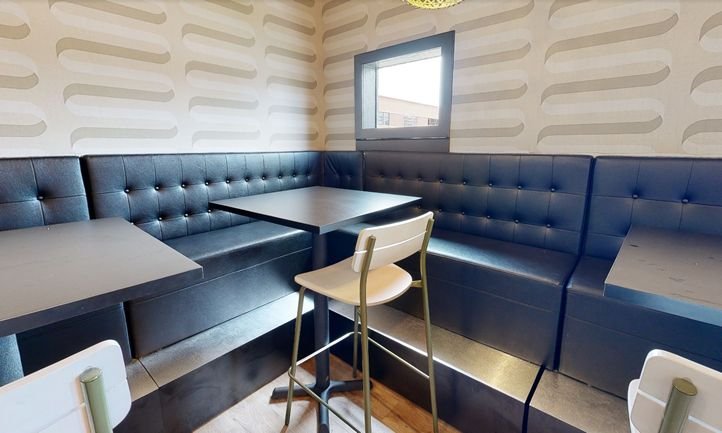
This creates a difficult situation. The restaurant is nearly ready to open, but the owner still needs restaurant booths, chairs, tables, and other essential furnishings.
For a 4,000-square-foot restaurant, a realistic furniture planning allowance is approximately $30,000–$80,000, with $50,000 serving as a useful starting budget for many projects.
This amount should be considered during the initial planning stage, not after construction is completed.
What Does a $50,000 Restaurant Furniture Budget Include?
A typical restaurant furniture package may include several product categories, depending on the seating layout and restaurant concept.
These can include upholstered booths, freestanding chairs, dining tables, table bases, bar stools, and lounge seating.
The final price depends on the number of seats, furniture dimensions, upholstery selections, materials, and customization requirements.
Custom furniture may require additional design and manufacturing considerations, while standard furniture collections can sometimes provide more economical solutions.
Restaurant owners should also account for shipping, installation, and any special delivery requirements.
The important consideration is not simply finding the cheapest furniture, but selecting commercial-grade products that fit the restaurant’s budget, design, and long-term operational needs.
Construction and Kitchen Equipment: The Largest Investments
Construction is often the most expensive part of opening a restaurant.
Electrical systems, plumbing, ventilation, HVAC, restrooms, flooring, and interior finishes can represent hundreds of thousands of dollars.
Commercial kitchen equipment is another substantial investment. Refrigeration, cooking equipment, dishwashing systems, food preparation stations, and ventilation requirements must all be considered.
This is why choosing an existing restaurant location with usable infrastructure can sometimes save owners a considerable amount of money.
However, even an existing restaurant may require costly upgrades to meet current building codes, operational requirements, or the new owner’s concept.
Don’t Forget the Expenses Beyond Construction
Other expenses are equally important.
Architectural drawings, permits, business licenses, insurance, POS systems, signage, and initial food inventory all require funding.
Restaurant owners also need to plan for employee recruitment, training, opening promotions, utility deposits, and unexpected delays.
Perhaps most importantly, a restaurant needs sufficient working capital to operate during its early months, when revenue may not yet cover every expense.
Spending the entire investment budget before opening day can put unnecessary financial pressure on the business.
Plan the Entire Restaurant Before Spending the Budget
One practical approach is to develop a complete restaurant opening budget before making major purchasing decisions.
This means obtaining preliminary estimates from contractors, kitchen equipment suppliers, furniture manufacturers, and other service providers early in the planning process.
It also means coordinating the dining room layout before finalizing construction.
For example, selecting the right combination of booths, chairs, and tables can influence seating capacity, circulation space, electrical placement, and the overall customer experience.
Working with furniture manufacturers during the design stage can help owners understand realistic costs and avoid expensive last-minute adjustments.
Final Thoughts: Budget for the Restaurant You Actually Plan to Open
Opening a restaurant requires much more than securing a location and installing a commercial kitchen.
Every element of the operation needs to be included in the financial plan, especially the furniture that customers will use every day.
A $50,000 furniture investment may seem significant when considered separately. However, within a restaurant project that could cost hundreds of thousands or more than a million dollars, it is an essential part of creating a complete, functional dining environment.
Restaurant owners and operators should discuss their furniture requirements early, explore available options, and establish a realistic budget before construction reaches its final stages.
Source & Author
V. Spivak | Hospitality Industry & Commercial Furniture Specialist
About the Author: Vlad Spivak brings more than 25 years of experience in the commercial furniture and hospitality industries. His articles provide practical insights into restaurant planning, interior design, furniture budgeting, and the financial considerations for opening and operating successful hospitality businesses.
Source: Modern Line Furniture
Cost estimates are illustrative 2026 U.S. planning figures and may vary depending on location, construction requirements, and restaurant concept.