Why the Hotel Business Is Entering an Owner-First Era

This sponsored content was created in collaboration with a Skift partner.
Hotel owners are under pressure from multiple directions at once. Costs are rising, returns are thinning, and the US commercial mortgage-backed securities (CMBS) delinquency rate for limited-service hotels has more than doubled since 2022, pointing to growing financial strain across parts of the market.
Meanwhile, the industry is increasingly shifting toward asset-light growth models designed to accelerate scale and reduce capital intensity. These work well for shareholders, but they’ve also prompted owners to ask harder questions around alignment, profitability, and long-term asset performance.
Having operated across over 50 countries and multiple market cycles, Minor Hotels occupies an unusual position in the industry. While many global hotel groups have shifted heavily toward asset-light growth, more than two-thirds of Minor’s portfolio remains owned or leased. The company describes this as an “asset-right” strategy: growing through flexible models while retaining the owner perspective that keeps it closely connected to asset performance.
Skift Studio spoke with Omar Romero, chief development and luxury officer at Minor Hotels, to explore what the shift toward owner-first thinking means for hotel development.

Skift Studio: Where do you think the traditional operator model has fallen short for hotel owners?
Omar Romero: The industry has historically focused on pipeline growth. Brands wanted to plant flags in as many markets as possible, sometimes prioritizing expansion over long-term asset performance.
That made sense in a market where development economics were easier to justify. However, debt is more expensive today, interest rates are higher, and construction costs have risen by up to 30% since 2019. In markets like the US, where costs are especially high, the focus is shifting from topline growth toward operational efficiency and profitability.
That has naturally changed the conversation between owners and operators — they’re asking tougher questions now. They want to understand where demand is coming from, how strong your loyalty platform and distribution systems are, and whether operators can improve the long-term performance of their assets.
Minor Hotels describes itself as an owner-operator while also expanding through asset-light growth. How do you stop one from undermining the other?
Minor Hotels has over 600 hotels across 66 countries. Approximately two-thirds are asset-heavy, which keeps the company connected to the operational realities owners face, from labor costs and financing pressures to renovation cycles and market volatility. When owners come to us with concerns, we understand those pressures firsthand.
At the same time, asset-light growth allows us to expand our loyalty ecosystem and commercial platforms through hotel management and franchise agreements. We benefit from one of the strongest member-to-key ratios in the industry through GHA DISCOVERY, while our ownership exposure keeps the focus on occupancy, repeat business, and asset performance, not just member growth.
The key is making sure that growth strengthens the ecosystem for owners, including ourselves. The two models complement each other.
How does having ownership exposure influence the way Minor approaches development decisions, owner relationships, or operational strategy, and where has that made a tangible difference?
Your mindset changes when you think like an owner and asset manager, because you’re exposed to the same capital and operational realities. It makes you more disciplined around standards and investment decisions. We’re protective of our brands, but we also focus on timing, phasing, and making sure renovation and technology investments generate profitability.
A good example is what we did with one of our own properties in Madrid. We leased a hotel operating as a midscale property and invested in an improvement plan to reposition it as an NH Collection, our full-service brand. The result was a 15-20% increase in occupancy and a 25% increase in average daily rate (ADR) within a year. That kind of decision only makes sense when you’re thinking like an owner.

We apply the same thinking across our owned portfolio, including major investments such as the recent $50 million renovation of Anantara Siam Bangkok. When you invest in your own assets, you also invest in the long-term strength of the brand, and owners benefit from that stronger brand equity over time.
What factors are driving the growing interest in soft brands, collection brands, and conversion-led opportunities across hospitality?
The current market environment is forcing operators to think more creatively. It’s becoming harder to justify the return on investment (ROI) of building a hotel from scratch. That’s one of the main reasons conversions and soft brand models are growing so quickly. They allow owners and operators to enter markets faster, reduce development risk, and reposition assets more efficiently.
Approximately 30% of Minor Hotels’ global pipeline is conversion-led. For example, we converted Anantara Palais Hansen Vienna from another operator in 2025. The hotel ranked sixth out of six in its competitive set before the conversion. One year later, it ranks first in revenue per available room (RevPAR), with rates up 42%. Another example is Tivoli La Caleta Tenerife Resort in the Canary Islands, where ADR increased by 74% following repositioning and investment into the property.
But the opportunity is not simply about changing a brand name above the door. The value comes from combining the right positioning with strong distribution, loyalty, and operational execution to improve performance.
How is the role of a hotel brand changing in an environment where owners increasingly expect measurable returns and flexibility alongside distribution and loyalty reach?
Hotel brands are becoming more targeted. Owners increasingly want brands that solve specific commercial and operational needs while preserving asset individuality. That thinking shaped the four brands we introduced last year, each designed around different owner needs and growth opportunities.
Minor Reserve Collection is our new luxury soft brand for independent hotels with strong character and identity, with projects already announced in Europe and South America. Colbert Collection, our new upscale soft brand, gives owners access to our distribution, loyalty platform, and management expertise while allowing greater flexibility around the property itself. We already have five confirmed projects and are discussing more than 35 globally.
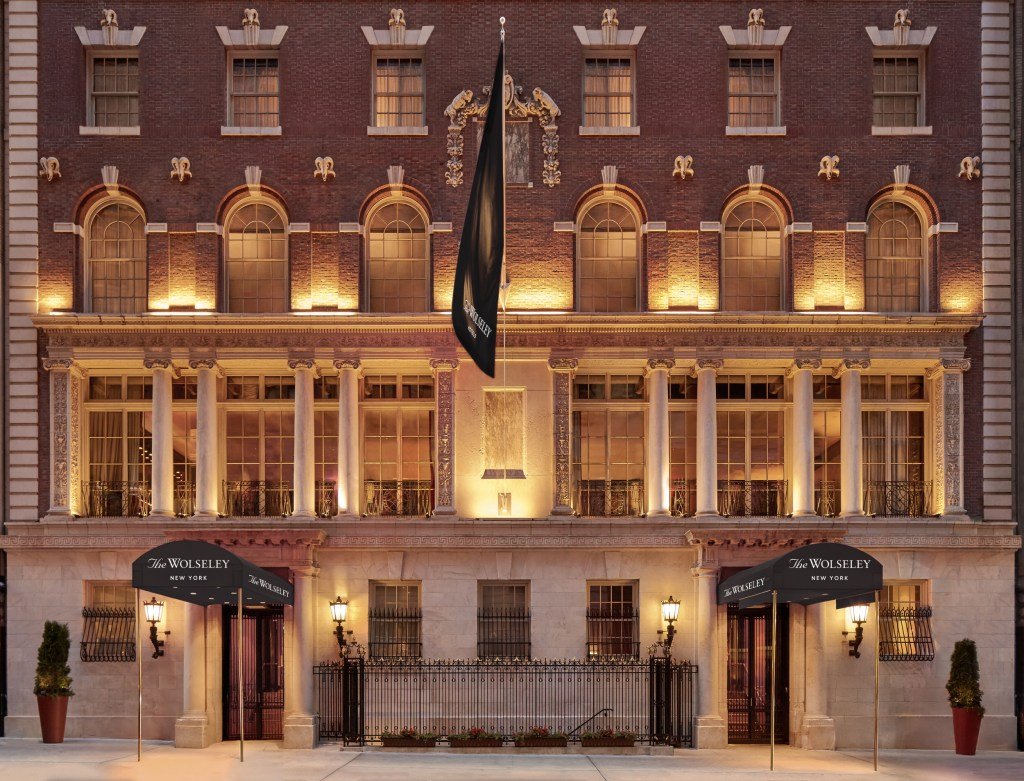
We also launched iStay, a conversion-friendly select-service brand designed for owners seeking stronger commercial support, alongside The Wolseley Hotels, our new luxury hard brand inspired by The Wolseley restaurant in London, which we intend to grow very selectively.
But it’s not just about launching new brands. Ownership creates a different discipline around brand building. When you operate and invest in assets yourself, growth becomes more about protecting long-term brand value. For example, Anantara recently marked its 25th anniversary, reflecting the value of building brands that evolve without losing their identity.
Where are owners finding the strongest risk-adjusted returns in Europe and North America right now, and where is Minor Hotels focusing its development energy as a result?
One of the biggest opportunities today is in highly differentiated, thoughtfully designed projects. A good example is our recently announced Anantara project in Miami, which combines hospitality, wellness, and branded residences to generate multiple complementary revenue streams within a single development.
North America is becoming an increasingly important focus for us. While our physical footprint in the US remains relatively limited today, American guests already contribute around 16% of Minor Hotels’ global revenue, which gives us strong confidence in the long-term opportunity and the strength of our brands in the market. Recent signings such as The Wolseley Hotel in New York reflect our approach of growing in markets where we already see strong demand while bringing differentiated concepts that can create value for both guests and owners.
Owners have sometimes felt that management agreements are written to protect operators rather than owners. Where do you think that perception has merit, and where does it miss the mark?
Management agreements have historically been built around operator and brand requirements, but the industry is increasingly evolving toward stronger owner alignment.
One of the strongest ways to align interests between owners and operators is through fee structures. We’re open to incentive management models tied to profitability. The more an owner earns, the more we earn. In some cases, we’re also willing to structure agreements around key owner obligations or returns first.
The same applies to performance testing. Rather than relying on standard clauses that are difficult to enforce, we focus on measures owners actually care about: ROI and bottom-line performance.
As the industry evolves, what qualities will define the most successful owner-operator relationships going forward?
The strength of the relationship between an owner and operator ultimately determines whether a hotel succeeds or fails. Every long-term partnership has ups and downs. What matters is how both sides adapt and support each other.
That’s why we’re investing heavily in the infrastructure that supports those relationships. We want to be a high-touch, high-tech company, investing across guest platforms, loyalty, distribution, and data systems to improve decision-making, strengthen demand, and create a more connected experience across the portfolio. As part of that, we’re rebuilding our technology infrastructure with partners including Google Cloud, Salesforce, OneTrust, and Deloitte to better understand guests, respond faster, and deliver greater value to owners.
Technology enables all of that, but it never replaces trust and alignment at the foundation of any owner-operator partnership. The industry will continue to evolve, and both owners and operators need to remain open to changing how they work together.
To explore development opportunities with Minor Hotels, visit minorhotels.com/en/development
This content was created collaboratively by Minor Hotels and Skift Studio.