Review: TransLink Double Decker Coach

The closest thing to flying in Economy on the ground is a bus. For an elevated experience, transit agencies in North America have Double Decker buses with upper deck seating for higher capacity routes. Riding on these buses, passengers can soar past freeway traffic in the HOV and bus only lanes, especially on days with absolutely terrible congestion.
Across Canada, agencies rely on double decker buses to ferry suburban residents into the city, creating an affordable connection to jobs and entertainment.
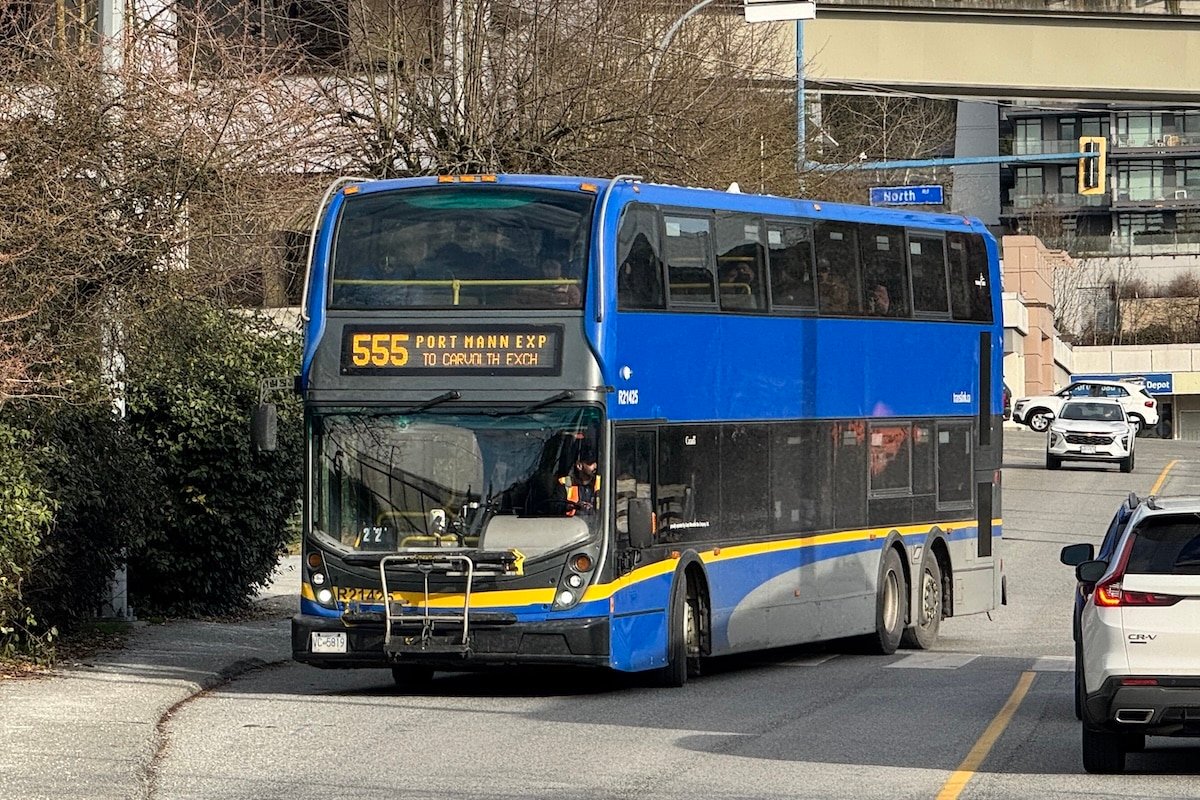
In Metro Vancouver, we are quite fortunate to have a well connected transit system that is accessible and frequent enough that even competes with driving times in some cases, especially when trying to get in and out of the Downtown core during rush hour. As a supplement to our urban rail lines, a handful of routes use Double Decker buses for freeway routes connecting commuters from the outskirts and park and ride facilities.
Booking the Bus in Coach
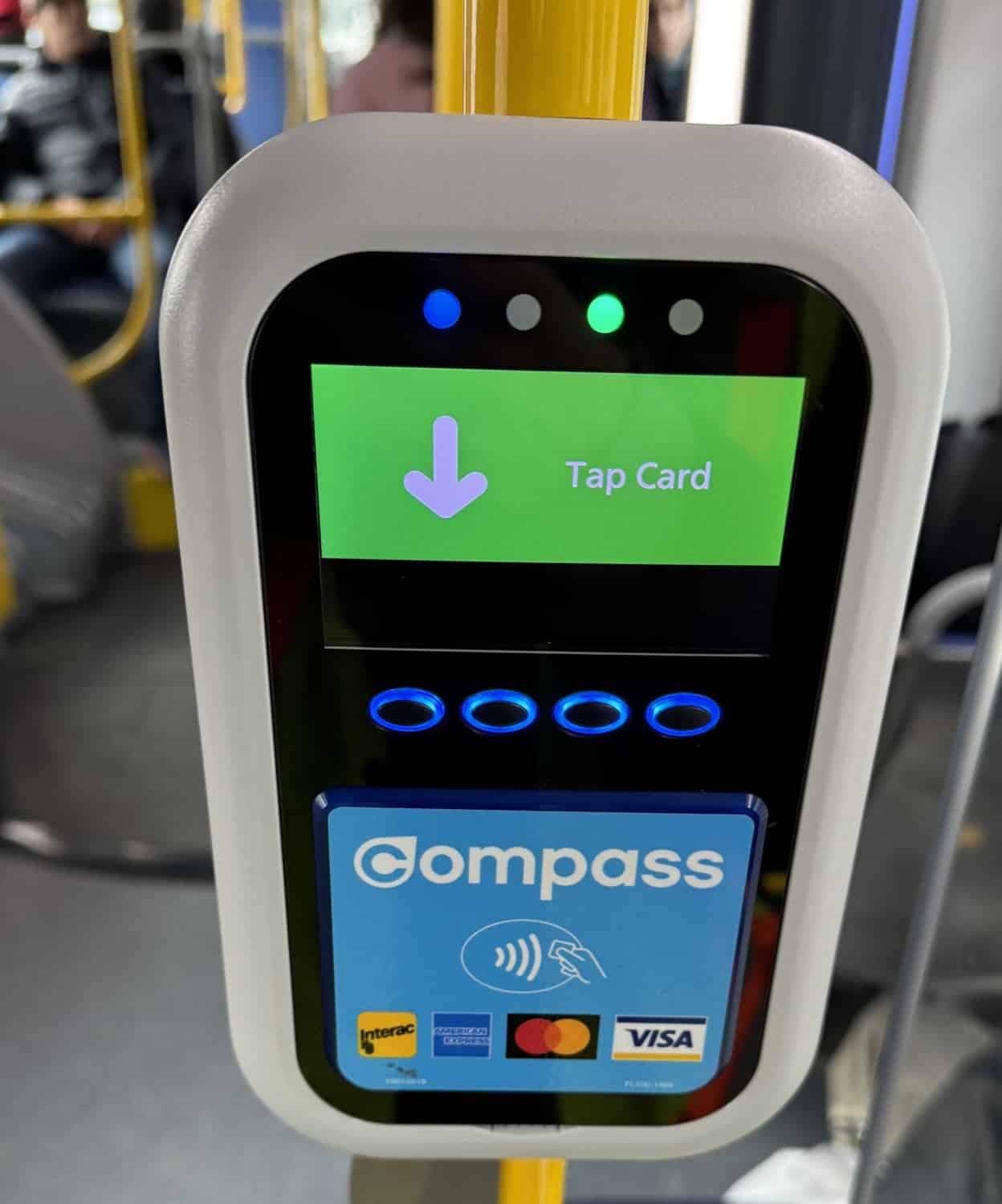
The bus is not a pre-paid service, though there are options for Monthly and Daypasses. If you’re paying as you go, the bus accepts traditional cash, and major tap-enabled credit cards including American Express, Visa and Mastercard on the transit card tap reader.
As a student studying full-time, I used my school-affiliated UPass, which allows for unlimited travel across buses, SkyTrains, and the SeaBus.
The pay-as-you-go rate for credit card users and adult cash fares is $3.35 for buses, with a 1.5 hr unlimited transfer window between other buses and within Zone 2 on the SkyTrain, including Burnaby, New Westminster, and Richmond. If you paid by cash, you can only transfer to other buses, whereas credit card users are able to use the same card to access other transit vehicles. I would recommend using the BMO CashBack World Elite Mastercard, with a 4% cash back rate on all transit purchases, the most out of any credit card.
If you have a Compass Card, TransLink’s frequent flier reloadable card with access to all of their transportation services, the fare is only $2.70 for an adult, and $2.25 for a concession rate.
| Bus Number | Bus Details | Route | Transit Duration |
|---|---|---|---|
| 555 Port Mann Express | Alexander Dennis Enviro 500 | Lougheed Station (Burnaby) to Carvolth Exchange (Langley) | 20 Minutes |
Ground Experience
With no security waits, you don’t have to plan too much time before boarding a bus. Typically just 5 minutes beforehand will suffice, especially when leaving from a terminus of a route. There’s no security lines or x-ray machines to worry about, so you can freely walk in and out of the station. Unfortunately, there are no credit card lounges or priority boarding opportunities so any kind of status will not be useful. There are also public washrooms available, where the nearest ones in my case would be at Lougheed Mall, about a 5 minute walk away.
Lougheed has lots of bus connections around the area, including a NightBus service that replaces the Millennium Line SkyTrain during the night. You can also transfer to BC Transit, with further service into Abbotsford and Chilliwack at this station. There is a bus shelter with a bench adjacent to the stop.

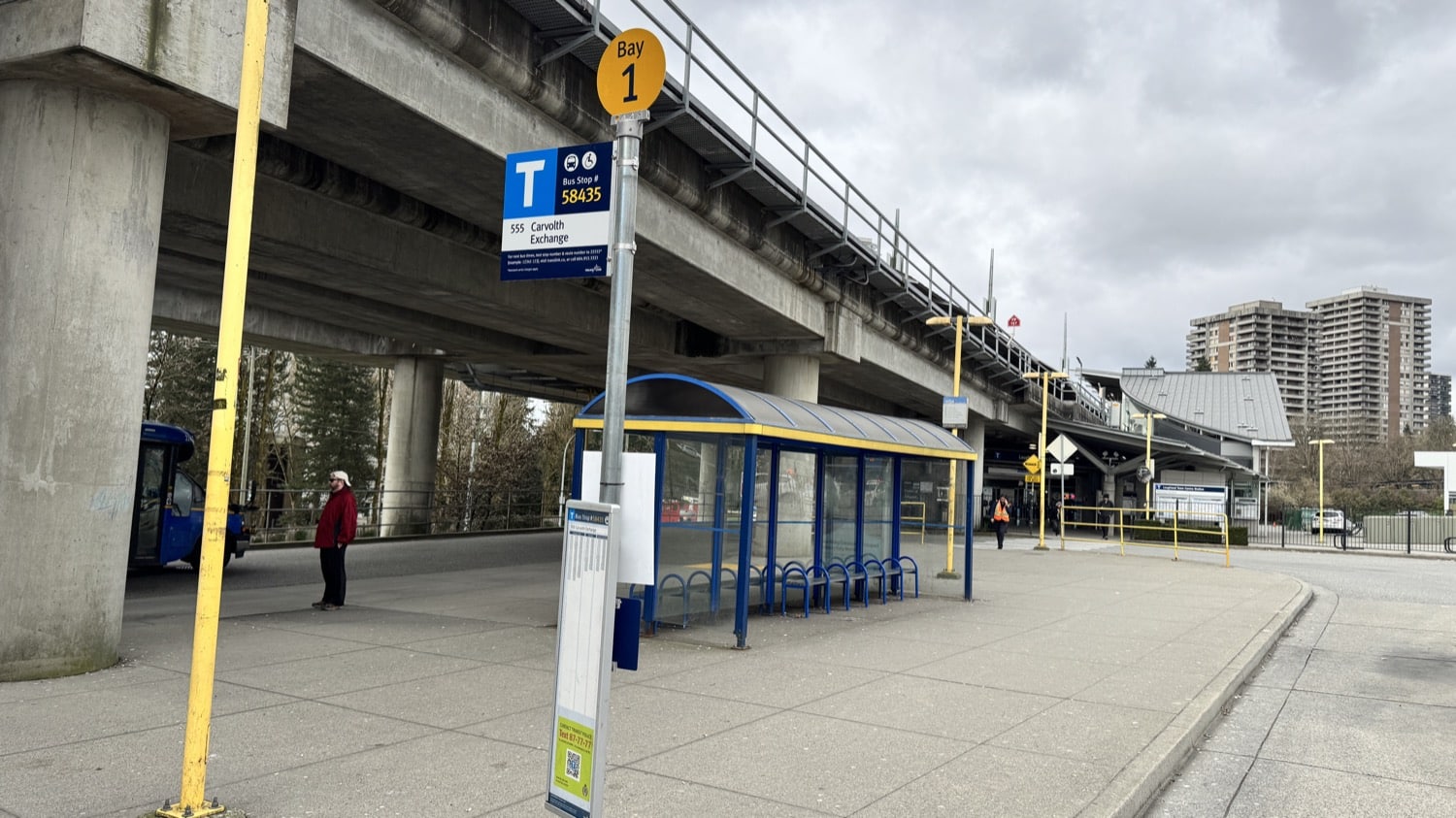
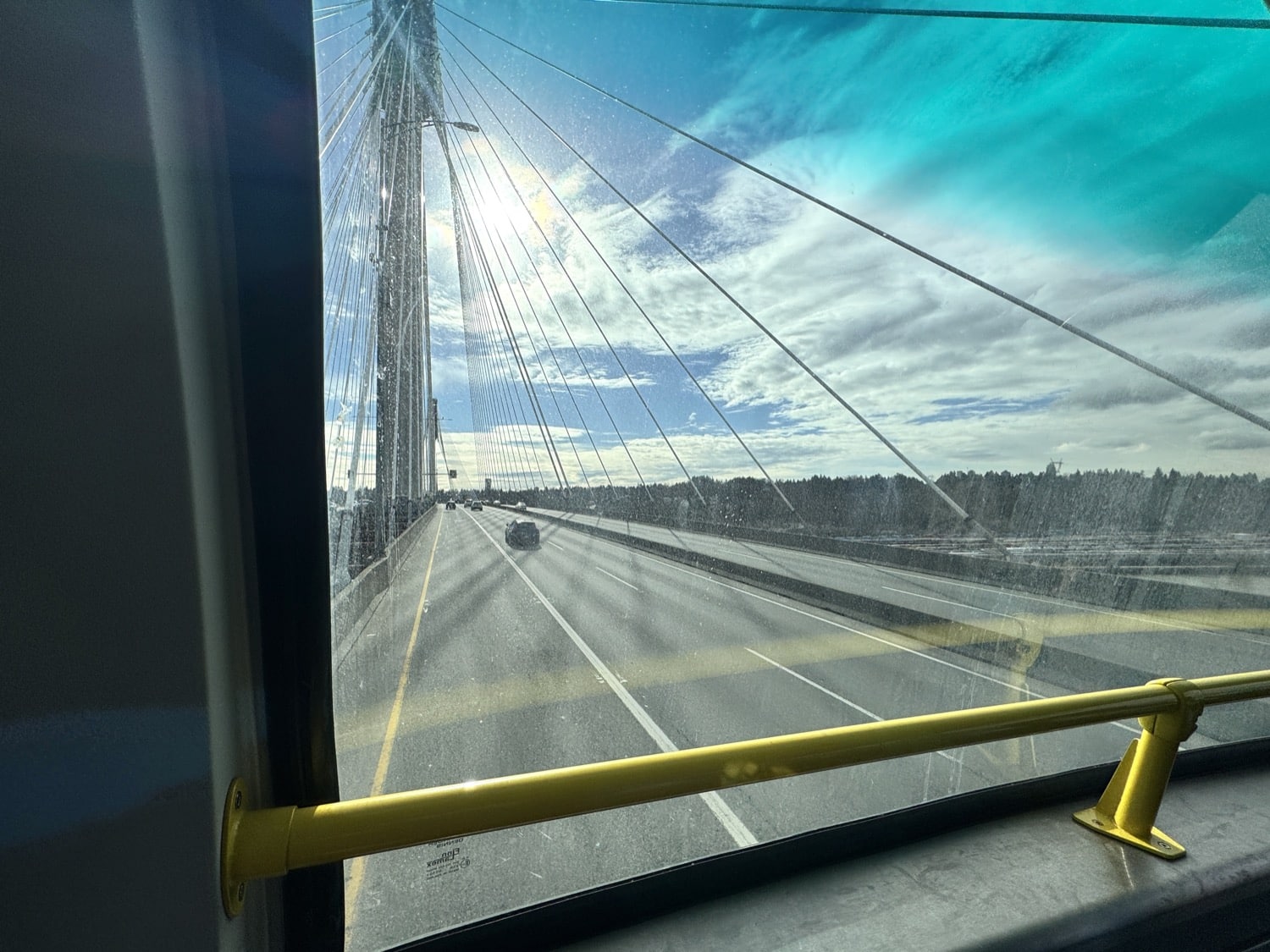
We departed Lougheed Station on time and eventually arrived in Langley 2 minutes earlier than scheduled, thanks to free-flowing traffic and sticking to the HOV and Bus lanes.
Cabin Arrangement
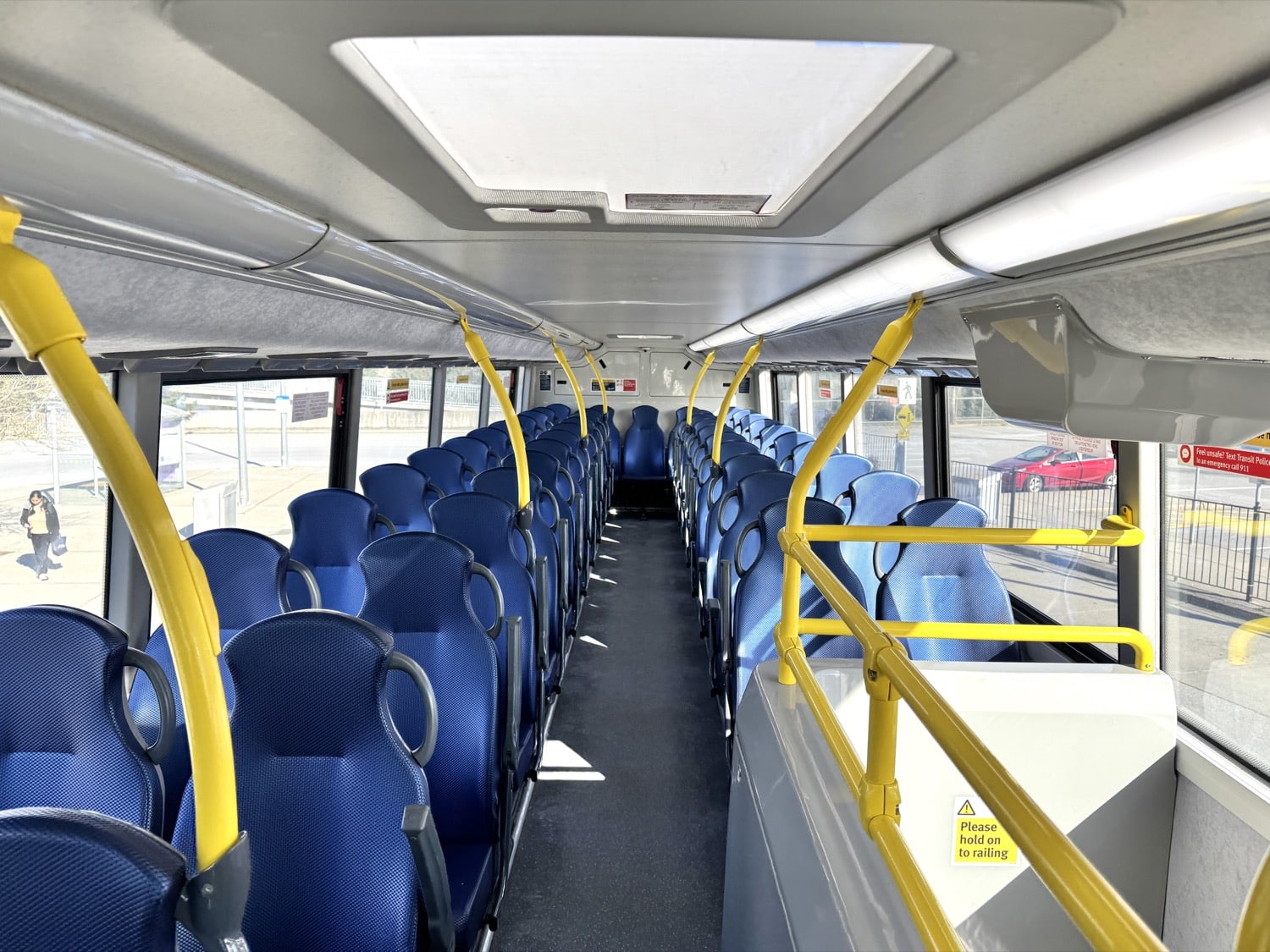
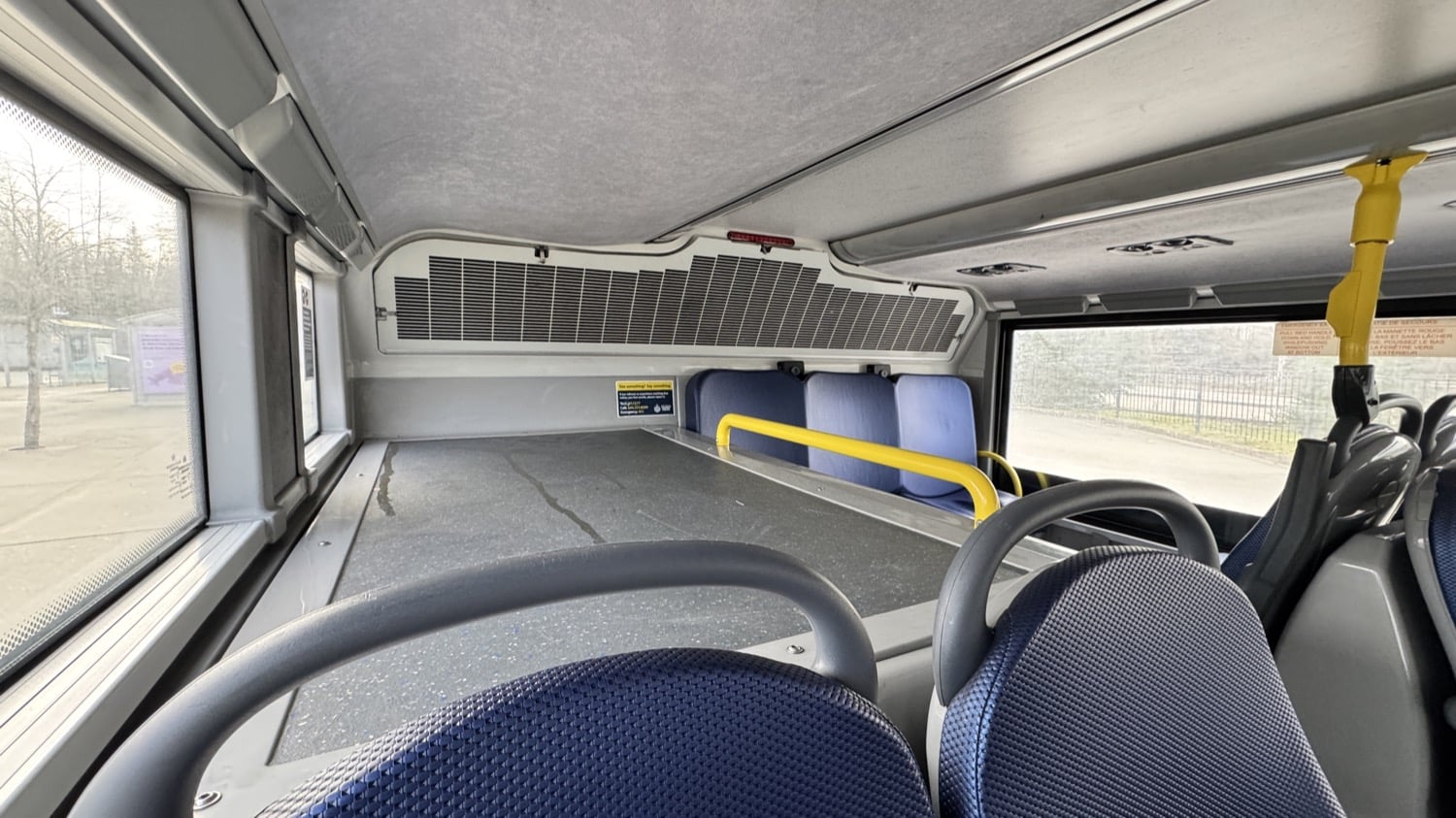
Both upper and lower levels are arranged in a 2-2 seating arrangement. The upper floor is fully 2-2 except the rear row which features a seat in the middle, facing the aisle towards the front. The windows are massive, where you can get a fantastic view of the scenery and highway traffic around the bus.
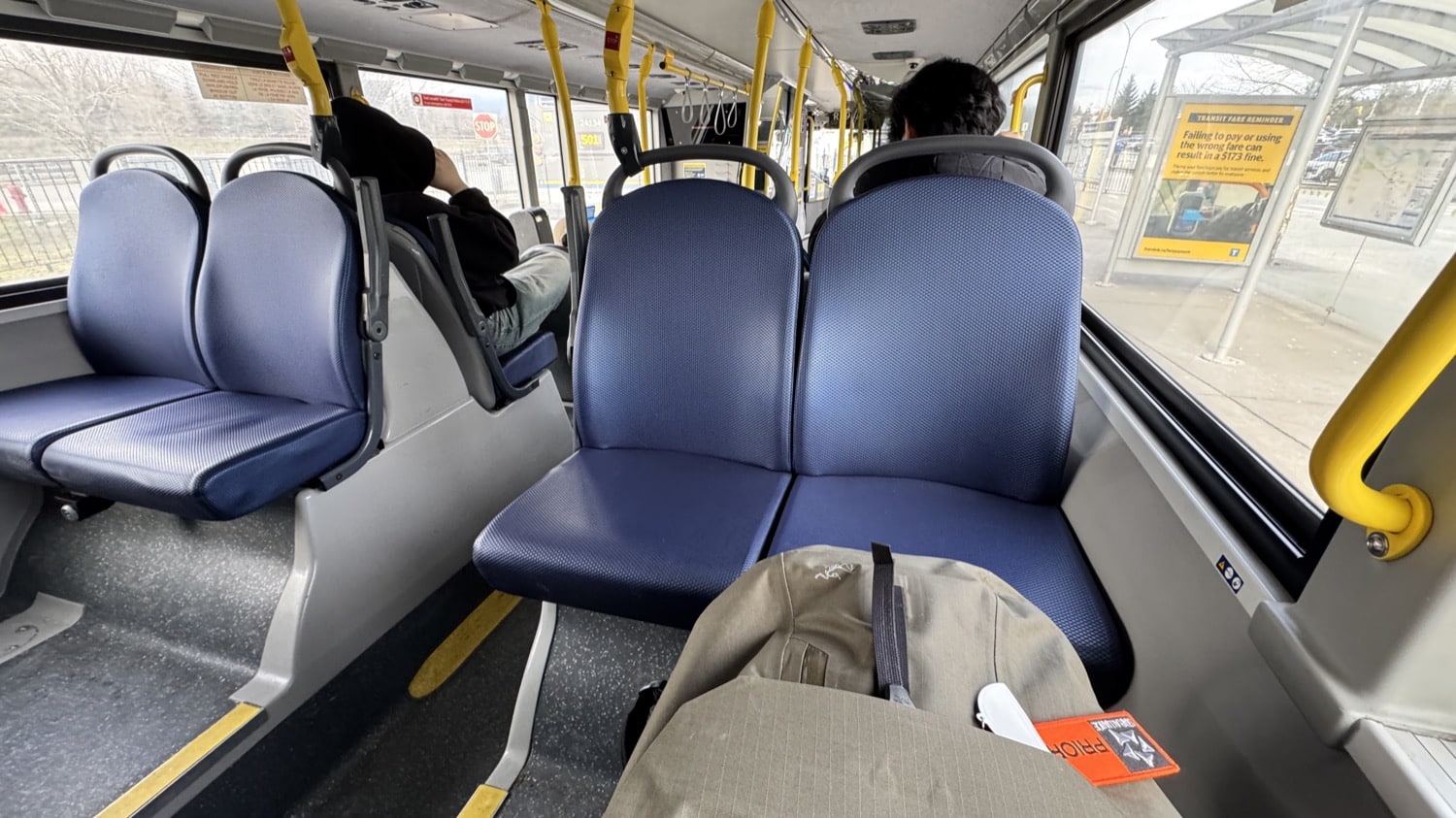
For the downstairs level, there are two wheelchair and stroller spaces, with flip down seats. Seating towards the end of the bus is a little different from the upper deck. With the wheel humps, passengers can use the hump as a foot rest, as long as no one else is sitting there. There’s also a large space for large objects above the engine bay.
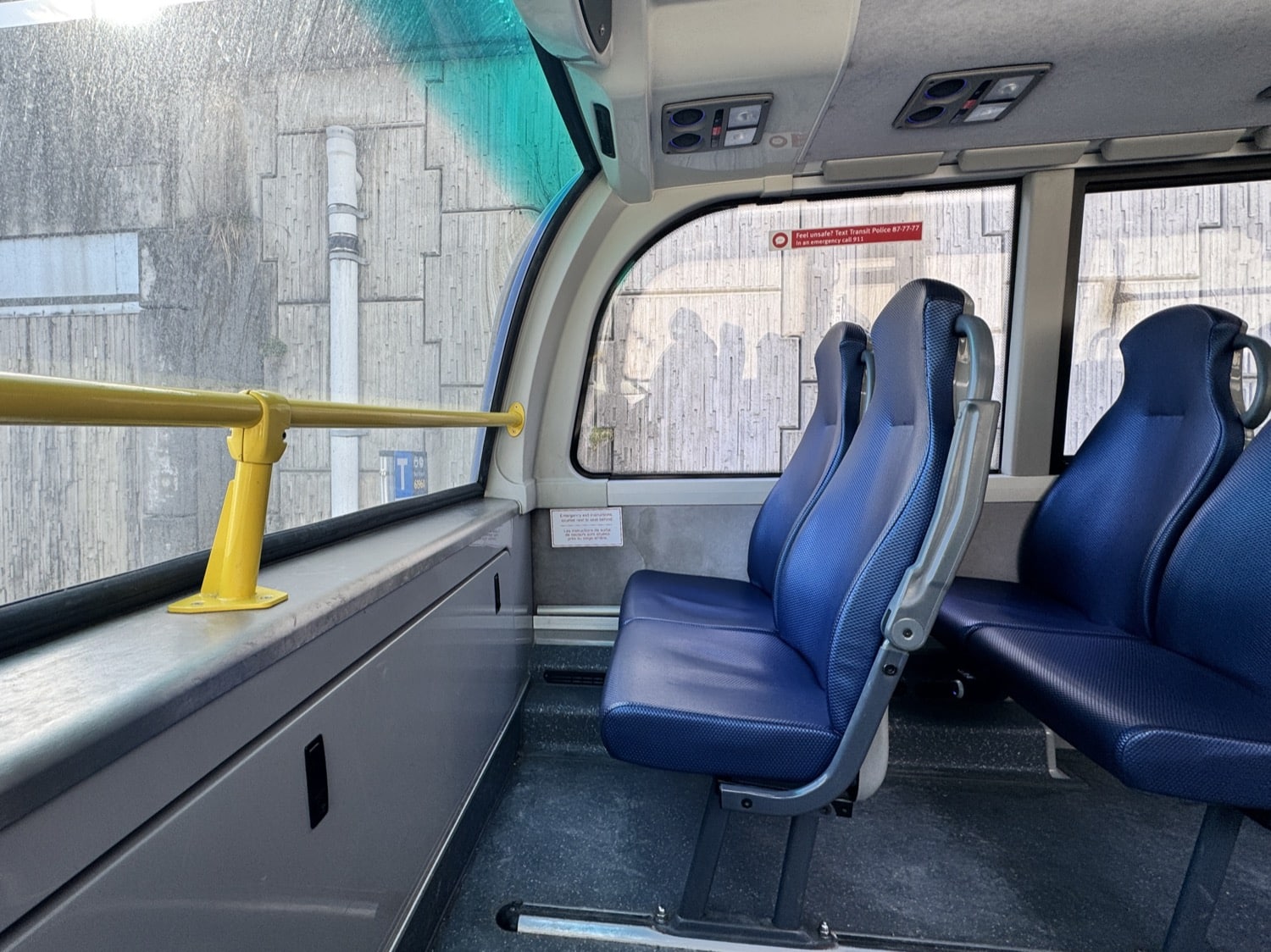
Seat
The seat is plushier than some airlines, with lots of padding for the back and bottom. Although there is no recline for any of these seats, they are quite comfortable. For aisle seats, there is a thin retractable arm rest in case you want to block other people from sitting next to you. The blue vinyl cover makes the seat easy to clean, and also easy to spot dirt and debris.
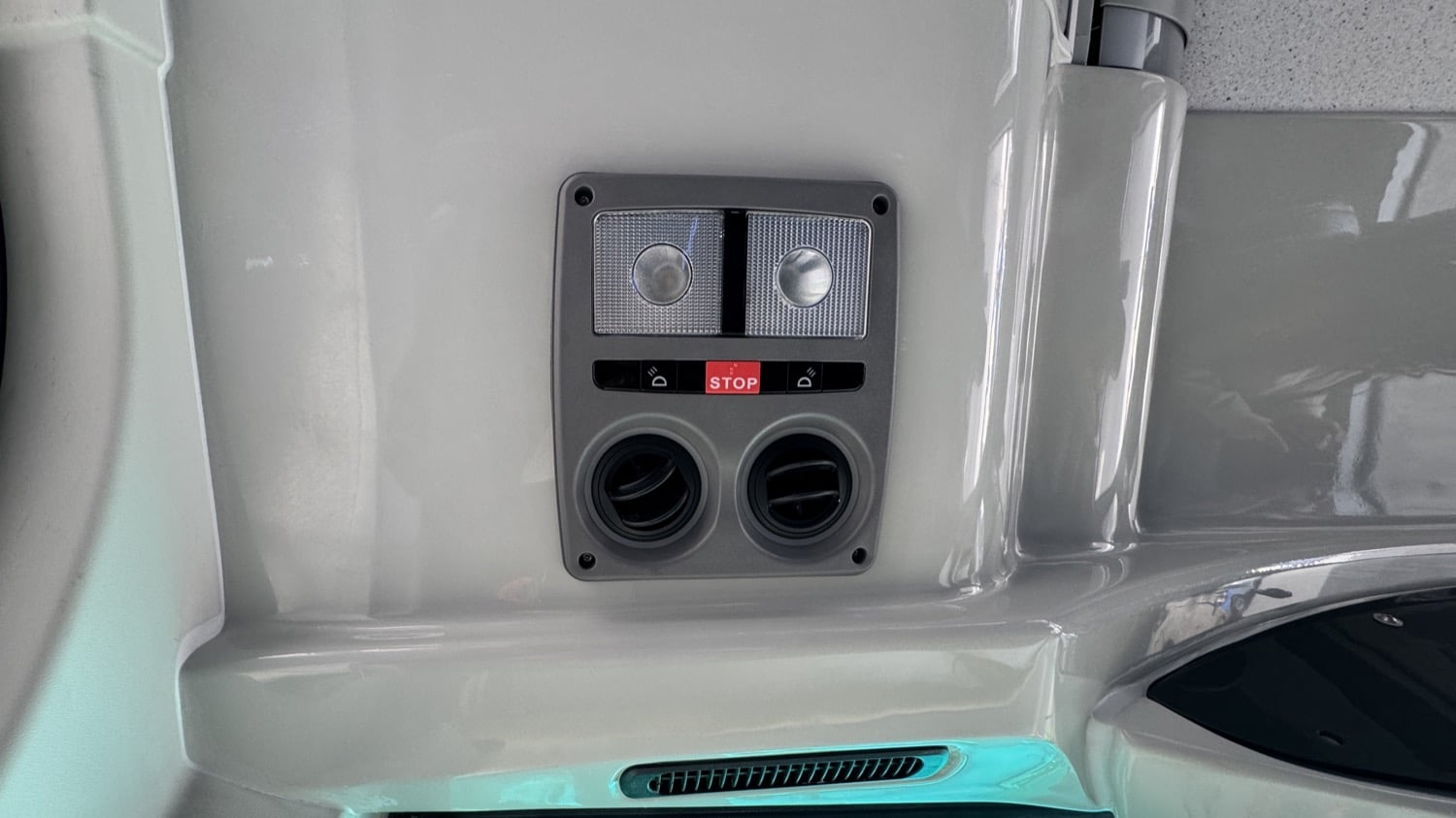
Above the seat, there are reading lights, a push button stop request, and large air vents for air conditioning and heating.
The front row in the upper deck will have the least amount of legroom due to the lack of space from the bulkhead. Seats behind the first row typically have more room to stretch out and place belongings. All seats, including the flip down seats in the wheelchair spaces, come with two USB charging ports. There is also a blue light to indicate whether or not power is flowing through.

No Wi-Fi is available onboard, but there is great cellular service so internet access is quite accessible. Some other TransLink vehicles, including some SkyTrains and more urban buses, offer complimentary Wi-Fi onboard, without having to sign into a loyalty rewards program to access the internet.
Dining
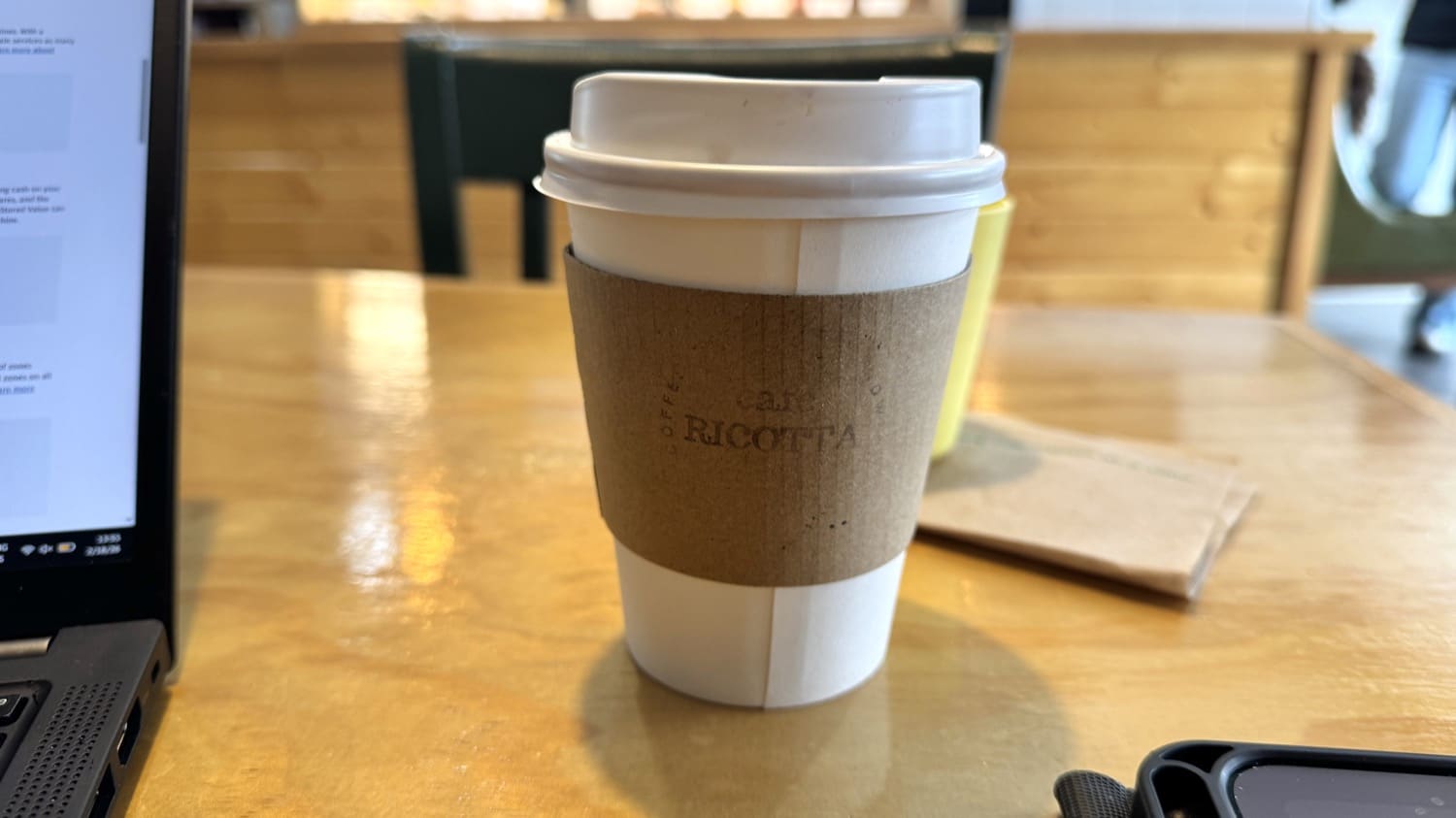
There are no complimentary drinks or snacks onboard, with no buy-on-board menu either! Be prepared to buy your own drinks or snacks before boarding, with options for food and beverages at either end of the route. Thankfully, the prices are not as expensive as they would be at an airport.
Entertainment
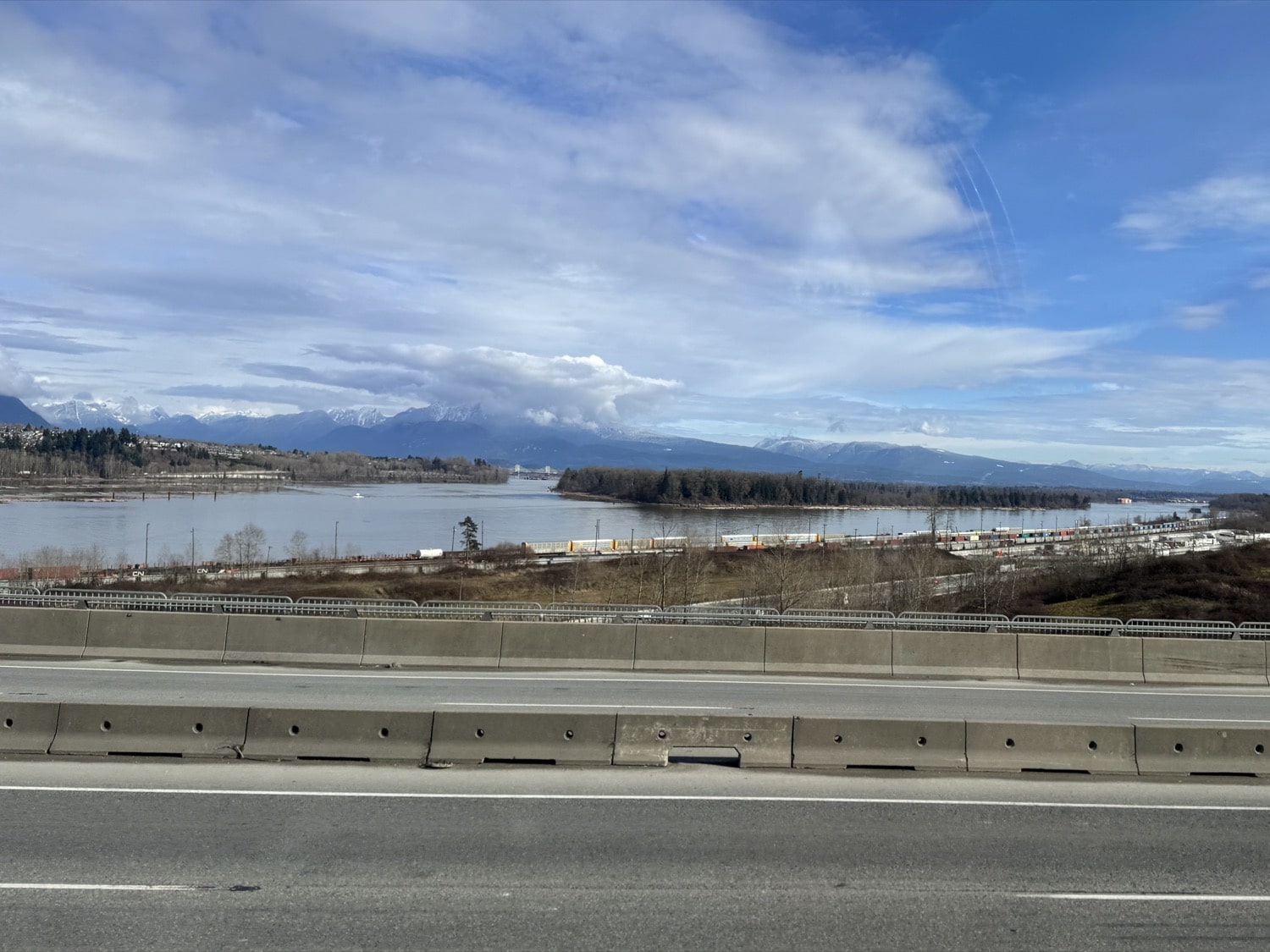
There isn’t much in terms of entertainment, but the windows on the bus give you an unobstructed view towards the front and sides of the bus. Sitting in the front row on the upper deck means that you sit above the driver where everything in front of the bus can be seen.
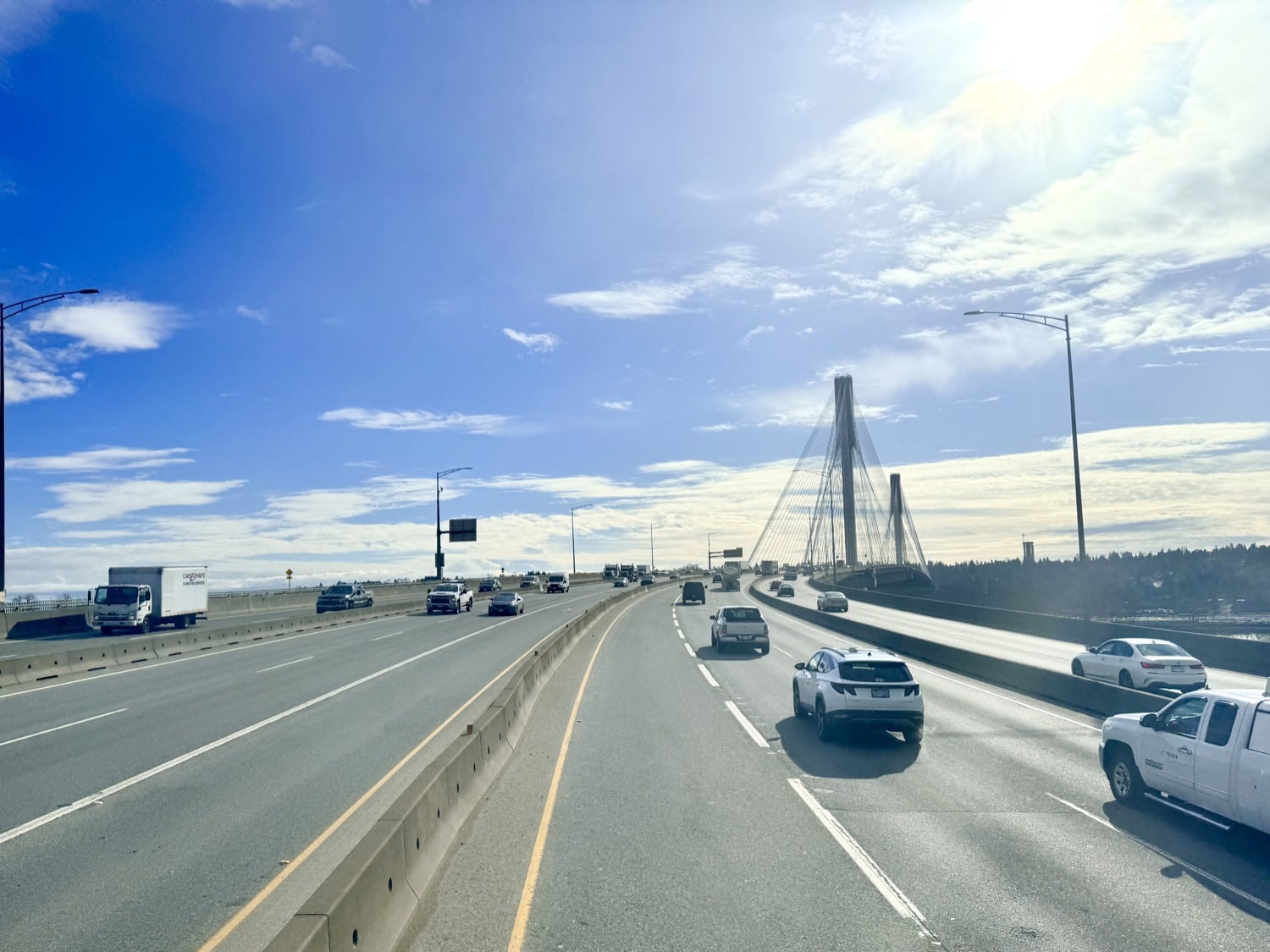
Seeing the North Shore mountains from the upper deck of the bus makes this mundane highway commute a scenic journey!
Conclusion
Although driving your own car will be much faster, taking a Double Decker Bus gives you the ability to sit back and relax. The route connects people from the inner suburbs to the SkyTrain system. Moreover, it serves one of British Columbia’s fastest growing cities, Surrey, which is expected to exceed Vancouver’s population as early as 2038.
The bus isn’t typically what you have in mind when travelling for vacation, especially with the lack of lounge or food facilities. Obviously we aren’t actually in the business of reviewing buses here at Frugal Flyer, so we hope you enjoyed this April Fool’s day article!