The AI Decisions Hotel CEOs Are Signing Right Now Will Look Like Fax Machines by 2029

The Argument He’s Bringing
Most Hotel AI Stacks Will Look Like Fax Machines by 2029
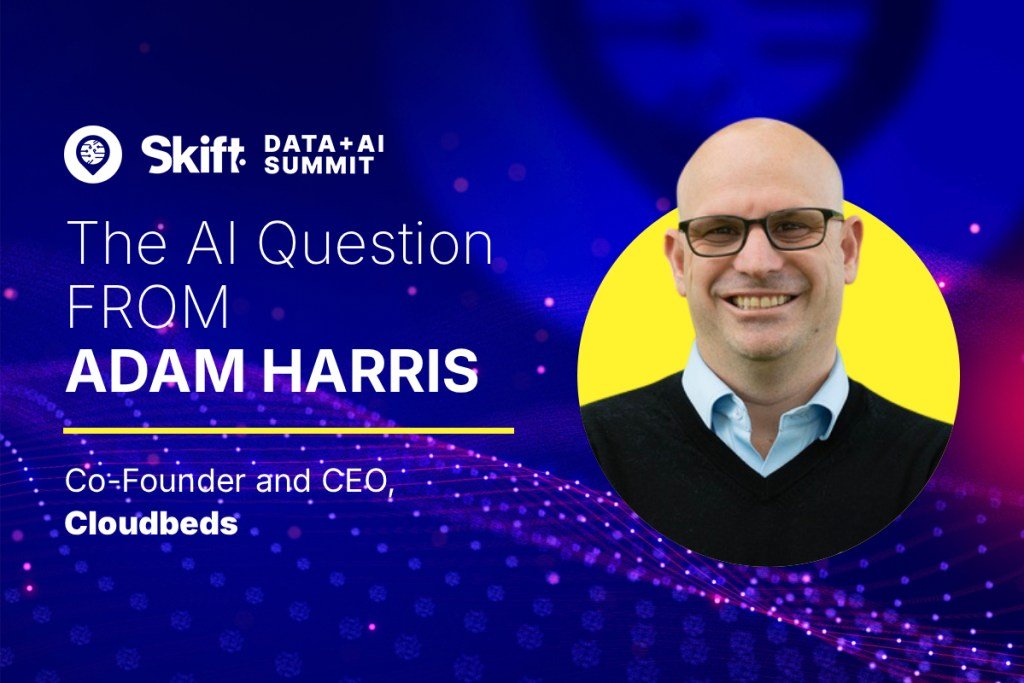
Harris is bringing one of the sharpest arguments on the Skift Data + AI Summit 2026 agenda, and it cuts directly against the AI procurement decisions hotel CEOs are signing this quarter. His thesis: most of the AI capability being pitched right now is probabilistic — it answers questions, makes guesses, produces impressive demos — and it is structurally unsuited to running operations at scale. The AI that actually runs a hotel takes action with certainty. Different architecture, different data layer, different vendor profile.
The implication is procurement-severe. Hotel CEOs who sign multi-year platform contracts in 2026 on the strength of AI capability demos are committing to architecture that will be obsolete within three years. By 2029, Harris argues, the tools and architectures everyone is committing to this year will look like fax machines — functional artifacts of an earlier era, expensive to replace, blocking the path to what actually works.
This isn’t speculative. It’s a working framework Harris uses to evaluate his own platform’s bets. At the summit, he’s bringing it to the operators making the procurement decisions in real time.
“Probabilistic AI answers questions. Deterministic AI takes action. One is a solid demo. The other is what accelerates your business.”
– Adam Harris, Cloudbeds
The Frameworks He Operates With
Three working models from inside the Cloudbeds AI build that Harris will bring to the Data + AI Summit.
1. Probabilistic vs. Deterministic AI. The architectural distinction hotel CEOs need to understand before signing any AI vendor contract. Probabilistic AI answers questions — useful for the demo, dangerous when it’s taking action on your business. Deterministic AI takes action with certainty: reprice a room at 2 a.m., issue a refund, move a reservation. When probabilistic AI breaks, you get a wrong answer. When deterministic AI is built correctly, breakage looks like a chargeback or a bad review instead. Different stakes, different architecture, different vendor profile required.
2. Agent-on-Agent Commerce. The buyer-side AI story most operators aren’t planning for. Hotels are building AI to run their side of the transaction — pricing, inventory, upsells. Guests are about to bring AI to the other side — price comparison, review aggregation, value-extraction flagging, counter-offer generation. Both sides negotiating in real time is the next disintermediation event in travel. Most travel companies are building only for the operator side. The next two years will reveal whether their architectures can hold against AI on the buyer side that’s specifically optimized to extract value the operator agent is trying to capture.
3. The Grading Line. Stop asking how much human you need in the AI loop. Start asking what you’re grading your humans on. The line you grade them against is the line that separates automation from irreplaceable judgment. Below the line, automate. Above it, your people are irreplaceable.
The Question He’ll Be Pressed On
Harris is making a sharp argument that benefits Cloudbeds commercially. The probabilistic-versus-deterministic distinction puts most platform vendors on the wrong side of the line he’s drawing — and Cloudbeds on the right side. The argument is defensible. It also creates the editorial pressure point Skift will press him on at Skift Data + AI Summit.
THE QUESTION
Cloudbeds is one of the platforms hotel CEOs are signing right now. What specific tests should those CEOs apply to your platform — and every other vendor — to validate the deterministic claim before committing?
The room will want specifics. What questions does a CEO ask in vendor diligence? What does the data layer look like architecturally? How does an operator distinguish a real deterministic platform from one that markets the language but ships probabilistic infrastructure underneath? Harris’s credibility on stage depends on whether he answers this in a way that includes Cloudbeds in the diligence rather than exempting it.
What to Watch For in the Room
Three signals that will tell you whether the industry conversation is shifting.
1. How operators react to the fax-machine framing. If the room treats it as urgent and starts asking architectural questions of every other platform vendor on stage that day, Harris has shifted the procurement conversation. If the room receives it as theoretical, the industry isn’t yet ready for the architectural decision Harris is naming.
2. Whether other platform CEOs on the agenda engage the deterministic claim or sidestep it. Engaging means the framework gets adopted into the working language of the summit. Sidestepping means platform marketing is staying in probabilistic-capability mode while operators are increasingly asking deterministic questions. Either is informative.
3. How the agent-on-agent commerce thesis travels through the day. Most travel-AI conversations are operator-side only. If Harris’s buyer-side AI framing gets adopted by other speakers and panel questions, he’s pushed the industry past a one-sided framing of the AI shift. If it gets ignored, the industry is still planning for half the problem.
Only a limited number of seats remain for Skift Data + AI Summit 2026 as travel companies prepare for the next phase of AI adoption.
↔️ Plans not final? Reassign tickets later.
🧾 Invoice or wire needed? events@skift.com
FOR TEAMS ATTENDING TOGETHER
Group Tickets
FOR ONE ATTENDEE
Solo Ticket
For single-ticket purchases only.
$995