The Hospitality Secrets That Built America’s #1 B&B


Subscribe Apple Podcasts | Spotify | YouTube | RSS
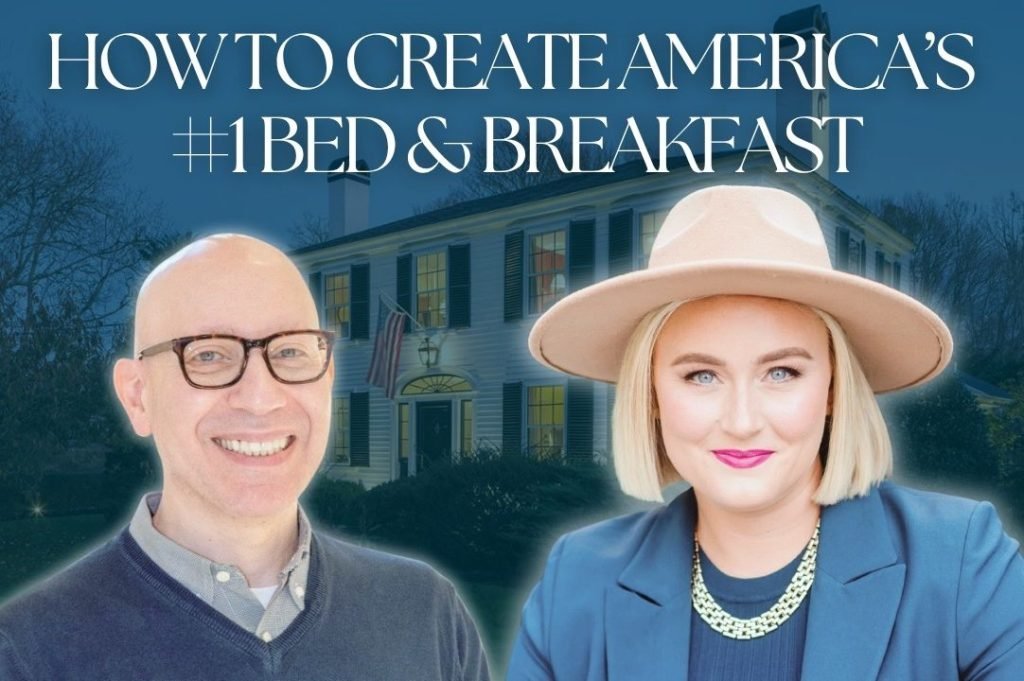
On this episode of Suite Success, host Katie Cline sits down with Marco DiDomizio, hospitality strategist, real estate broker, consultant, and coach at InnAdvisors. Before advising hotel owners across the country, Marco spent nearly a decade transforming the Candleberry Inn on Cape Cod from a dated bed and breakfast into the #1 inn in the United States according to both Travel + Leisure and TripAdvisor.
Together, they unpack the strategies that helped Marco command higher nightly rates, create unforgettable guest experiences, build a fiercely loyal customer base, and ultimately sell the business at the top of its game. Whether you own a hotel or dream of purchasing your first hospitality asset, this conversation is packed with practical lessons on creating a business guests can’t stop talking about.
This episode is brought to you by Lodgify and Bilt!
Watch This Episode
Transcript of This Conversation
This transcript is generated by artificial intelligence.
I’m Marco DiDomizio and you are listening to Suite Success.
You’ve just checked in to Suite Success. Join me, Katie Cline, for exclusive conversations with hotel executives, hospitality leaders, and industry innovators.
Together, we’ll uncover the strategies and techniques these Masters of Hospitality relentlessly refine. Whether you’re already in the industry or just starting out, tune in every week to unlock the secret to your Suite Success.
0:38
Meet Marco DiDomizio
Hello, everyone, and welcome back to another episode of Suite Success. I’m your host, Katie Cline, and today I’m thrilled to welcome Marco DiDomizio to the show.
Marco is a hospitality strategist, licensed real estate broker, consultant, and coach with InnAdvisors. From 2016 to 2025, Marco owned and operated the Candleberry Inn on Cape Cod, rocking up a litany of awards such as the No.
1 Inn in the US by Travel and Leisure, and the No. 1 Inn in the US and Top 5 Worldwide by TripAdvisor for three years in a row.
Today, Marco helps independent inns and boutique hotels operate not just as a lifestyle business, but as high-performing investment assets. Marco, thank you so much for joining us today.
Thank you, Katie. It’s a pleasure to be here.
1:29
From Finance to Running a B&B
I am so excited for this chat.
And when I was looking into your background, what I found really interesting is that you spent more than 20 years in corporate finance before shifting into hospitality with the Candleberry Inn.
So tell us a little bit about your background and what ultimately pulled you into hospitality.
Absolutely. So I actually started out as an auditor and a CPA out of school many moons ago and moved into marketing and finance marketing for ad agencies in New York City. Loved what I was doing.
My husband and I vacationed on Cape Cod often. He’s an architect specializing in classical design and restorations. So we always visited many of the old Victorian B&Bs that are around Cape Cod.
He wanted to study the architectural details of them for his work. Over time, we started noticing, you know, I could do this, maybe.
And, you know, we started inquiring more about it, but then we’d get scared away, thinking, you know, no, this is not for us. But something kept pulling us back over time. So we started looking into it a little more.
We started asking some of the owners and innkeepers what they did before they owned their properties. How did they get into it? And one couple recommended that we joined the National Association for Lodging and Innkeepers as aspiring innkeepers.
That’s what we did. And we took a seminar course to answer all of the questions that were sort of holding us back. And that’s when I met my current broker.
At that point, she was teaching hospitality on Cape Cod, and she answered all the questions that we had. We ran out of excuses at that point. So, like I said, we liked what we were doing in New York, but we were ready to do something different.
We were ready to do something on our own, where we were the owners of our businesses, we were the makers of our destiny, and we called the shots. So, after taking that intense seminar with Carol, who is now my broker, we ran out of excuses.
So we started working with her to find properties on the Cape.
3:38
Choosing Cape Cod
The reason we picked the Cape is we liked it here, but we also wanted to be in an area where we knew that there were going to be travelers, you know, because it was a big risk doing this. So we wanted to minimize as many risks as there were.
So knowing that we’d be going to a place where travelers go to, where there is a strong chamber of commerce and visitors bureau that is paying money to bring travelers both nationally and internationally to the area, was a big component of it.
And then whatever marketing we did was in addition to. So there are over 200 licensed properties here in this 80-mile stretch of Cape Cod that are small properties, anything from four rooms to 20-plus rooms. So we knew that it was a destination.
It needed to be something that was historically significant for Angelo. So those were our criteria. And that’s how we found the Candleberry Inn.
I think it’s so smart what you’re talking about too, because other people might think, oh my gosh, 200 properties within an 80-mile radius, too much competition.
I want to go someplace where there’s less competition.
But I have always taken the same approach with my short-term rentals, which is I’d rather be in a place where people want to go anyway, and then my job is to be the best place in that destination, rather than being the destination itself, which
works. We’ve seen a ton of hotels and short-term rentals that have succeeded in that. I’m thinking of the potato house. It’s shaped like an actual potato.
There’s nothing around that property. People are going there for that property. It can be done.
But I think what you’re talking about is so important, especially for people who are maybe just starting out, as you said. I really liked what you talked about of you guys kept thinking about this, but you were nervous.
I really resonate with that a lot, especially because you’re looking at expensive purchase prices, typically more money than single-family residences for commercial assets. It’s a lot of big risk, hopefully big reward.
I had another guest on the podcast once, and she said something I’ll never forget. She said, everyone has an unfair advantage. You just need to figure out what yours is.
I’m reminded of that as I hear you speak about you and your partner, because again, my brain is doing that thing where I go, well, Marco has this amazing background in finance and his partner is an architect.
Of course, they would be successful at it. But hearing what you said, there was a lot of nerves there for you guys as well.
Absolutely. And one of the things I’ve learned over time, and we tell our students or clients that are exploring this now, is assess the area and find who the best in class is. Find who you aspire to be.
And even if you find an inn that’s across the street or next door to them, that’s great because they’re already attracting that amazing guest. They’re full. You’re getting their overflow.
And over time, as you build your business and your guest experience, you can rise and be as great as they can. And who said there can’t be two or three great properties together because you’re bringing up the entire area at that point.
The location becomes a destination, which is amazing.
Yes.
Very powerful.
6:57
Finding the Candleberry Inn
So you’ve taken this seminar.
You’re like, all of our excuses are gone.
Yes.
What happened between then and purchasing the Candleberry Inn?
Sure. So we started, it was about a year. We started visiting the Cape and seeing different properties with Carol.
Some were too small, some were too big. We wanted to live on site. So the owner’s quarters are a real thing, and it’s evolved a lot over time.
Right now, like today’s buyers are not going to compromise on how they’re going to be living on. So they’re not going to be living in basements, or they don’t want just a bedroom. So having that owners or managers suite is really important.
So we were lucky enough to find a property that had a nice owner space that worked for us.
So it took a while to find Candleberry Inn, and we had actually stayed there previously, and then we learned that the current owners were selling because they were retiring.
So we flew up for New York for the day just to see it again, so that we can see all of the utilities and the owner space and all of the spaces, all of the rooms that we hadn’t been able to see before. So that was a right fit and it worked for us.
8:07
Renovation Vision
But it was dated. At this point, it was 2015, and the last major renovation was maybe done circa 1980 or so. So bathrooms were dated.
Linoleum floors and fiberglass inserts and home depot, vanity type things and there was a lot of burgundy there. A lot of Candleberry color everywhere. So doilies and chintz and that sort of thing.
But we had a vision of what it could be. We knew that it was a great location, less than a quarter of a mile walk to the beach, restaurants nearby centrally located on the Cape.
So nothing is more than an hour away, but most things are within a 20-mile radius. So really had a lot of potential at work for us. So still scared, but we went for it with that vision.
And we put our heads down the minute we bought it and just started elevating everything.
Elevating the amenities, the sheets, the towels, the robes, the beds themselves, gutting bathrooms and providing this really spa-like experience for the guests, as well as the common areas.
9:22
Guest Experience
The experience itself, the communications with the guests.
And this is something where I believe operators, in our opinions, have this super power, where short-term rentals may not have, because you’re getting a key code and you’re pretty much left on your own.
Here, we have this personal connection with a guest that the big box hotels can’t do either, because they can’t train their staff to deliver it consistently. It’s a challenge.
So this is something where these small operators, whether it’s owner operated or you’re hiring a manager to operate, because it’s still small and that personal connection is still there. It is something that really will help you excel.
You’re making those personal connections with the guests. So that was something that we integrated as well. So both onsite as well as offsite.
So it’s like this whole 360-degree view of what the guest experience is like, because especially in America, free time is so limited, right? We maybe get two weeks on average. Most bosses frown if we take them consecutively.
So the free time away with our loved ones, whether it’s your partner, whether it’s your mom or daughter, gal’s trip, father, son, brothers, whatever it is, solo, we have a lot of solo travelers, everyone’s working really hard, so that time away is so
precious. How do we help optimize that time away, right?
So that the guests don’t want for anything either on the property, with all of the amenities and all of the services and the food, as well as in the area, how do we help curate the entire experience with their excursions and their activities and
their meals, whatever it is that they need, so they’re not scrambling last minute on what we’re going to do. And with the network that we build in our area, whether it’s restaurants or tour operators, you can get them in even last minute because we
have those connections. And the restaurants love us because we’re sending guests there all the time, that when I have the rare luxury of going there, they’re paying for my cocktail because we’re sending somebody guests.
But it’s that 360-degree approach. And it really starts from the minute the guest finds your website. It’s being found.
And then what is that guest journey like on your website? Is your website current? And is the navigation intuitive for the guests?
Does it feel good? Are they seeing all of your rooms? There are so many websites where it’s like one picture.
Well, what does the rest of the room look like? What does the bathroom look like? Are there food shots?
If you are a bed and breakfast, if you do full service, showcase that. What does it look like? It’s a full journey from the minute they find you, through the booking, through the personal check-in.
And we actually would walk our guests to the room and show them the essential things in the room. Those usual friction things, the remote control for the TV, the thermostat, those usual things, and then we would disappear.
Because I have horror stories of like others where they do a 45-minute check-in and the guest is busting to use the bathroom after a five-hour drive. So, reading the room is the biggest challenge of your guests.
Because not every guest wants to talk to you, even at breakfast. So, you got to learn how to read the room and understand what the guest needs.
Oh my gosh, Marco, there is so much here for us to unpack. So much good stuff. Let’s back up to the reno because I think I shared with you, I am also currently looking to purchase a hospitality asset.
When I see the doilies and the burgundies and the floral bedspreads, I get a little excited because I’m like, this could actually be in my price point versus the ones that’s already renovated. And like you said, you can see that potential.
You had actually stayed there as a guest, so you knew what was and wasn’t working. You knew about the location. That really allowed you to bring it to life.
13:13
Funding the Deal
So first of all, the financing part of it, how were you able to do this? Was this something that you were able to mortgage and cover personally? And then you talked about pretty significant renovations with redoing the bathrooms and such.
So how did you put together what I now understand to be called the capital stack for anyone listening who is not aware of that?
Yeah, so there are so many different ways to do it. We actually were able to do a 1031 exchange because we had another building in New Jersey. We were living in New York City.
We had a building in New Jersey that was a four family that we were able to sell and do a 1031 exchange. So that means that you’re not paying the capital gains on it. The property is like for life.
So we were able to classify it under the IRS as rental property for rental property, just different numbers of units. So we were able to do it that way. But we were exploring other ways too.
You can save money and do it that way. You can also use your 401k. It’s called a Rob’s program.
So it’s like a rollover where you’re using your 401k investment as the investment that the 401k fund holds. So there’s a corporation that you own, and you’re buying stock in your own corporation that owns the property. That is an option as well.
Wait, wait, wait, wait, wait.
Because I have recently learned that you can take a loan against your 401k, and that blew my mind. I think it’s usually a max of about $50,000, as long as you have at least $100,000 in there, but it’s usually no more than $50,000.
But you’re talking about something completely different, it sounds like.
Completely different. So there are companies out there that do this. So you got to work through them.
They’re sort of like intermediaries. One of them is called Guidance Financial. So it works kind of like the 401k or IRA accounts that we have, where instead of investing in a mutual fund or stock in another company, you form your own corporation.
So it would be like Katie Cline LLC or corporation actually, Katie Cline Corporation. And then you buy the stock in that corporation that owns the property. Then when you sell, it’s got to go back into like a traditional IRA.
That’s the deal. So it stays as retirement. But what’s great is, you know, whatever appreciation you have, it appreciates just like, you know, your mutual fund or whatever else you owned.
And I’m simplifying it to the nth degree, but it is possible. And we have many clients that have done it and continue to do it right now because it is an option.
Very cool. I also just love when people showcase, there’s always a solution, you know, and so much of, even what you were saying of leading up to this decision, we have so much fear, are we making a mistake? Are we making the wrong decision?
Are we just not able to do it? How many people just write things off of like, oh, I can’t afford that. When I started dreaming about owning a hotel, I literally looked at approximately how much they were selling for.
And then was like, I guess I got to save 20% and then I can own it. You know, I didn’t know. So it’s just really interesting to hear about.
There are so many methods.
And just getting into this network, that seminar that I took was amazing for me.
16:21
Renovations That Pay
But to answer the other part of your question regarding the renovations, at that point, we took an SBA loan. There’s a small business administration loan where the interest was very low. It was a construction loan.
And it made a lot of sense because we pretty much gutted those bathrooms down to the beams. And there were several that Angelo reconfigured. Because we wanted to maintain the classic charm of this 1790s building, but with the modern amenities.
And that’s what today’s travelers are looking for. They want that charm. It’s not a stark hotel room.
So the charm is there, but those amenities need to be current and amazing.
So the way it worked out was once those renovations were done, I was pretty much able to charge an additional amount per night per room of in-season, anywhere from $100 to $150 a night and more because of the renovations in the bathrooms.
So my monthly loan payment to SBA was like $600. Well, I had nine rooms. So with that additional amount in nightly rate, I was able to pay that monthly loan payment in one night.
Then the other 29 or 30 nights of extra room rate, that’s all profit or extra projects. It was also attracting the guests we wanted because all of a sudden, the offering was so much nicer.
Exactly.
So it was a game changer.
17:52
Valuation and Appraisals
The other thing I’m noticing too, even when the asset is dated with the doilies, with the burgundy, etc.
I am seeing a lot of hotel owners, etc. trying to sell at a much higher price point because a destination like you in Cape Cod, I’m looking in Lake George, the destination we know is so valuable, has been valuable, will continue to be valuable.
But yet if you underwrite them in the way that a commercial business would, the valuation that they’re charging for the property is not actually supported unless you have a plan like we do to renovate and to elevate everything.
So did you run into that as well?
So a little bit and I run into it often now with clients. So at the end of the day, the commercial appraiser is the one who calls the shots, right?
Whether you’re going for a traditional loan or an SBA loan, if you’re working with investors or even if you’re paying cash, no one wants to pay more than what it’s worth. And there are instances where sellers are not realistic about what it’s worth.
Emotionally, everyone always wants things it’s worth more than it is, right? And there actually have been instances where, because at the end of the day, the seller can charge, can list it for whatever they want, their property. Is it going to sell?
Don’t know.
But even in an instance where, you know, there could be a buyer who makes an offer at the price that they want and they’re going for a loan or an investor, once they go through their due diligence, and definitely once the appraiser gets involved, it
can fall apart where it doesn’t appraise. And this isn’t like residential real estate where, you know, there are 20 buyers that are interested in a house and, you know, they’re willing to pay more than what it appraised for because they still have
their two corporate jobs, so they can pay the difference on what the bank isn’t willing to finance. Here, this is your source of income. So, you don’t have that choice of paying more than what it’s worth.
Like, the bank is only going to lend on so much. So, you do run into that situation where it’s not priced appropriately, and those properties tend to sit. You know, you start to notice who they are.
If they’re on the market for more than a year or two years, it’s probably because the pricing is too high.
I’m still waiting for two that got away to come back to me for exactly that reason.
Yeah, I mean, it doesn’t mean that you can’t make an offer on what the numbers come up for you, and maybe the seller is willing to do it. But a lot of times, my broker Carol, she won’t take those deals because she’ll say they’re not for sale.
Let me know when you’re ready for a realistic price, because it’s a lot of work for us to list it and to market it and to do the showings and to pre-qualify buyers and all of that. But at the end, like the deal might fall apart.
So we really have to do our homework there on what is it worth. So yes, you are right. There are properties out there that are not realistically priced.
The numbers just don’t make sense or the business value isn’t there where the cash flow can’t support the loan. So the banks are going to be a hard time.
21:19
Leaving Corporate Behind
Yeah.
And you talked about corporate jobs earlier. And I’m curious, when you guys purchased the Candleberry Inn, had you and your partner had traditional W2 corporate jobs? And did you leave those to go full time working at the Candleberry?
We did.
And it was scary. And we were like, what did we just do? Because we left great jobs, great careers in New York City.
And I’ll be completely transparent. Like the top line revenue for Candleberry Inn when I bought it was like $200,000 a year. When I sold it, that was my payroll.
Just to give you an idea of how we scaled it. So that was amazing. It was a great story, great case study.
But initially I was like, what did I just do?
And what was the motivation? Were you guys, cause you know, my husband and I are kind of at this moment right now where you’re in this hamster wheel, New York City energy.
We have two young children and we’re kind of looking around and going, is this really it? Were you guys in a similar headspace?
Yeah. We knew the potential was there. My broker Carol, who I work with now, she had done it a couple of decades before us.
Like she left corporate in the 1990s and bought a similar inn and turned it around. She was the first inn on the Cape to have a website. Everyone thought she was crazy and she was going to go bankrupt.
You know, meanwhile, she was the visionary. So she’s kind of like, you know, she was my mentor and the person cheering us on throughout this. So we knew that the potential was there.
And she shared insights of other properties that were going for it and were successful. So you know, the roadmap, the guide was there for us.
Wow, that’s so great.
23:02
Websites and Content Marketing
You had mentioned earlier about websites and with Carol there as well.
I think as you touched on, almost if you think about travel 20, 30, 40 years ago, if you stayed in a Marriott Hotel in New York and in Mumbai, the rooms looked pretty much identical to one another. And that was really intentional, right?
Because that was a very far trip then, and you didn’t have the websites and the virtual tours to know what you were getting when you arrived someplace.
And therefore, you wanted to know that when you arrived, you were going to have certain creature comforts and you were going to feel really taken care of. And that was perfect for the time.
But now, I agree, we’re having this moment of people really, number one, want to feel like they’re in the destination they’re in.
They’re loving historical property as though, as you so rightly touched on, historical beauty without maybe historical bones and HRAC systems and plumbing.
Absolutely.
Because they can usually, whether it be from the website, social media, a combination, know what they’re getting before they even arrive, and then hopefully when they arrive, it’s even better than they experience.
So when you think about building websites for hotels, for inns, et cetera, what do you think are those crucial elements that people miss sometimes?
It is so important. I spend a lot of time on this with clients now, and it was one of the things that I learned when I bought the inn. Because when I bought the Bordard Inn, our website was dated.
It wasn’t responsive design, so it was looking very strange on mobile devices. There was no marketing being done at all. OK, so there was no blog.
There was no email marketing. Social was very limited. So we immediately hired a marketing partner that specializes in hospitality.
So not someone local, someone that understands this market. My market in hospitality and who my guests are and how I need to fill my rooms.
So they were based in South Carolina and we worked with them for five years before I switched to someone else in Michigan. So not local. Even though I love supporting local, you need to work with someone who understands hospitality.
We would not have been able to reach where we did without this partnership with this marketing partner who immediately rebuilt our website, that it was responsive, it was mobile first.
Understanding the importance of content on the website, how fresh content needs to be added consistently in the form of blogs as well as other contents, and what is in those blogs. What are we writing about? You’re not writing about yourself.
You can only say how wonderful your breakfast is and how nice your rooms are so much. You’re writing about the area, what to do when you get there because that’s what people are searching for.
Then over time, you become the expert in that, and you start to rank there, whether it’s Google or AI or whoever, whatever the search method is, you start to rank as the expert in that area and you’re found in those top results.
There were a couple of blogs that we had written where we ranked higher than TripAdvisor. There was one about the Cape Cod Rail Trail, which is an old railroad line that was converted into a bike path, and it’s like 26 miles.
And at that time, we were learning to do longer blogs, but fewer of them, just making them richer. And that’s where we are now, this little long-language model, which works. And we wrote about every possible entrance and exit to the rail trail.
Where can you grab a sandwich? Where are the bike shops? Where can you stop and take a dip in one of the lakes or the ponds or the beaches?
And that blog ranked higher than TripAdvisor on a Google search. So I still have the screen grab of that when that happened.
It makes sense though, because that’s such important, useful information. I could imagine if I was going to the destination, you’re not just like, it exists, here it is. You’re telling me really my own journey that I want to know while I’m on it.
Whereas TripAdvisor, I know one destination I was looking in, the number one restaurant on TripAdvisor was like KFC or something. So like that’s not very helpful for me.
And I think it’s such a good reframe for people of, and I think this is with everything, personal brands, any brand, any promotion that you’re doing. It’s not about ourselves. Stop trying to talk about us.
Provide that utility first that you can, in your own distinct lens, like you could through the Candleberry’s lens, and then trust that that’s gonna lead the breadcrumbs back to you.
So important, yeah.
That’s really interesting.
27:40
Romance vs Reality
I think a lot of people romanticize in ownership. I know I definitely do. What were the really romantic parts of it and what were the downsides?
So the romantic parts of it that came true, is that what you’re asking?
Like the ones that hit the point?
Yeah, the ones that like when you looked around, you were like, this is actually better than I thought it was gonna be.
And then the day-to-day realities where you thought, okay, this is not what I was envisioning when we thought we were moving to the Cape to live this life.
Sure. So the part that actually surprised us was the relationships that we built with our guests.
28:21
When Guests Become Friends
And so strong. And in the end when we sold, it actually was very difficult for us because there were these friendships that formed. It really was an unexpected gift that formed over the years with these guests who were so loyal to us.
Several of them were coming three to four times a year. So even now that we’ve sold the inn, it’s over a year now, when they visit the area, we still meet them for coffee or dinner or lunch.
There’s a couple of times where Angelo’s had them here and he’s made their favorite breakfast for them. So that unexpected gift that sort of came along the way, like we didn’t expect it, but that was amazing.
But being in the area, being close to the water, the natural beauty of the Cape, that was definitely on point, what we expected. The relationships with the guests exceeded way more than we could have expected.
You know, amazing, amazing relationships.
29:17
Staffing and Culture
The difficult, the challenges were probably the hardest thing was the staffing. And I think that that is pervasive with any industry.
When I worked in New York, when I worked in advertising, I was in finance, I worked very closely with the HR group in filling positions. It was challenging. You know, at that point, we were hiring MBAs.
You know, here I was hiring housekeepers and breakfast servers. And it’s still the same challenge on how to motivate them and how to keep them happy. And we did, overall, we did a great job.
You know, we loved our staff and we had a motto where, you know, we treat our staff as good as we treat our guests.
And they became an extension of us and they understood, you know, our approach to our guests, you know, where this whole guest experience thing was so important on making guests feel like, you know, they were at home.
Yeah.
30:09
Winning Awards
Some of those awards that I mentioned in the beginning, Number 1 Inn in the US by Travel and Leisure, Number 1 Inn in the US and Top 5 Worldwide by TripAdvisor for not one, not two, but three years in a row. I mean, those are really big accolades.
So how did that come about and what was your reaction when you found out?
Yeah. So needless to say, when we bought the Inn, it wasn’t ranked anywhere. So over time, we just sort of clawed our way up and then, you know, maybe by year five or so, we were in the top 25 of TripAdvisor.
And then, you know, we got to number 14 and then number 7. And then there was one morning where I woke up and there, and, you know, I checked my email right away.
And there was an email from a guest who had a former guest from England, and she was congratulating me. She was like, congratulations, love, on your award. I’m like, okay.
So then I looked, I’m like, oh my God, we’re in number one. Oh my God. Oh, like that first time, like, oh my God.
And then it blew up because it hit the press. And NBC News came to the inn for an interview that day, so their satellite truck was in the driveway. And it was insanity.
Wonderful, but crazy energy. And the phone was ringing off the hook. The reservations were exploding for the next year.
And then, you know, we kept that momentum for the following three years until we sold. Wow. And then when Travel and Leisure happened, that was amazing.
And I have a picture on my current website of me accepting the award from their editor-in-chief, Jackie Gifford. So that was my Miranda Priestly moment, my Devil Wears Prada moment. Amazing.
And the people at that, they did an inaugural Best of World Awards for Travel and Leisure.
Yeah.
And wonderful people that I met there. So collaborative. I got a lot of contacts for marketing and PR partners there that I’ve been working with as I refer guests to.
So really wonderful experience. But yes, it was crazy and wonderful.
Wow. Jackie Gifford was actually a guest of this podcast as well. And I think what is so cool is I know from the TNL side, and I imagine the same from the TripAdvisor side, they really spend so much time and energy and effort into curating that list.
They take it very seriously that their word is going to be held so highly by their readers. And it’s very cool to hear that it is because you saw it instantly translate into bookings.
It was amazing. Yeah.
Yeah. The power of PR, everyone. Yes.
Yes.
32:54
Why They Sold
What made you end up selling the property?
So, we actually were planning on expanding, believe it or not.
We were planning on buying another inn nearby so that we can grow the footprint. We would have had essentially double the rooms, which would have allowed for a bigger budget to alleviate some of the day-to-day grind that Angela and I were feeling.
We loved it, we wanted to be there, but 7 days a week, 24-7 is a lot. It’s a lot. So, we wanted to rethink that in a thoughtful way.
So, having another property with that much more revenue, we would be able to do it thoughtfully and intentionally. As we were going through that process, we had our property professionally appraised, so we knew what it was worth.
And we were surprised by what it was worth in a favorable way. And we actually were approached by a buyer at the same time. And the numbers work, we shared the appraisal with them, and they made the offer.
And looking, Angelo and I looked at each other and said, I don’t know how much more I can do this number one thing. This is a lot of pressure.
Yeah.
And concurrently, I was still working on this side of it, on the consulting thing. I’ve had my real estate license since 2018 as a sales agent. And then in 2022, I got my broker’s license, always having this sort of as my plan B, my side pocket.
And while I owned the inn, I sort of did this part time. A lot of times as new buyers were entering the industry, I would help them with the transition. I’m in this now.
This is what I’m doing now. This is what you need to do operationally. This is what you need to do for guests’ experience.
This is what you should be thinking about for marketing. Just helping them through that process and it really worked out well. And this was sort of like always my plan B.
So then when this came together, when this offer came together and it was really going out on at the top of our game, it worked and I was ready to move into this full time. So I miss it. I miss my guests, but this also is wonderful too.
Do you think you’ll do another one?
I don’t know.
I will be honest, I’ve gone through withdrawal over the last year, like this morning phase. So I don’t know. Never say never.
But it would need to be different. I wouldn’t be looking to be do number one again. That’s cool.
Did it. Good. Because I would need to balance my life a little more because we put all of it into it, all of ourselves into it.
We don’t regret a minute of it because when we said, if I’m going to do this, I’m going to do this. Luckily, we had the amazing satisfaction of winning those awards and doing so great. But we put everything into it.
There were times where Angelo was doing test kitchen, different type of eggs, it was like nine o’clock at night. So that was my dinner where he was doing test kitchen for breakfast.
It was amazing and we loved it and the energy that was there with our staff and our assistant innkeeper. But it’s a lot.
It’s a lot. Yeah.
36:06
Owner vs Operator
It’s something I’ve been thinking a lot about too of almost how can I shift less of operator and more of owner? Because you touched on earlier that you owned the other building in New Jersey.
And I do, I really believe in real estate as an asset class, as hedge against inflation, all of the things.
But especially when we’re doing this in hospitality, it can be a lot of work, especially if we want to operate at the level that you and I hold ourselves to.
Yeah, so there are, I believe there’s different ways to do it. If you’re able to hire a manager to run it the way you want that has the same vision that we want, that’s one way to do it. We can make it a little bit less touch points with the guests.
I mean, where there is a little bit more of a self-check-in and maybe you’re not doing a full breakfast and a little bit less labor-intensive.
But you know, you’re not going to be getting awards maybe that way because the personal connection where I really think that puts you over the top, where you’re making those personal connections, where the guests are voting for you and they’re
leaving the reviews and you have that following. My marketing partner, when he would work with us on reputation management, he would say, I’ve never seen anything like this.
It’s like a cult that follows you because when he would send out the emails for the voting and all of that, he had never seen such a response. The things that people were writing, he’s like, what are you doing over there? What’s going on?
So, you may not achieve that when there’s less touch points, but are you making money and is it a great property? That might be okay. It depends on what your goals are.
If I were to do it again, it probably would be something more like that. I still want to be involved, I still want to oversee it, I still want to see guests, but I don’t think I could do the 14-hour days, seven days a week in order to achieve that.
Now, there are other properties where some of our neighbors, five o’clock, the door closed. It’s Miller time, they were done, their guests didn’t see them.
But they were not achieving what we did, they were not getting the reviews we got, they were not being recognized, they were not getting the midweek bookings in November. We were getting, we were full midweek October, midweek November in the end.
That’s when we first bought the inn, like November was dead. Even the weekends were a challenge to fill. With the marketing work that we did and the awards that we got, we were able to be full all the time.
So you get what you put into it. So if you’re closing your door at five o’clock and saying, I’m done, I’m gonna go rest, that’s cool, but you’re not gonna see the return either.
Yeah, and you mentioned earlier about having your real estate agent license.
38:51
InnAdvisors
I know on your website in Advisors, you do market properties that are for sale, hospitality assets. Is that kind of the extent of your broker relationship? Are you actually representing clients who are looking to purchase?
We are.
So the way we look at it is the whole life cycle of the inn owner or innkeeper from aspiring where we teach aspiring seminars. And a lot of times, we end up sending some of those people home because it’s not for them.
It’s one of those things where you romanticize about it, but maybe it’s not for them for different reasons. We’ve learned over the years who doesn’t like food, who doesn’t like people, who doesn’t like cleaning.
Well, you know, maybe this isn’t for you.
It’s from the beginning of that life cycle from aspiring through purchase, finding the property that’s right for them in their price point, in the market they want, helping them through that with the lender, with the business plan, finding the
insurance providers for the commercial property, helping them through their permitting process, which is different. Every town is a little different. So helping it through it.
And then the business transition, all of the business assets and all of the passwords, helping them get that from from but seller to buyer. So that’s phase one. Phase two is they’re operators now.
So how can we help you optimize your business? What are your needs?
Whether it is operations, whether it’s food or room or staffing, marketing partners, whatever it is that you need help to get to the next level so that when you do reach that exiting stage, we can help you.
And a lot of times our buyers become our sellers years later, whether it’s five years or 10 years later, that relationship goes through to the end.
But it’s getting them ready for that ultimate sale and whatever it is, whether it is a sale or whether it’s succession planning with family, whatever that is, having that plan in place, we help with those plans.
We have templates for that, working through that. Because ideally, you’re ready to do this three to five years before you actually sell.
Because when you’re assessing a property, a buyer, a lender will look at the last three years of financials and take an average of that.
So you want to start this five years before you sell so that you’ve got a couple of years to fix anything before there is that three-year look back. So it’s that full life cycle.
So yes, we represent sellers, we represent buyers, we represent both in many instances. We do dual because it makes sense with our vertical, with our niche. It makes it very easy versus how it is in residential.
And then everything in between. And we work with brokers around the country, we list properties around the country. But there’s a lot here on the Cape, so this keeps us busy.
Yeah.
And what you just said about the last three years, it almost underscores why it was such a great time for you to sell the Candleberry with everything that you had achieved with the awards and everything.
41:51
Deal Green Flags
When you’re working with your clients and they’re assessing a purchase, what are some green flags that you see? And what are some red flags that make you suggest you potentially avoid that property?
Sure. So green flags would be definitely that net operating income, looking to see how it’s running. What is left after we remove any of those expenses that are specific to the seller?
What are the core operating costs? What is left there to pay back your financing and then also have a profit? Do the numbers work?
And if they don’t, that’s okay because you may still want to do this because it’s an underperforming property that you can turn around. But that could be a red flag or a green flag. You know, if it’s good, it’s green.
Another flag for me personally is, you know, what is the online presence like? Is this seller investing in their marketing, in their website? What is that website like?
Is it dated? You know, is it functioning the way that it should? Is it current?
What is the booking engine like? A guest knows when an owner is cheaping out on the booking engine where, you know, you feel like you’ve landed somewhere else. It should be seamless, right?
The booking engine, whoever the designer is there, should mirror the website if you’re working with one that’s not integrated. It should not feel like you’ve landed somewhere else. Because all of a sudden, the guest is feeling like, is this secure?
Should I be booking here? Where am I? So that is really important.
You can tell where the seller is investing or not. And that, for me, I get an idea. For me, it’s a red flag when they’re not investing in that.
You know, what associations are they part of? You know, are they part of Select Registry or Relay and Chateau or other organizations like that? Because you can see that they’re looking always to do better.
They’re always looking to learn when they’re part of these peer-to-peer groups.
I love that.
43:52
Advice for Aspiring Owners
If someone listening today dreams of owning a boutique inn or hospitality property someday, what’s the one piece of advice you would give them?
Absolutely. This is something I feel very passionate about, is to get involved in one of the aspiring groups or one of these investor groups. There are several that are around.
I personally sit on the board of the Association of Lodging Professionals, ALP, and they have a whole aspiring track. So that at their annual conference, there is a whole aspiring track there.
But also they have these monthly webinars on different topics, whether it’s financing, whether it’s insurance, whether it’s design, whatever it is, they have the experts in the industry going on and talking about it to help them through that journey.
It’s getting connected to the experts so that you don’t get into those pitfalls as you’re going through this process. That’s my biggest piece of advice. It worked for me when those innkeepers many years ago told me to join as inspiring.
Yeah, absolutely.
Marco, I want to ask you the last three questions that I ask every guest. And the first is, what was the best hospitality experience that you have ever had?
So, there were a couple of instances way back when we still were in corporate.
And Angela and I actually stayed at over 30 B&Bs prior to doing this, because we just had a passion for them and because of his interest in studying the architectural details. We were out in Oregon, in Portland, and we stayed at a B&B there.
And we happened to be out for dinner and all of a sudden someone paid for a round of drinks. And then the server pointed to the bar and the innkeeper was there. And she just sort of toasted us and she bought us a round of drinks.
And that hit such a chord for me. Like here is totally unexpected surprise and delight and just wonderful. And it made that connection.
So that was one of those experiences for me. That was pretty amazing. Yeah, and over time, you know, it tends to be the smaller properties where there is some kind of human connection.
Those are the ones that always have resonated for me.
You know, if you ask me to name a property, there is one small inn in Westerly, Rhode Island called the Margin Street Inn, where Angelo stayed last year out of coincidence because he was helping his cousin build a house there in Westerly.
And so, you know, he stayed at the inn. And then we went there, and it was probably one of the nicest properties I’ve ever seen. The renovations, the quality of linens, everything was matuque.
The husband and wife couple were wonderful. The breakfast was lovely. The afternoon snacks and everything.
Amazing, beautiful. Probably one of the nicest I’ve ever seen. And, you know, when I was asking Angelo this question not too long ago, like, what would you say?
Because, you know, with the work I do, I’m always wondering, like, you know, what are some of the best experiences we’ve had? And that is up there, like, one of the top five where, you know, it just was lovely on every front.
That’s amazing. On the flip side of those, what was the worst hospitality experience you’ve ever had?
Yeah, I’ve got a doozy. Many years ago, a group of friends and I went up to Ogunquit, Maine, and there was an inn there, you know, lovely area. And, you know, there were some lovely inns that we stayed at.
Then one year, another friend of mine picked a different place. Okay, well, very different. We arrive and the manager or the owner opened this little window and just a credit card.
And she gave me the credit card back. And then I never saw her again. The window closed and I never saw her again.
Supposedly, there was breakfast involved. So I get out there and it was the front enclosed porch. My friend was in, it was one of those big, those big aluminum urns of coffee.
And he said, Oh, Marco, and we’re Italian, he goes, Marco, sciacquatura, that means wash water, it’s rinse water, it was horrible.
Yeah.
One cup that was chipped. So we took turns taking a sip. And there was one hostess muffin that we split.
We had to go across the street to the church hall for their pancake breakfast. So, and you know, the sad part is, you know, she was a block from the beach. So she will continue to be full, but she will never have repeat guests.
This is exactly it.
I know Ogunquit, because my husband’s family goes to York Beach every single summer. And I have looked in that destination because there, it needs a shake up from a hospitality perspective.
But it’s exactly what we were talking about, where there’s this great beachside property that could be so incredible. And they want 12 million for it.
Yeah, but the experience is horrible.
Yeah, exactly. Exactly. Final question for you.
What does hospitality mean to you? And is there any one, a person, a brand that you think has truly mastered it?
Yeah, so for me, it really is about that human element. That is really what sets us apart. And it doesn’t mean that it has to be 24-7 the way we did it.
But even there are some properties out there where there is this wonderful connection. You know, last night, we were invited to an event here on the Cape at the Chatham Inn, which is part of a group, a small group of boutique hotels.
And the GM there, whose title is also Maître de Maison, he just invited me to go there for their wine tasting and event. So I went and it was so gracious. And I’ve been to that property before this group owned it.
So I was familiar with it. But they’ve done such a beautiful job at renovating it. We saw the rooms and the dining room and their new menu for the season.
And the staff was so lovely, so polished and just so pleasant to speak to as they shared the menus with us and they talked to us about the different cocktails that were available for the evening. Really lovely, nicely done.
So yeah, definitely inspiring. That’s top of mind for me because I just experienced it.
It’s a great, great example, Marco. This has been so fun. Thank you for joining us today.
I really appreciate it.
Thank you.
50:05
Suite Summary
All right, everyone.
It’s time for today’s Suite Summary where I break down the key insights and actionable takeaways from today’s conversation. Marco’s story is proof that you don’t always need traditional experience in something to become exceptional at it.
Neither he nor his husband came from the hospitality industry before purchasing the Candleberry Inn. But what they did have was perspective.
They had stayed in 30 different bed and breakfasts themselves, paying attention to the details that made a place memorable.
The small gestures, the emotional connection, the feeling a guest walks away with years later, like the innkeeper who once surprised them with a round of drinks at dinner.
Instead of viewing their lack of hospitality experience as a disadvantage, they leaned into the strengths they already had. Marco brought his background in finance, his husband brought his experience in architecture and design.
Together, they created the kind of place they themselves would want to book. And for the areas where they lacked knowledge, they didn’t pretend to know everything. They built relationships with people who did.
First with other aspiring innkeepers, then with a broker who had successfully gone through the process herself. In many ways, Marco’s story really is about relationships.
The relationships with guests that transformed a small inn into the number one bed and breakfast in the country on both TripAdvisor and Travel and Leisure.
The relationships with buyers through his company InnAdvisors that now often return as sellers. But I also appreciated Marco’s honesty about the pressure that comes with being number one.
Because once you’ve reached that level, the challenge becomes maintaining it. Every guest arrives with heightened expectations. Every detail matters even more.
And that’s where true hospitality reveals itself. Not in one grand gesture, but in the consistency, care and intentionality required to deliver excellence over and over again. And that concludes another episode of Suite Success.
If you enjoyed today’s conversation, please subscribe, rate and review the show. We all know how important those five-star reviews are. I also want to say a massive thank you to each and every one of you for tuning in.
It means the absolute world to me. And I’d love to hear from you. If you have ideas for future guests, new topics to cover, or even just want to say hi, don’t be shy.
Message me through our website, suitesuccesspodcast.com or on social media at suitesuccesspodcast.com. That’s Suite like Hotel Suite. Once again, I’m your host Katie Cline, and I’m super excited to see you all next week.