
Vollebak’s Spaceshop Has Landed — and Retail May Never Look the Same Again | News

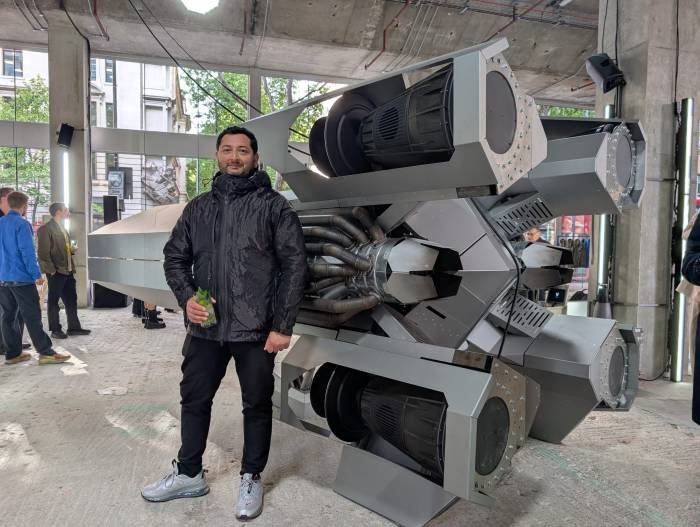
Forget flagships. Forget concept stores. Forget polite rails of neatly folded jackets under warm lighting. Vollebak has built a 1,000kg aluminium spacecraft-shop and sent it on tour.
Part retail installation, part sci-fi delivery vehicle, part sonic art object, the Vollebak Spaceshop is the British futurewear brand’s latest attempt to drag fashion out of the present and launch it into orbit. After making clothes from copper, graphene, aerogel and materials designed for Mars, Vollebak has now turned the shop itself into the spectacle: a travelling, interplanetary-style pop-up designed to imagine a future where stores come to you — whether you are on a beach in Los Angeles or mining asteroids somewhere far beyond Earth.
For its London appearance, the Spaceshop lands for just 48 hours, with Vollebak describing the event in typically cosmic style: for visitors from Earth, the address is London; for intergalactic readers, the instruction is to “take a hard left at Sirius B.”

A shop built like a spacecraft
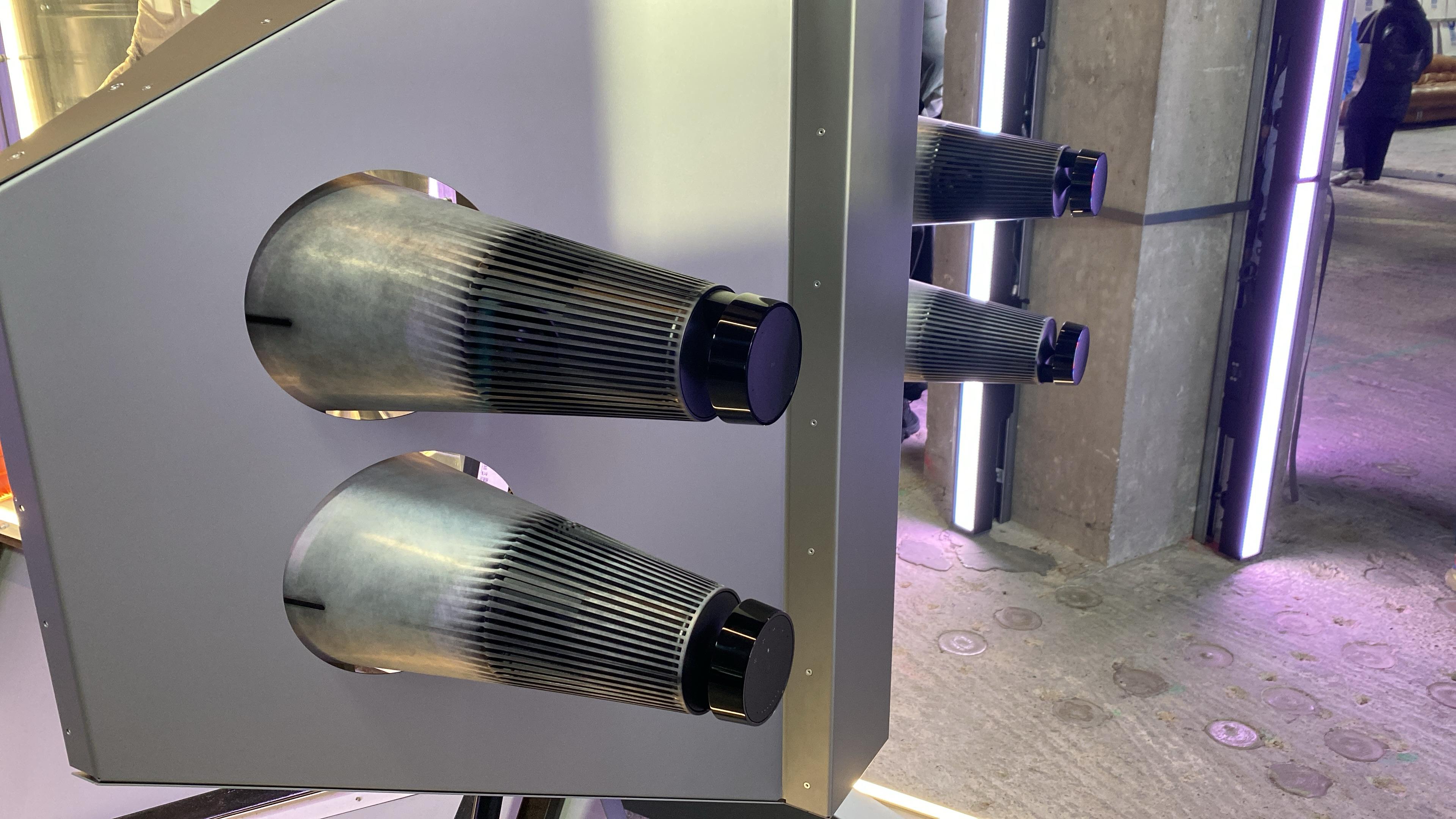
Created in collaboration with SAGA Space Architects and Bang & Olufsen, the Spaceshop is not simply a branded kiosk with futuristic styling. It is a full-scale engineered object: a conceptual spacecraft and pop-up shop built from a frame of carbon and stainless steel, clad in anodised aluminium panels — materials chosen for their connection to space-industry durability.
SAGA, the Danish studio behind architecture for extreme environments, helped shape the craft as a future-facing retail vehicle; Bang & Olufsen brought the sound, material experimentation and luxury industrial design language. The result feels less like walking into a store and more like approaching a machine that has just arrived from another century.
The craft was first launched at Bjarke Ingels Group’s headquarters in Copenhagen, before being sent out on a wider global tour — a fitting origin point for a project that sits somewhere between architecture, fashion, sound design and science fiction.
Retail as theatre, retail as world-building
Vollebak has always understood that the future is easier to believe in when you can touch it. Its clothes have included jackets built from 11 kilometres of copper, hoodies designed to outlive the wearer, and clothing engineered for Mars-like conditions. The Spaceshop takes that same energy and scales it up from garment to architecture.
This is physical retail turned into theatre. At a time when many brands are still trying to justify why a store should exist at all, Vollebak has answered with a simple proposition: make the store so strange, ambitious and temporary that visiting becomes an event.
The Spaceshop does not behave like a boutique. It behaves like a landing. It is here, briefly. Then it is gone.
The sound of the future
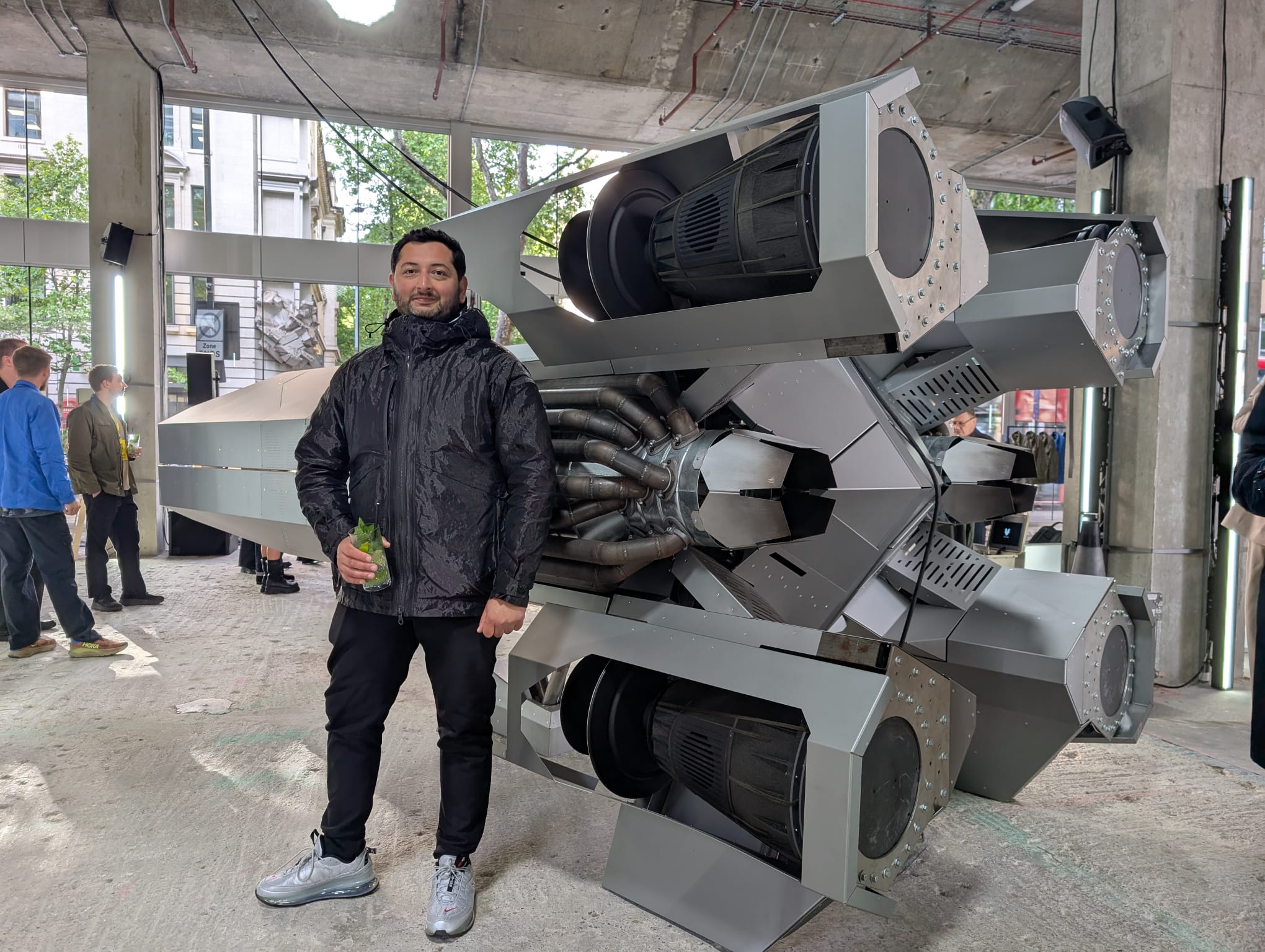
The Bang & Olufsen collaboration gives the Spaceshop a second identity: not just a shop, but a sonic environment. Inside, the installation houses Bang & Olufsen’s Beolab 5 and Beosound 2 speakers, creating an immersive, space-inspired soundscape. Some coverage describes the craft as capable of delivering around 120 decibels, turning the experience into something closer to standing in front of a sonic boom than browsing a rack of outerwear.
The visual language of the project is equally dramatic. Bang & Olufsen and Vollebak also developed the Beosound 2 Vollebak Edition, finished through an experimental anodisation process inspired by the unpredictable look of rocket burn. What began as an attempt to create a dark metallic finish produced unexpected swirls, streaks and burnished effects — a “burnout” look that became central to the final design.
It is a very Vollebak idea: turn an accident in material science into a luxury object from the future.
The Sonic Jacket: when clothing becomes a sound system
If the Spaceshop is Vollebak’s vision of the future of retail, The Sonic Jacket is its vision of the future of the body.
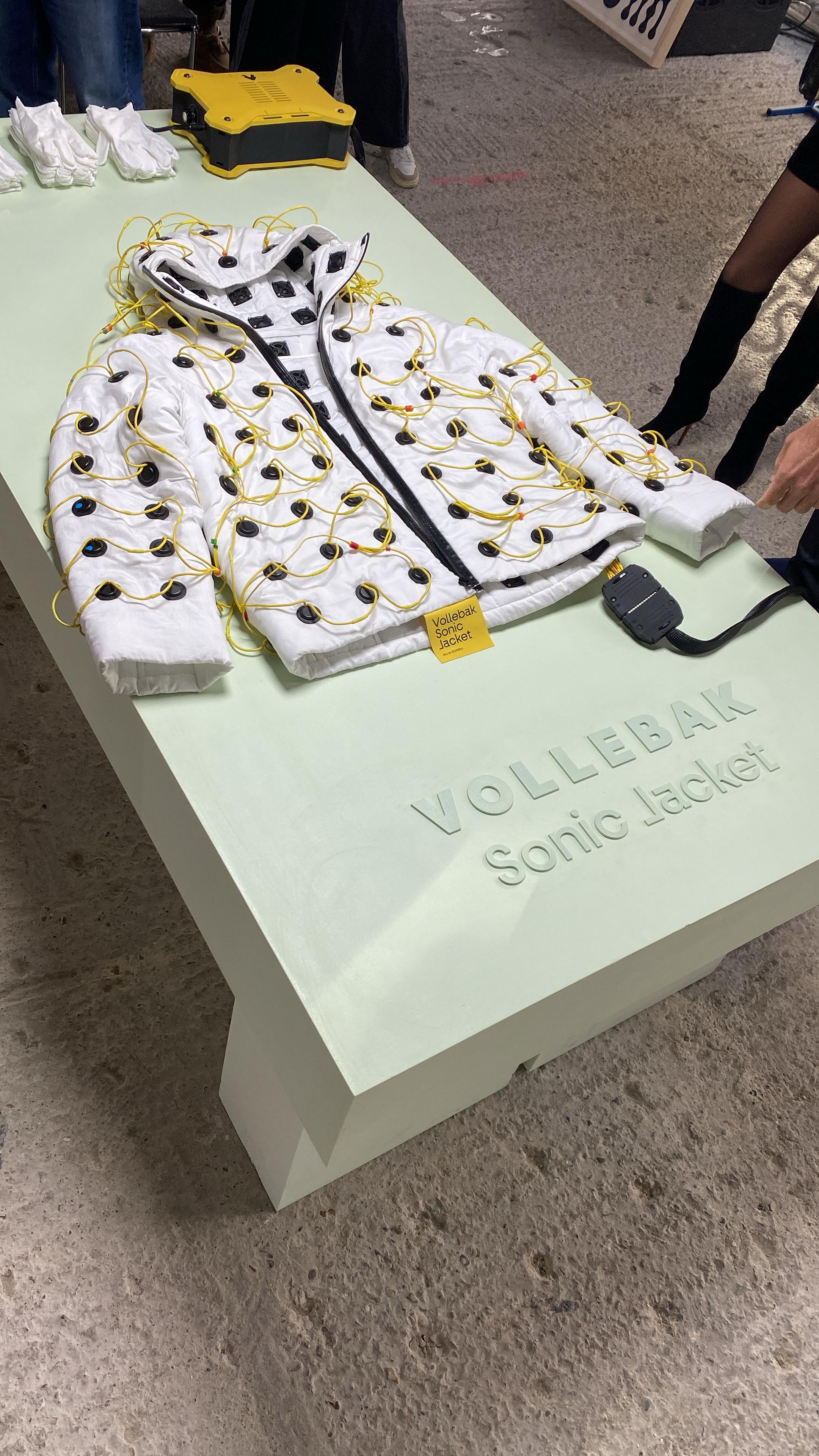
Described by the brand as “the world’s first sonic clothing,” the jacket is loaded with 180 miniature speakers distributed across the body, arms and hood. Rather than blasting sound outward, the speakers fire inward, transforming the garment into a wearable sound field. It is not a jacket you simply listen to; it is one you feel.
The numbers are wild: Vollebak says the Sonic Jacket can deliver frequencies from 4Hz to 20,000Hz directly into the body. Each speaker is only 32mm wide and 10mm deep, mounted into laser-cut holes to create a distributed speaker system wrapped around the wearer. The control unit includes an MP3 player with 10 preset frequencies, a physical dial for tuning, and a Micro SD card reader capable of holding up to 1,000 preset frequencies.
The jacket was developed with FBFX, the London special effects studio known for building costumes, spacesuits, armour and superhero outfits for major film and television productions. Visually, the Sonic Jacket keeps its engineering on show: exposed yellow wiring, visible construction and a deliberately experimental aesthetic. It looks less like fashion and more like a prototype smuggled out of a research lab.
That is the point. The Sonic Jacket turns sound into something physical, private and immersive. It asks whether clothing can become a tool for mood, focus, energy and perception — not through apps or screens, but through resonance.
The futurewear universe expands
Together, the Spaceshop and Sonic Jacket show Vollebak at its most Vollebak: hyped, strange, technically obsessive and almost comically ambitious.
The Spaceshop imagines a future where the store is mobile, off-grid and potentially interplanetary. The Sonic Jacket imagines a future where clothing is no longer passive, but sensory, responsive and machine-like. The brand’s wider material experiments — from copper jackets to metal-treated outerwear — sit around these objects like artefacts from the same fictional universe.
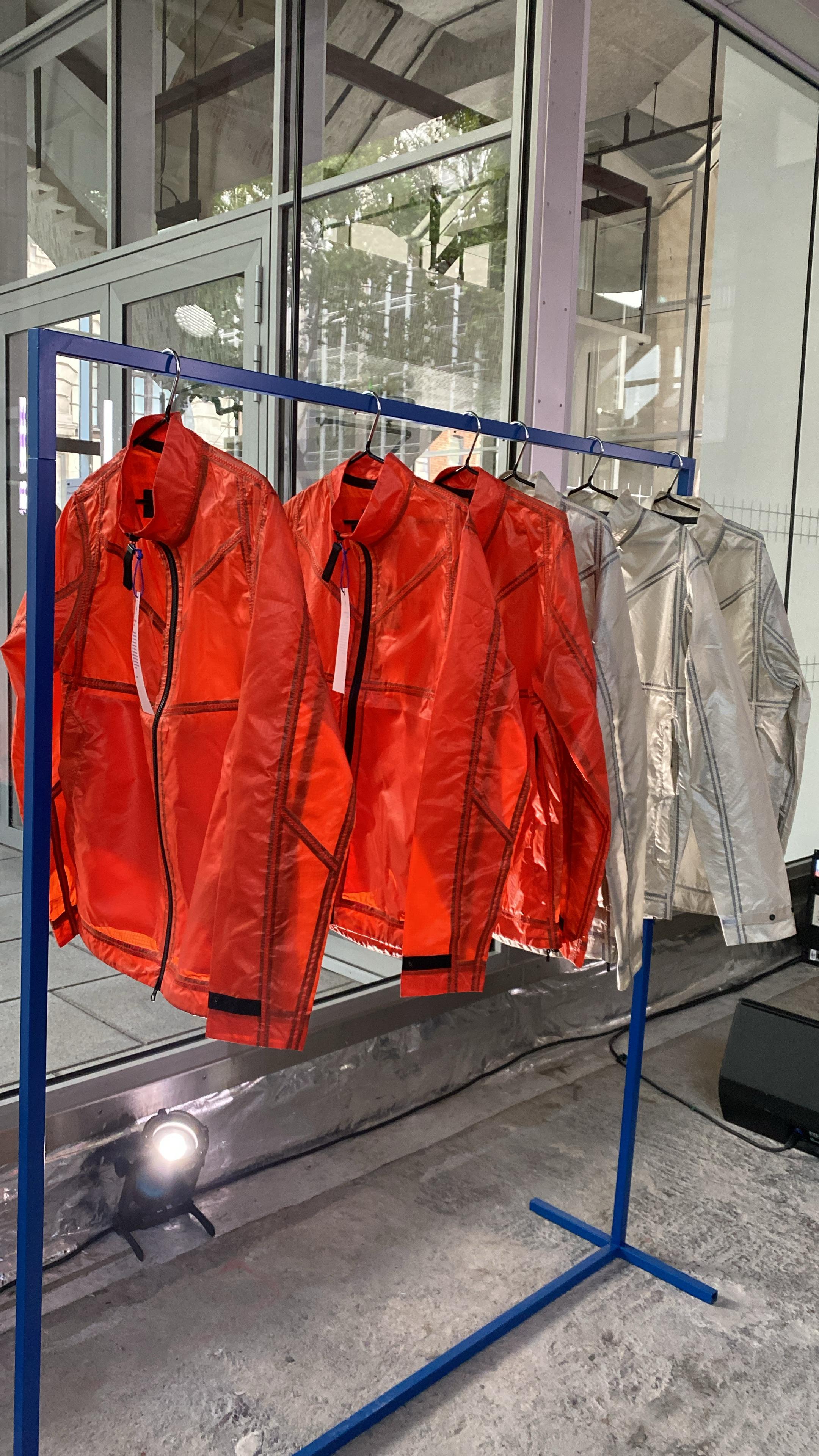
Alongside the Spaceshop, Vollebak and Bang & Olufsen have also introduced the Vollebak Anodised Jacket, made from polyamide ripstop fused with a near-invisible layer of metal through galvanic treatment, mirroring the material experimentation behind the speaker collaboration.
This is not fashion chasing trends. It is fashion chasing the outer edge of possibility.
Why it matters
The Spaceshop arrives at a moment when luxury, retail and technology are all searching for new forms of relevance. Consumers no longer need to visit a store to buy a jacket. They need a reason to care.
Vollebak’s answer is to turn retail into myth. The shop becomes a spacecraft. The jacket becomes a speaker array. The product launch becomes a landing sequence. The brand becomes less a clothing company than a future laboratory with a sense of humour.
And that may be why it works. Vollebak understands that the future is not only about utility. It is about emotion, imagination and spectacle. The Spaceshop is not just selling clothes; it is selling the feeling that tomorrow has briefly parked outside.
For 48 hours in London, visitors are not simply shopping. They are stepping into Vollebak’s version of what comes next: a world where fashion borrows from aerospace, sound design becomes wearable, stores move like spacecraft, and the next delivery might not come from a warehouse — but from orbit.
visit the SpaceShop for the next 2 days
by Sid Thaker