
IATA AGM countdown begins as global aviation leaders prepare to gather in Rio | News


Rio de Janeiro is preparing to welcome the global aviation industry as the countdown begins to the 82nd IATA Annual General Meeting and World Air Transport Summit, taking place from 6 to 8 June 2026.
Hosted by LATAM Airlines Group, the event will bring airline chiefs, aviation policymakers, manufacturers, airports, technology leaders, investors and media to Brazil at a decisive moment for global air transport.
The decision to stage the AGM in Rio places South America firmly at the centre of the aviation conversation. IATA says the event will be held in “the largest aviation market in South America”, underlining the role air transport can play as a driver of social and economic prosperity across the region.
For Brazil, the timing is significant. Aviation already supports 2.1 per cent of the country’s GDP and 1.9 million jobs, according to IATA, with the Rio summit set to examine how the sector can make an even larger contribution to national development.
The AGM will open with IATA director general Willie Walsh, while the World Air Transport Summit will examine the outlook for airlines in 2026, led by Marie Owens Thomsen, IATA’s senior vice president, sustainability and chief economist.
A central theme will be the operating environment facing global airlines over the next 12 months. The “Big Picture” session will explore geopolitics, security, trade and economics, bringing together speakers including Nick Allan, chief executive of Control Risks, Eleanor Budds of S&P Global, Matt Kaminski and Marie Owens Thomsen.
Rio will also give the industry a platform to focus directly on Brazil’s aviation potential. A dedicated session, “Turning Brazil’s Aviation Potential into Reality”, will feature Mariana Aldrigui of the University of São Paulo, Jerome Cadier, chief executive of LATAM Brasil, Jeanine Pires of Pires Inteligência em Turismo, and Fabio Rogerio de Carvalho, chief executive of ABR Aeroportos do Brasil.
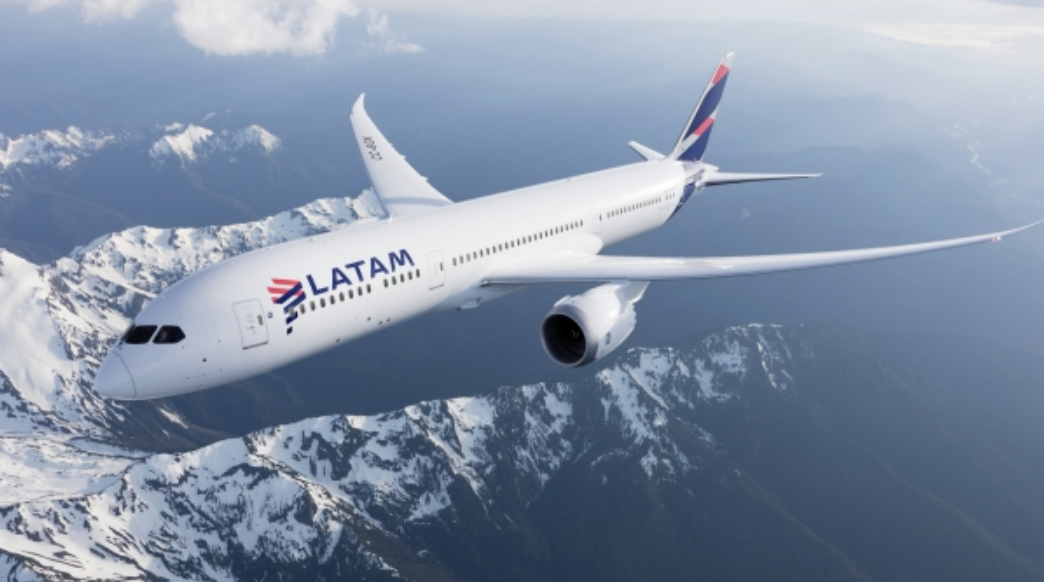
The host airline will play a prominent role throughout the programme. Roberto Alvo, chief executive of LATAM Airlines Group, is listed among the headline speakers, with IATA highlighting his role in LATAM’s transformation and the airline group’s position as a driver of connectivity and development across South America.
But the Rio AGM will also be about the system that sits behind global aviation. IATA represents more than 370 airlines across 131 countries and territories, with its members accounting for around 85 per cent of total scheduled traffic. In 2024, IATA members carried 3.3 billion scheduled passengers and 59 million tonnes of scheduled cargo, illustrating the scale of the industry that will be represented in Rio.
That scale brings with it a series of operational, financial, environmental and technological questions that are now central to the industry’s next chapter.
Airport capacity will be one of them. IATA says 395 airports are subject to airport coordination in 2026, including 216 fully slot-coordinated airports. Around 43 per cent of passengers globally now depart from a slot-coordinated airport, showing how capacity constraints are becoming an increasingly important part of the aviation growth debate.
IATA argues that the Worldwide Airport Slot Guidelines remain central to managing scarce airport capacity in a neutral, transparent and non-discriminatory way. The issue is likely to become increasingly important as demand grows faster than infrastructure expansion in many parts of the world.
Sustainability will remain one of the defining issues in Rio. IATA member airlines passed a resolution in 2021 committing to achieve net zero carbon emissions from operations by 2050, with sustainable aviation fuel expected to provide the largest share of the emissions reduction pathway.
Brazil’s potential role in the future SAF economy will be addressed directly in the session “Closing the Gap Between Brazil’s SAF Production Potential and Airline Needs”, featuring representatives from Brazil’s Ministry of Energy, Acelen Renewables and Petrobras.
The sustainability debate will also go beyond SAF. IATA’s latest fact sheets highlight the role of new aircraft technology, offsetting, carbon capture, cabin waste reduction and smarter regulation in the sector’s net zero pathway.
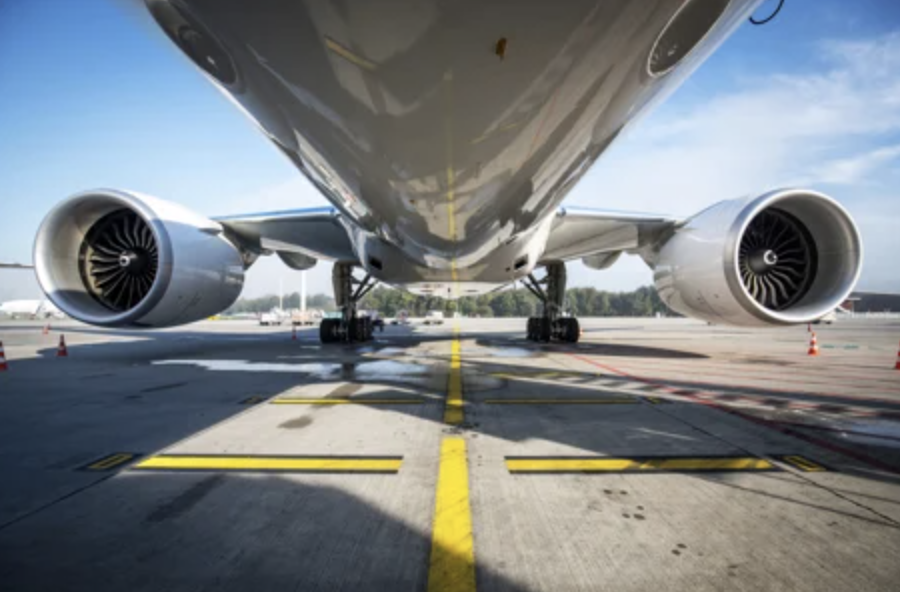
Aircraft efficiency has improved substantially over recent decades. IATA notes that each new generation of aircraft has reduced emissions by around 15 to 20 per cent, while the overall fuel efficiency of the fleet is around 80 per cent better than 50 years ago. Further gains are expected from geared turbofan engines, advanced aircraft design, hybrid-electric concepts, electric aircraft, hydrogen propulsion and new aerodynamic configurations.
However, IATA’s analysis also points to the complexity of the transition. Hybrid-electric aircraft may begin with small and regional aircraft, while hydrogen faces challenges around green hydrogen production, infrastructure, storage and aircraft design. That makes the pathway to 2050 a combination of near-term efficiency, SAF scale-up, regulatory alignment and longer-term technology breakthroughs.
Cabin waste is another area where the industry is seeking practical progress. IATA says 34 per cent of cabin waste is untouched food and beverages, representing around US$6 billion of resources incinerated or landfilled each year. The association argues that smarter regulation is needed to allow airlines and catering providers to reuse and recycle more materials from international flights, while still protecting animal health and passenger safety.
The same tension applies to single-use plastics. Airlines are under pressure to reduce plastic waste, but IATA says inconsistent regulations across airports, regions and countries can lead to operational complexity, higher costs and, in some cases, more waste. The challenge for the industry is to move towards more sustainable alternatives while respecting aviation’s strict safety, hygiene and weight requirements.
Financial infrastructure will also sit quietly behind many of the Rio discussions. IATA Financial Settlement Systems processed US$492.4 billion in 2025, excluding refunds, helping airlines, travel agents, cargo operators and other partners move money through the global aviation value chain. The Billing and Settlement Plan alone processed US$242.3 billion in 2025, net of US$19.7 billion in refunds, across more than 180 countries and territories.
As airlines invest in transformation, distribution, new aircraft, sustainability and customer experience, the efficiency and resilience of these financial systems remain a critical part of the industry’s operating backbone.
Technology and cybersecurity will be another major theme. The World Air Transport Summit will include a session asking whether AI is living up to its promises for airlines, examining how carriers and technology providers are applying artificial intelligence across operations, customer experience and decision-making.
IATA’s aviation cybersecurity fact sheet underlines why this matters. The industry’s digital transformation now spans corporate operations, aircraft systems, ground infrastructure, connected aircraft, electronic flight bags, cloud-enabled operations and data-driven decision-making. The growing use of AI and automation can improve efficiency and service quality, but also expands the cyber risk environment facing airlines and aviation partners.
IATA says it is establishing several aviation cybersecurity expert groups in 2026, focused on industry coordination, regulatory monitoring, innovation and crisis response. The issue is likely to become more important as airlines become more connected, data-led and dependent on digital infrastructure.

The formal media programme begins on Saturday 6 June with regional briefings covering North Asia, Europe, Asia Pacific, Africa and the Middle East, and the Americas, followed by briefings on sustainability and LATAM Airlines Group.
Sunday’s schedule includes the AGM opening session, an AGM press briefing with Willie Walsh, IAG chief executive Luis Gallego and LATAM chief executive Roberto Alvo, followed by the World Air Transport Summit, the CEO panel and the IATA Diversity and Inclusion Awards.
The CEO Forum, one of the traditional highlights of the AGM, will be hosted by CNN’s Richard Quest and feature airline leaders including Con Korfiatis of Oman Air, Güliz Öztürk of Pegasus and Luis Rodrigues of TAP Air Portugal.
For Rio, the AGM is more than an aviation conference. It is an opportunity to showcase the city’s growing role as a global destination for business, tourism, events and connectivity. With Visit Rio named as destination partner, the event will bring the world’s aviation leadership to one of Latin America’s most recognisable cities at a moment when tourism, infrastructure and international access are central to the region’s growth story.
For LATAM, the gathering provides a platform to demonstrate the role of a major South American airline group in connecting the region to the world. For Brazil, it is a chance to place aviation at the heart of the country’s wider ambitions around tourism, trade, sustainability and economic development.
As the industry prepares to gather under the IATA banner, the agenda in Rio reflects an aviation sector defined by both opportunity and complexity. Growth is returning, demand is shifting, technology is accelerating, financial systems are evolving, cyber risks are rising and sustainability is moving from ambition to execution.
For three days in June, Rio de Janeiro will become the stage on which many of those questions are debated. For Brazil, LATAM and South America, it is also a chance to demonstrate that aviation remains one of the most powerful engines of connection, trade, tourism and long-term economic development.
Justin Cooke is Editor in Chief of Breaking Travel News and will be attending the IATA AGM in Rio de Janeiro.